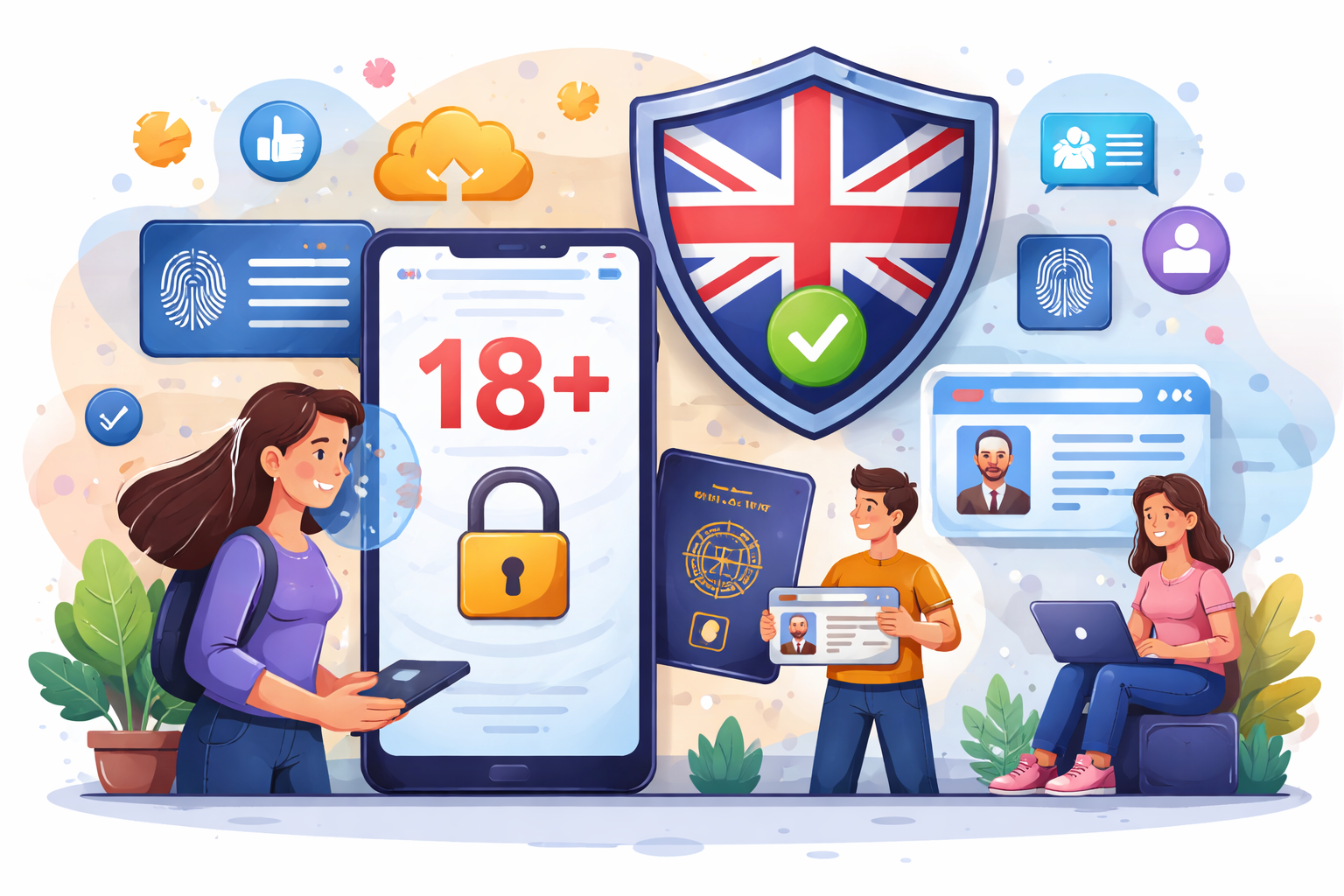
Ofcom has detailed its recommendations on how to accurately verify whether social media users in the United Kingdom are 16 or older, a measure linked to a forthcoming ban intended to restrict underage access to major platforms like Instagram, TikTok, and Snapchat starting in March.
The new rules aim to prevent users under 16 from accessing ten leading social media networks, and require many adults to prove they are not underage. Although the final implementations await government approval, Ofcom has proposed several methods it considers highly effective while emphasizing privacy and data protection.
Recommended Age Verification Methods
Recognizing that verifying users below 18 is challenging—since teenagers might lack credit cards, full driving licenses, or passports—Ofcom suggests four main verification techniques in addition to traditional photo ID methods. These include:
- Photo ID matching that compares details from official documents against live images during checks.
- Banking-based checks leveraging financial institutions’ records of users’ ages.
- Advanced facial age estimation technology, which the regulator says has recently improved.
- Digital ID services that allow users to digitally verify their identity or age.
Implementation and Responsibilities
While Ofcom outlines viable approaches, the social media companies themselves are responsible for deciding and implementing suitable age verification systems. This follows lessons learned from enforcing age checks on adult content websites, where excessively prescriptive mandates previously proved ineffective.
Some technology firms, including Meta, advocate for device-level age verification that would automatically restrict underage users from installing apps. Apple has already introduced such measures in the UK. However, Ofcom maintains that platforms must still conduct their own user checks.
Challenges and Outlook
The regulator acknowledges the difficulty in completely eliminating circumvention risks, noting some younger users may bypass the safeguards. Ofcom’s CEO pointed to the broad scale of verification required, given a large number of adult accounts will need age confirmation alongside younger users.
The effectiveness of the ban will depend on cooperative efforts from social media companies, regulators, and the wider community. Ofcom emphasizes that the goal is to make certain social media use less common for those aged 8 to 10 years entering secondary school, reshaping digital interaction norms among youths.
Ofcom’s report now awaits government consideration, with a final decision expected by the end of the year.