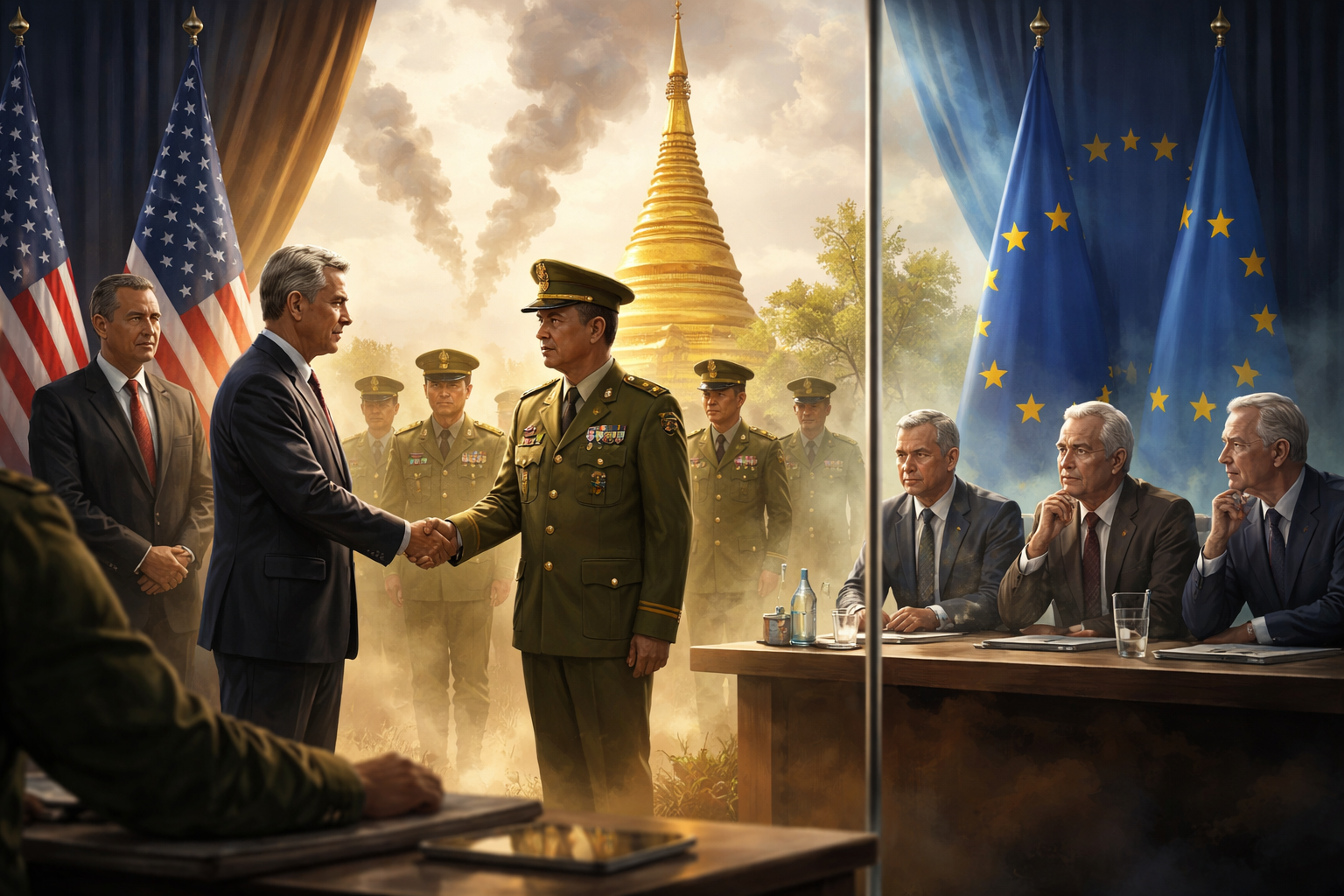
The US government has initiated discreet diplomatic engagements with Myanmar’s military-led government, holding two rounds of discussions since September, according to diplomatic reports. This marks a strategic shift aiming to address issues like online scam operations, secure the release of imprisoned American businessman Adam Castillo, and potentially access Myanmar’s rare-earth minerals—resources that have been dominated by China.
Meanwhile, the European Union continues to reject the legitimacy of Myanmar’s military regime following the 2021 coup and is maintaining its suite of targeted sanctions. However, the EU is closely monitoring evolving positions from the US, Japan, ASEAN countries, and other regional actors, some of which have begun restoring direct diplomatic ties with the military junta.
US Objectives and Regional Developments
US diplomatic efforts have involved meetings in Naypyitaw and Tokyo, with State Department representative Michael Vance leading the talks. Washington’s engagement appears transactional, concentrating on concrete issues such as combating cybercrime and gaining resource access, rather than endorsing Myanmar’s military rule.
In Southeast Asia, several governments are reconsidering their once hardline stance, renewing direct contacts with Myanmar’s military authorities. Thailand, in particular, has expressed frustration over the stalled peace process and has welcomed Washington’s re-engagement, anticipating substantive discussions at the upcoming ASEAN summit in Manila.
EU Maintains Sanctions and Non-Recognition Policy
The EU has steadfastly maintained sanctions covering more than 100 individuals and two dozen entities associated with Myanmar’s military, following the 2021 coup. These measures were extended for another year as of April. Brussels has suspended financial assistance to the military government and sharply curtailed diplomatic relations but continues to provide humanitarian aid to displaced communities and support civil society organizations.
Despite pressure, the EU has kept Myanmar’s preferential trade access intact, fearing negative impacts on workers, especially young women employed in the garment sector. Bilateral trade recently reached roughly €4 billion, showing resilience despite political turmoil.
Challenges and Strategic Considerations for the EU
Experts on EU policy caution that while the US approach signals a tactical engagement geared toward specific interests like resource mining, the EU’s credibility as a defender of democracy and human rights could be undermined if it abandons its isolation policy. That said, isolation has had limited success in altering the junta’s behavior.
The EU faces a delicate balancing act: expanding diplomatic engagement risks alienating democratic opposition and ethnic resistance groups who control significant territory within Myanmar, while continued isolation could lead to diminished influence over the country’s future. Advocates suggest the EU maintain sanctions against military leaders while increasing coordination through ASEAN, the United Nations, and regional partners, potentially exploring economic engagement with areas controlled by ethnic resistance forces.
Outlook Amid Shifting Diplomatic Tides
Myanmar’s military regime has sought to break diplomatic isolation by engaging with Western media and diplomats. Recently, the military’s diplomatic representatives have pursued contacts with European politicians. Yet, Brussels currently shows little appetite for fundamental policy changes, underscoring the EU’s commitment to non-recognition amid ongoing violence.
As more countries reopen dialogue with Myanmar’s generals, the EU will need to reconsider its approach to remain a relevant actor in shaping Myanmar’s political trajectory without compromising its core principles.