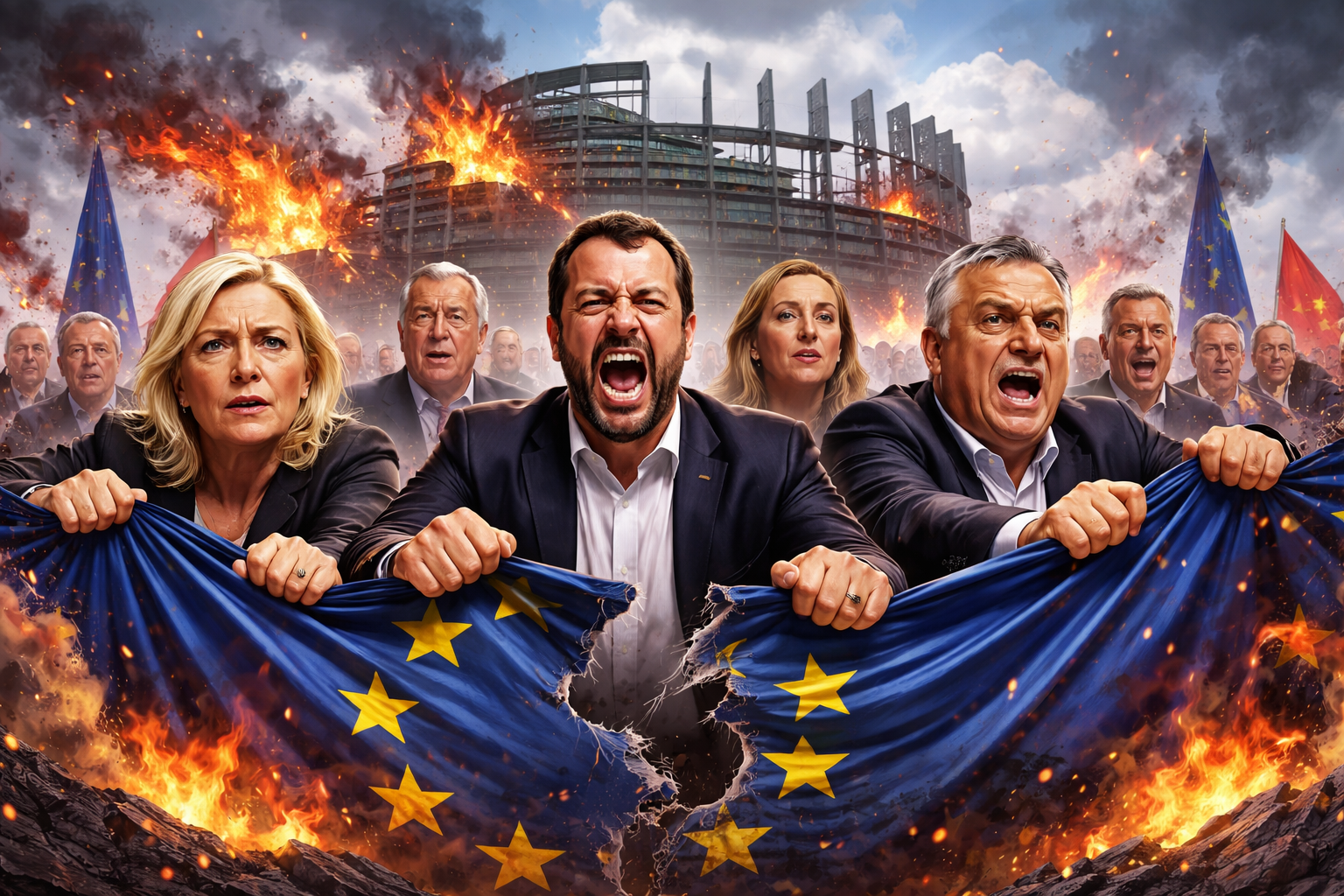
Far-right leaders Marine Le Pen of France and Alice Weidel of Germany have laid out proposals to significantly diminish the power and funding of European Union institutions, raising fears of weakening the bloc’s unity and capacity to face global challenges.
The proposals include dramatic budget cuts and fundamental changes to EU governance structures, posing what critics describe as a potential act of self-harm that could fragment European cooperation and open vulnerabilities to international rivals.
Plans to Erode EU Authority
Marine Le Pen’s National Rally suggests slashing French contributions to the EU budget by 60% over five years and ending Brussels’ role in proposing common policies for all 27 member states. Meanwhile, Alice Weidel, leader of Germany’s Alternative for Germany (AfD), advocates abolishing elections to the European Parliament and securing opt-outs for Germany in key areas such as migration, defense, and shared borrowing.
Weidel has targeted the year 2029, when Germany’s next federal election is due, envisioning a point where a coalition of eurosceptic nationalist governments across France, Italy, Poland, and Germany could begin unraveling the European project from within.
Concerns Amid Global and Continental Challenges
Pro-European leaders have so far shown a muted response to the far-right plans. Yet the continent faces complex issues like economic competition with China and the United States, climate change demands, and security threats—all requiring deeper cooperation and resource pooling.
Mario Draghi, former head of the European Central Bank, has warned that without a coordinated industrial policy, the EU risks losing its global competitiveness. The policies proposed by Le Pen and Weidel threaten efforts toward European strategic autonomy, potentially stalling progress on green transitions and weakening collective defense initiatives.
Implications for Europe’s Stability and Global Position
Observers caution that downsizing EU institutions and fracturing collective political will would result in a Europe less capable than the sum of its parts. Such fragmentation could be exploited by global figures like China’s Xi Jinping, Russia’s Vladimir Putin, or future political forces inspired by Donald Trump’s movement.
As Europe approaches a critical period in its history, experts stress the need for vigorous advocacy supporting a unified and strong European Union capable of navigating geopolitical volatility and anxiety.