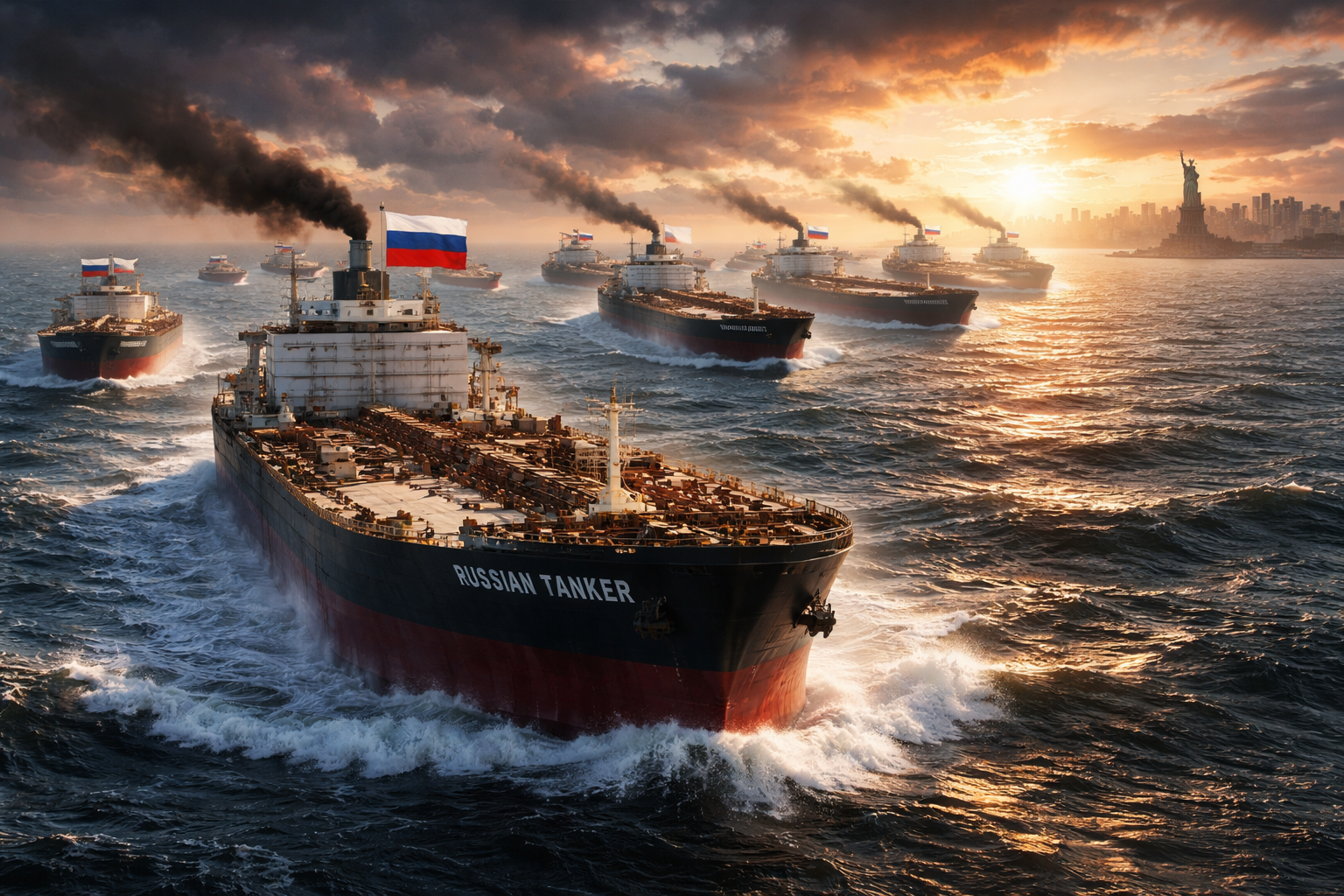
Seven oil tankers transporting an estimated 288,000 tonnes of Russian diesel are currently sailing toward the United States, marking the initial phase of a disputed supply agreement between former President Donald Trump and Russian President Vladimir Putin. However, questions remain about whether the diesel will be unloaded amid ongoing legal and political opposition.
Environmental group Greenpeace, which has been tracking the vessels, reported that until now only three tankers were confirmed to have departed Russian terminals in the Baltic Sea. Their broader monitoring suggests this is the largest known fleet movement under the unexpected deal negotiated earlier this month.
Political and Legal Opposition in the U.S.
U.S. lawmakers, especially a faction of Democratic senators, have warned banks, port authorities, and other involved parties that they could face congressional investigations if they facilitate the diesel shipments. Mikie Sherrill, Democratic governor of New Jersey, has publicly stated her intent to prevent the unloading of Russian diesel in her state, calling the deal “corrupt and illegal.” Meanwhile, some reports indicate the White House has encouraged U.S. companies to accept the diesel, though actual buyers remain uncertain due to potential legal risks and the proximity of midterm elections.
Shaun Burnie, an energy specialist with Greenpeace Ukraine, stated that since the tankers’ locations are now trackable, Congress or local authorities should intervene to stop the shipments. He criticized the deal for “rewarding Russia for its vile war against Ukraine” instead of imposing stricter sanctions.
Context of the Diesel Shipments
The supply deal was announced on October 9, with Putin agreeing to supply the U.S. with 1.8 million tonnes of diesel, starting immediately with about 300,000 tonnes. Trump authorized a six-month waiver on existing sanctions to enable these shipments.
This move reverses years of sanctions imposed by the U.S., European Union, United Kingdom, and other western nations following Russia’s full-scale invasion of Ukraine in February 2022. Despite continued Russian attacks, Trump sought to shift toward cooperation with Putin this fall.
Related Developments in Ukraine
Amid these geopolitical tensions, Ukraine faced renewed violence. On Thursday morning, 14 people were reported killed in a Russian drone strike on a crowded train platform in the city of Dnipro. Additional daytime strikes in Chernihiv and Kremenchuk killed five more. The Ukrainian state railway company stated the attack involved a high-speed jet-powered drone hitting the main station just as a commuter train was about to depart.
Reactions and Implications
Ukrainian President Volodymyr Zelenskyy condemned the diesel deal, warning that proceeds from the oil sales will bolster Kremlin funding for the war in Ukraine. He described the agreement as a “back room deal” that unfairly advantages Putin on the battlefield.
Meanwhile, the Kremlin has sought to restrict information about current oil exports with a presidential decree issued at the end of September designed to circumvent international sanctions by limiting public data about oil shipments.