
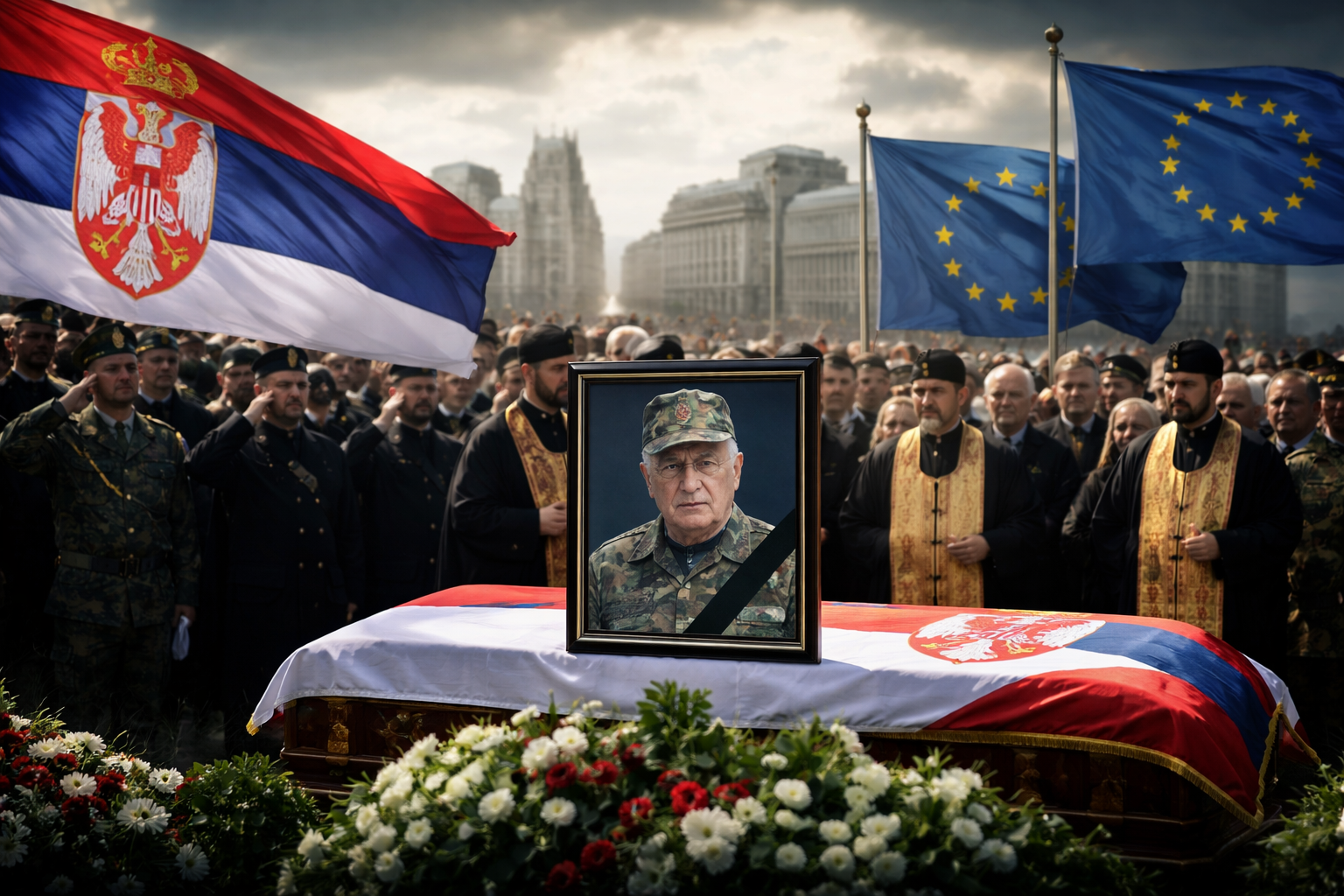
The state-supported funeral of Ratko Mladic in Belgrade has intensified questions in Brussels about Serbia’s suitability as a European Union candidate. Mladic, convicted by a United Nations court of genocide, crimes against humanity, and war crimes, was honored with military rites attended by government officials, highlighting a growing tension between Serbia’s political actions and EU expectations.
According to the European Council on Foreign Relations and Serbia’s Institute for European Affairs, Serbia’s accession process has significantly lost momentum. Experts highlight that the Serbian government has failed to meet promised reforms over the past five years, with democracy and rule of law standards deteriorating under nationalist leadership.
Political Backslide and Regional Tensions
Serbia’s refusal to join EU sanctions against Russia and ongoing strained relations with Kosovo mark a departure from aligning with European Union policies. While the Serbian president did not attend Mladic’s funeral, the government’s facilitation and public defense of the event drew strong reactions from Brussels. European Commission President Ursula von der Leyen described the images as shocking, and the head of the European Council condemned the glorification of war criminals. Enlargement Commissioner Marta Kos cancelled an official trip to Serbia.
Concerns Over EU Leniency and Strategic Engagement
Observers argue that the European Union has treated Serbia with leniency, viewing Serbian leadership as crucial for maintaining regional stability despite democratic setbacks. Serbian civil society has repeatedly alerted Brussels to issues such as media suppression and weakened institutions, though the EU largely overlooked these warnings. Economically, the bloc remains Serbia’s largest trading partner and donor, yet politically, Serbia has strengthened ties with Moscow. Experts warn that isolating Serbia could risk pushing the country closer to Russia or China but advocate for balanced engagement combined with pressure for political clarity.
Economic Influence and Political Challenges
The EU has introduced financial leverage by withholding payments under the Growth Plan for the Western Balkans due to concerns over judicial independence. However, some analysis suggests broad funding cuts may disproportionately impact the public rather than political elites, advocating instead for targeted actions against individuals responsible for democratic erosion.
Serbia’s upcoming early parliamentary election on October 25 presents a test for entrenched leadership. Although the ruling figure aims to maintain dominance by shifting roles, analysts note that the opposition remains fragile and electoral conditions challenging. Experts caution that a single election is unlikely to resolve institutional issues or dramatically shift Serbia’s EU relationship.
Regional Reconciliation Remains Elusive
Experts underline that reconciliation in the Balkans is distant, as Serbia has yet to formally acknowledge its role in the conflicts of the 1990s or confront established facts about wartime crimes. The continued portrayal of Serbs primarily as victims remains embedded in political discourse, education, and media.
The state funeral for Ratko Mladic did not initiate this trajectory, but instead exposed how far Serbia currently stands from both regional reconciliation and integration into the European Union.