
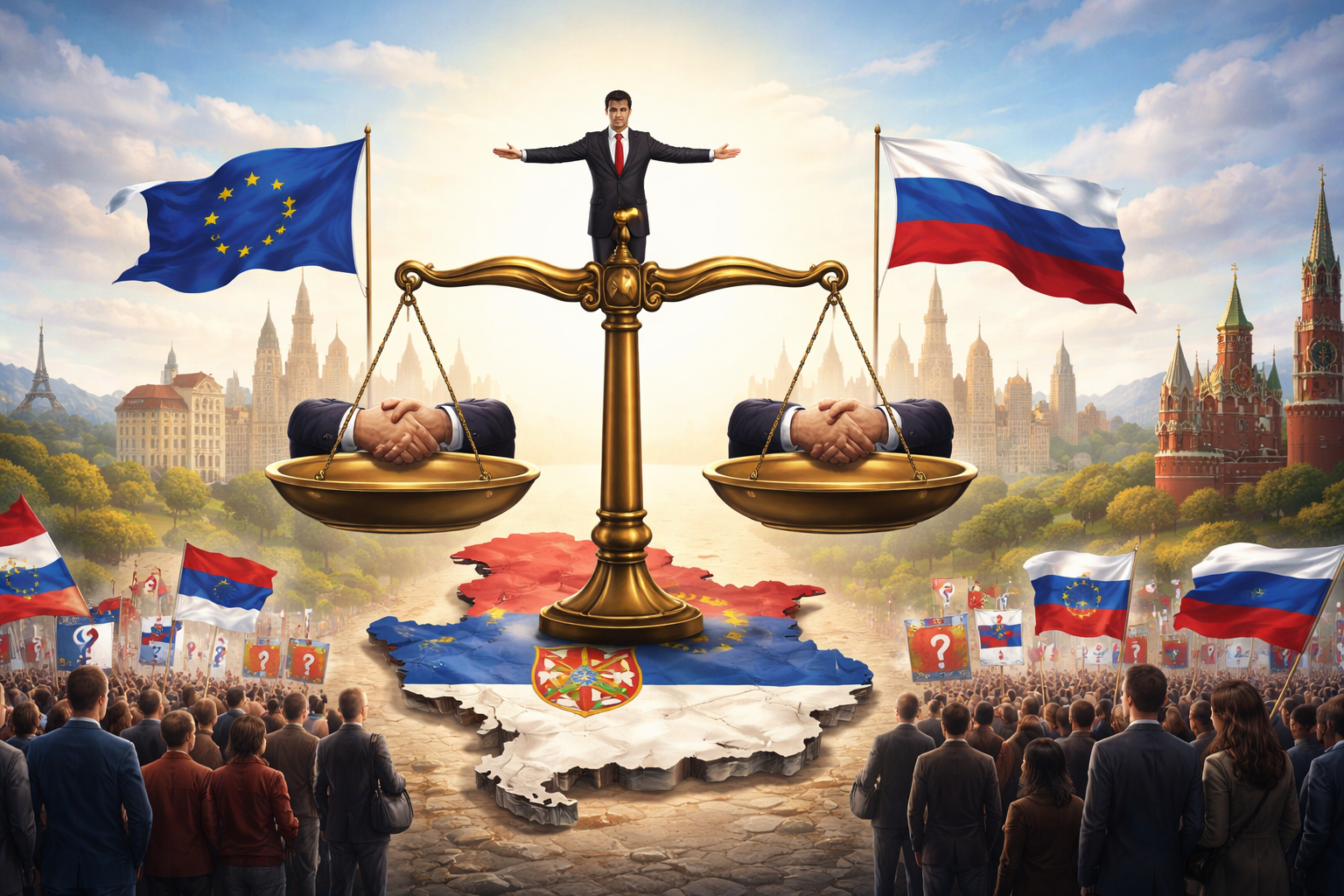
In early August, Serbia faced devastating wildfires that burned over 3,500 hectares in a protected nature reserve. The government turned to Russia for urgent assistance, requesting the deployment of a Russian firefighting aircraft before activating the European Union’s emergency response system. This order of support triggered debate about Serbia’s diplomatic alignment as the country prepares for a significant election scheduled for October.
Officials from Serbia have emphasized the pragmatic nature of the request for Russian assistance, pointing out that the Russian aircraft offered capabilities that EU resources did not provide. Serbian leaders have dismissed interpretations framing this move as a political shift toward Moscow.
Firefighting Efforts Highlight Serbia’s Geopolitical Balancing
The response to the wildfires saw Serbian authorities first seek help from Moscow, with a Russian Ilyushin Il-76 aircraft arriving in the southern city of Nis. Pro-government media referred to the plane as the “Russian beast,” celebrating its role in combating the blazes. Internal ministry officials underlined the aircraft’s superior capacity compared to available European firefighting helicopters.
Subsequently, the European Union swiftly provided support by mobilizing four helicopters from its rescEU reserve and dispatching ground teams from Germany and Romania. Despite this, Serbian leadership argued that reliance on Russia reflected practical considerations rather than a change in foreign policy direction.
Diplomatic Engagements Reflect Efforts to Maintain Balance
Just weeks before the wildfires, Ukrainian President Volodymyr Zelenskyy visited Serbia, reinforcing mutual support for territorial integrity. This gesture is particularly sensitive, as Ukraine does not recognize Kosovo’s independence—a status Serbia continues to dispute.
Political analysts suggest Serbian authorities aim to demonstrate friendship with Ukraine and the West to avoid antagonizing European partners, while simultaneously preserving a constructive stance toward Russia. This approach reflects a strategic effort to avoid alienating either side ahead of elections.
Challenges Ahead for Serbia’s Foreign Policy Maneuvering
As tensions between Russia and Western countries intensify, Serbia’s ability to maintain close ties with both is under increasing strain. The European Union expects candidate countries to align their foreign policies more closely with bloc standards, and Serbia’s refusal to sanction Russia remains a sticking point.
At the same time, Russia’s confidence in Serbia’s leadership is cautious, particularly amid recent student-led protests portrayed by Moscow and Serbian authorities as Western-backed attempts to destabilize the government. This further complicates Serbia’s diplomatic balancing act.
For Serbia’s leadership, the immediate priority appears to be retaining control in the upcoming elections to continue managing this delicate foreign policy position.