

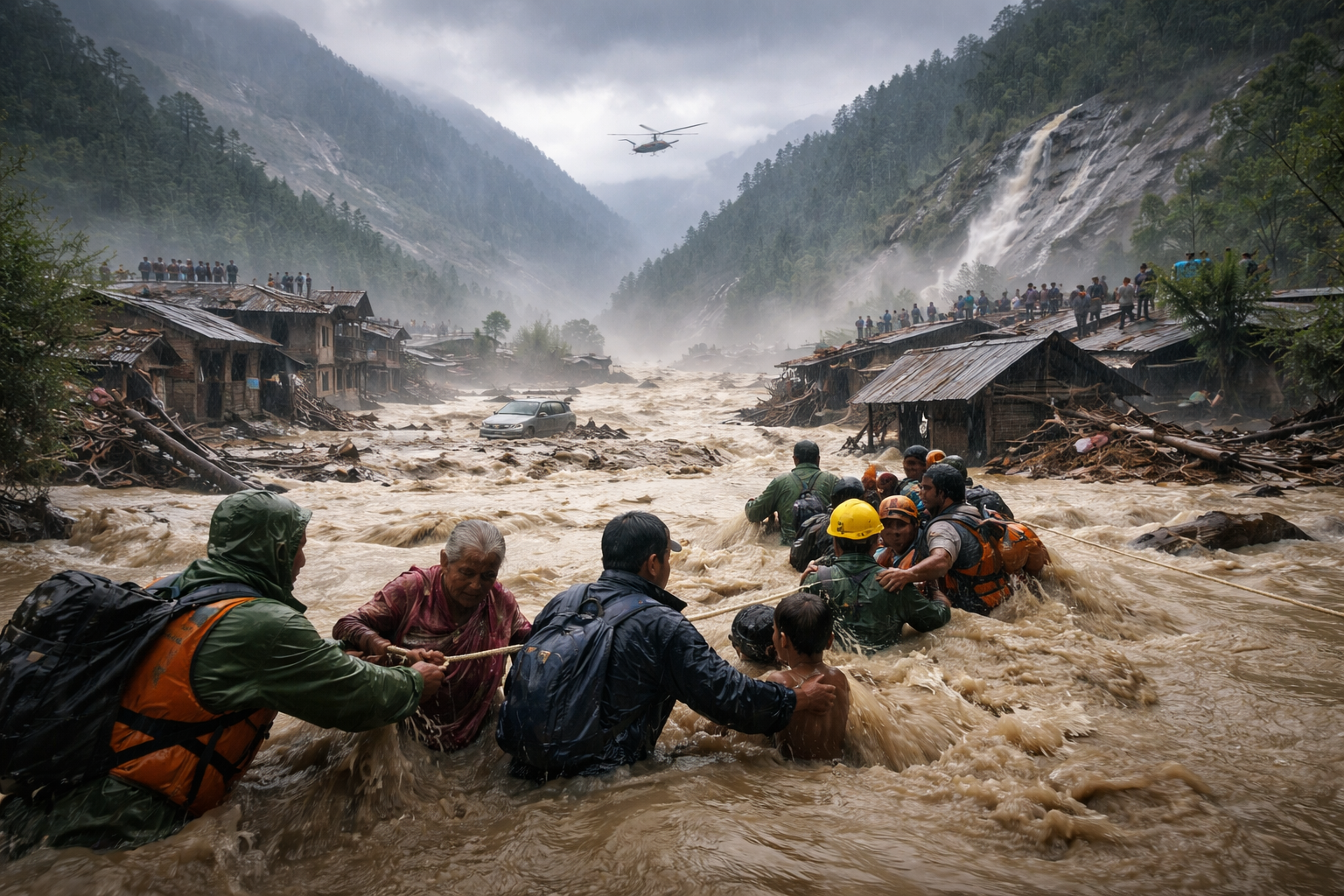
The death toll from the recent floods affecting Nepal and Tibet has reached 750, with more than 3,000 people still unaccounted for, officials reported Sunday. A fresh flood alert has been issued as river levels continue to rise, prompting warnings for residents living near the Bhotekoshi River to move to higher ground.
The floods followed what scientists believe might have been a glacier collapse in the Himalayas, which then sent massive amounts of water rushing down river valleys starting last Wednesday. Nepal’s disaster authority reported 734 fatalities within the country, while Chinese state media confirmed 16 deaths in Tibet, including over 100 Nepalis along with individuals from more than a dozen other countries.
New Flood Risks and Barrier Lake Concerns
Authorities in Tibet have raised alarms about a new barrier lake forming behind a landslide near the Gyirong border port. Monitoring drones detected the lake on Saturday night, and rescue teams have been relocated due to concerns that the natural dam could burst. This development has heightened fears of further flooding downstream in both Tibet and Nepal.
Ongoing Rescue Efforts Focus on Trapped Hydropower Workers
Rescue teams in Nepal are working to reach more than 100 hydropower workers trapped in tunnels flooded with debris, particularly along the Trishuli River where over 900 workers went missing during the floods. Efforts include drilling into mud-blocked tunnels to pump oxygen and deploy cameras. Despite continuous rain and harsh conditions, these teams remain active in their search and rescue mission.
International Support and Humanitarian Aid
India and China have deployed specialized teams to assist Nepal’s rescue operations alongside Nepal’s own mountain rescue squad. The Nepalese Foreign Ministry highlighted the need for help in areas such as tunnel rescue and victim identification through DNA testing. The U.S. State Department announced $3.6 million in humanitarian aid, including emergency food assistance for up to 10,000 households affected by the disaster. The Red Cross estimates that more than 90,000 people have been impacted by the floods, underscoring the scale of the crisis.