
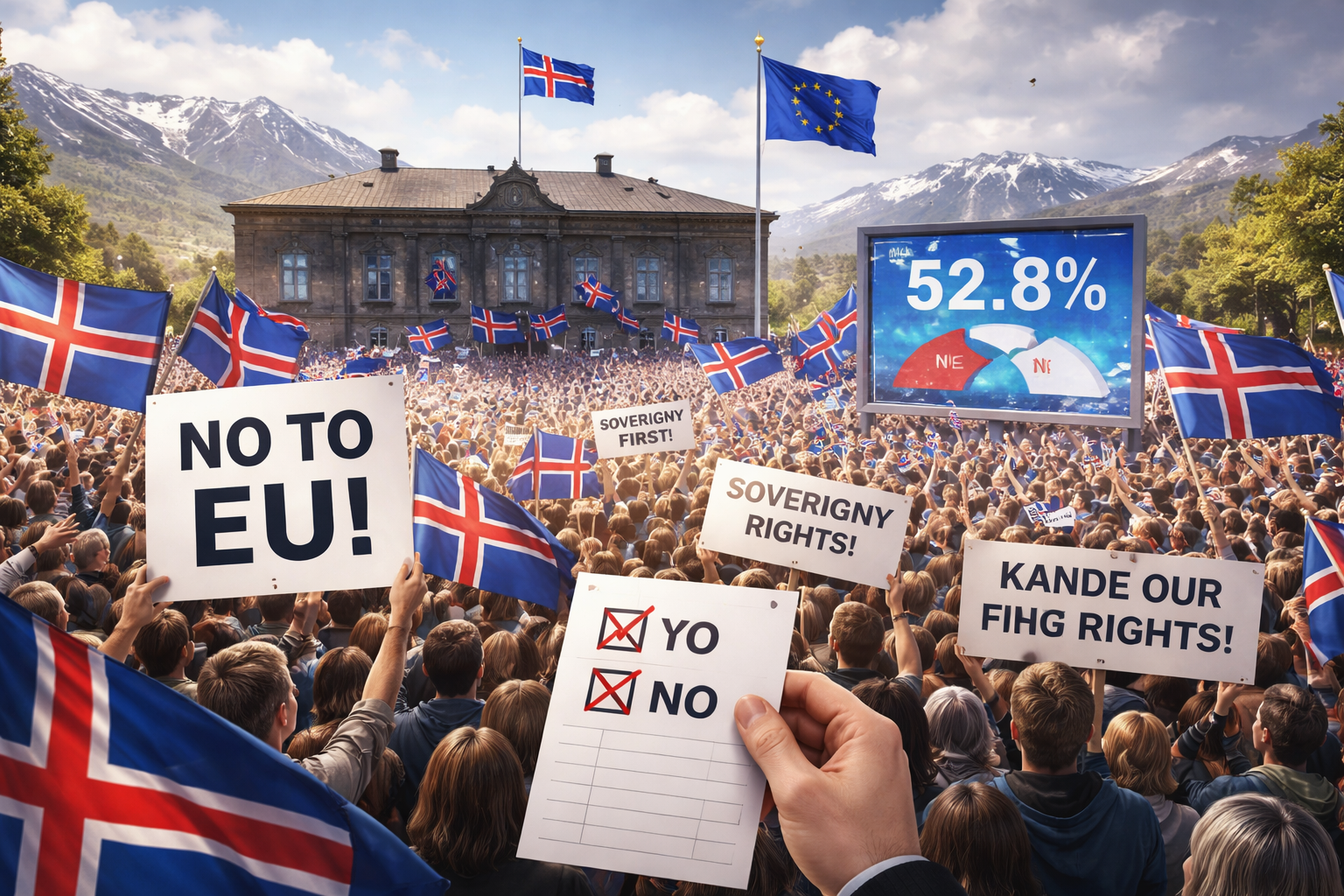
Iceland’s electorate rejects reopening EU accession talks in a narrow 52.8% majority amid concerns over sovereignty, fishing rights, and Arctic security
Iceland has decisively voted to reject its government’s proposal to restart EU membership negotiations, ending hopes to join the bloc in the near future. The referendum campaign was fiercely contested, revealing a clear divide between urban and rural voters, with Reykjavik standing as the only region favoring EU talks.
High turnout of 82.5% underlined the nation’s engagement in the issue, which unfolded against the backdrop of global insecurity, notably repeated threats from then-US President Donald Trump regarding Greenland. Proponents of EU membership argued that closer ties with Europe could offer stronger security guarantees, while opponents highlighted sovereignty and economic concerns, especially over fishing rights.
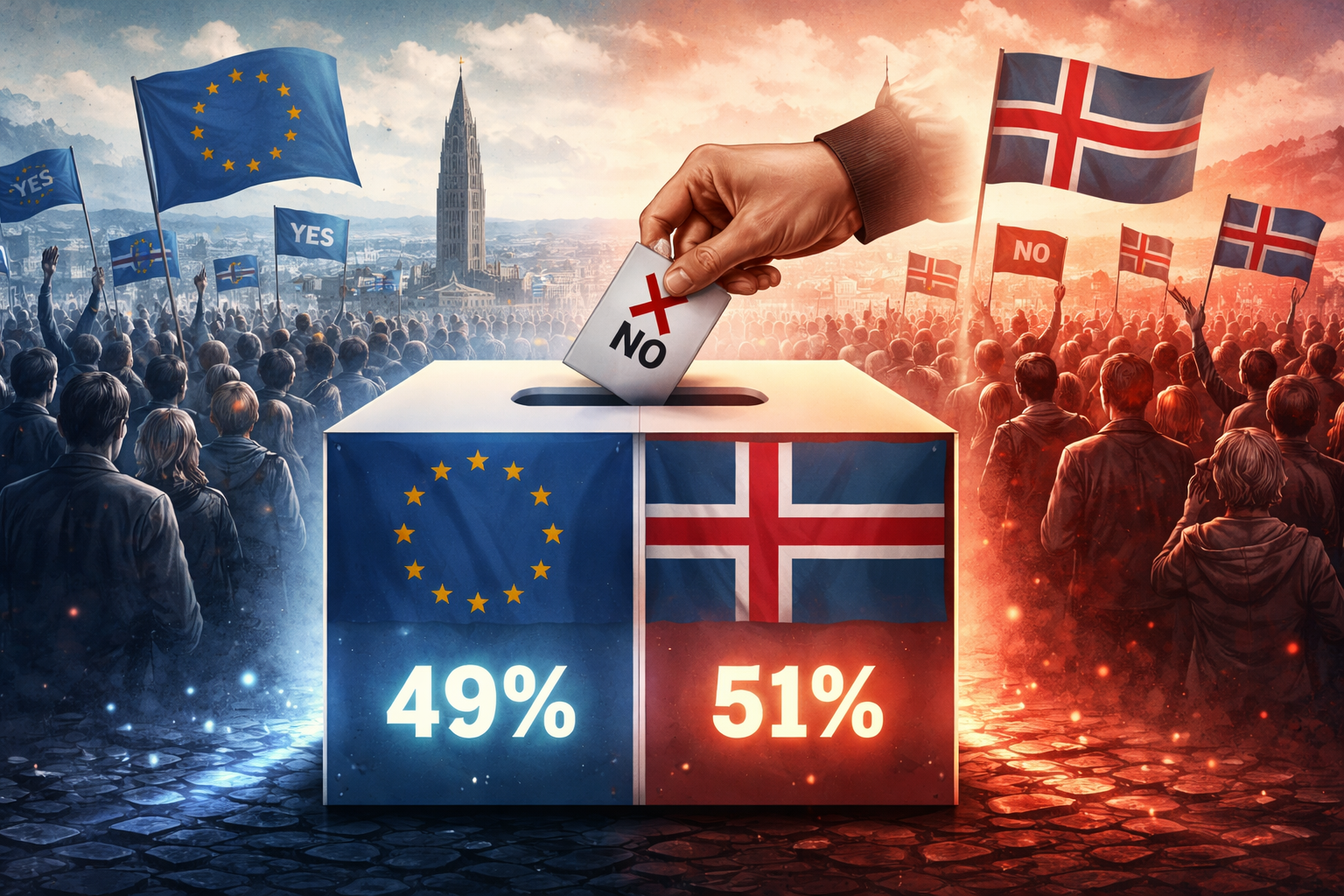
As the vote closed with 52.8% against and 47.2% for reopening accession talks, reactions spread across Europe, from Eurosceptics celebrating to Brussels expressing respect for Iceland’s choice. This article explores the results, the campaign dynamics, and the implications for Iceland and the EU. The information is based on detailed reporting from the Guardian.
Referendum Outcome and Government Response
The no camp triumphed with 52.8% of the vote, as stated early Sunday, leaving the yes camp at 47.2%. Prime Minister Kristrún Frostadóttir acknowledged the narrow margin and called for respect toward those who supported EU talks. However, she confirmed that reopening membership discussions would not progress under the current government. Frostadóttir also mentioned the government’s intention to consider formally withdrawing Iceland’s EU application, originally submitted in 2009 after the financial crisis but paused in 2013 pending a public referendum.
Campaign Influence: Sovereignty, Funding, and Misinformation
The no campaign effectively leveraged concerns about national sovereignty and protection of Iceland’s fishing waters, which resonated strongly with many voters, especially in rural areas. Hulda Þórisdóttir, a political science professor at the University of Iceland, noted that the no side’s access to much larger financial resources helped sway public opinion amid misinformation. Some voters feared hypothetical EU army conscription and questioned the need to move beyond the European Economic Area agreement, which Iceland currently benefits from.
Urban voters, particularly in Reykjavik, showed greater support for the yes side, reflecting differing economic perspectives and priorities. The government had positioned the referendum as a crucial “now or never” moment, accelerated by heightened Arctic geopolitical tensions.
International Reactions and Broader Implications
European far-right and Eurosceptic figures quickly praised the vote. Marine Le Pen of France remarked, translated from her social media post, “At a time when some push for greater federalism and transfer of sovereignty to the European Commission, this vote reminds us another Europe is possible, a Europe of free, sovereign nations collaborating voluntarily on common interests.” Nigel Farage congratulated Iceland for maintaining its independence.
Meanwhile, in Brussels, the European Council president António Costa affirmed respect for Iceland’s democratic choice and emphasized that Iceland remains one of the EU’s closest and most trusted partners. The EU had shown willingness to compromise on sensitive issues like fishing rights, yet the Icelandic referendum outcome reflects deep-rooted concerns about national control over natural resources and governance.
Looking Forward: Divides and National Unity
Prime Minister Frostadóttir expressed hope that the outcome would not leave the nation divided and acknowledged the differences in opinion across Iceland’s population. She committed to addressing the concerns raised by rural voters about agriculture, fisheries, and natural resources. Despite the loss, she maintained optimism about the country remaining open to various outcomes in the future.
The referendum has put a temporary halt to Iceland’s EU ambitions but has also highlighted the complex interplay of geopolitical factors, economic interests, and national identity in shaping the country’s path forward amid global uncertainty in the Arctic region.