

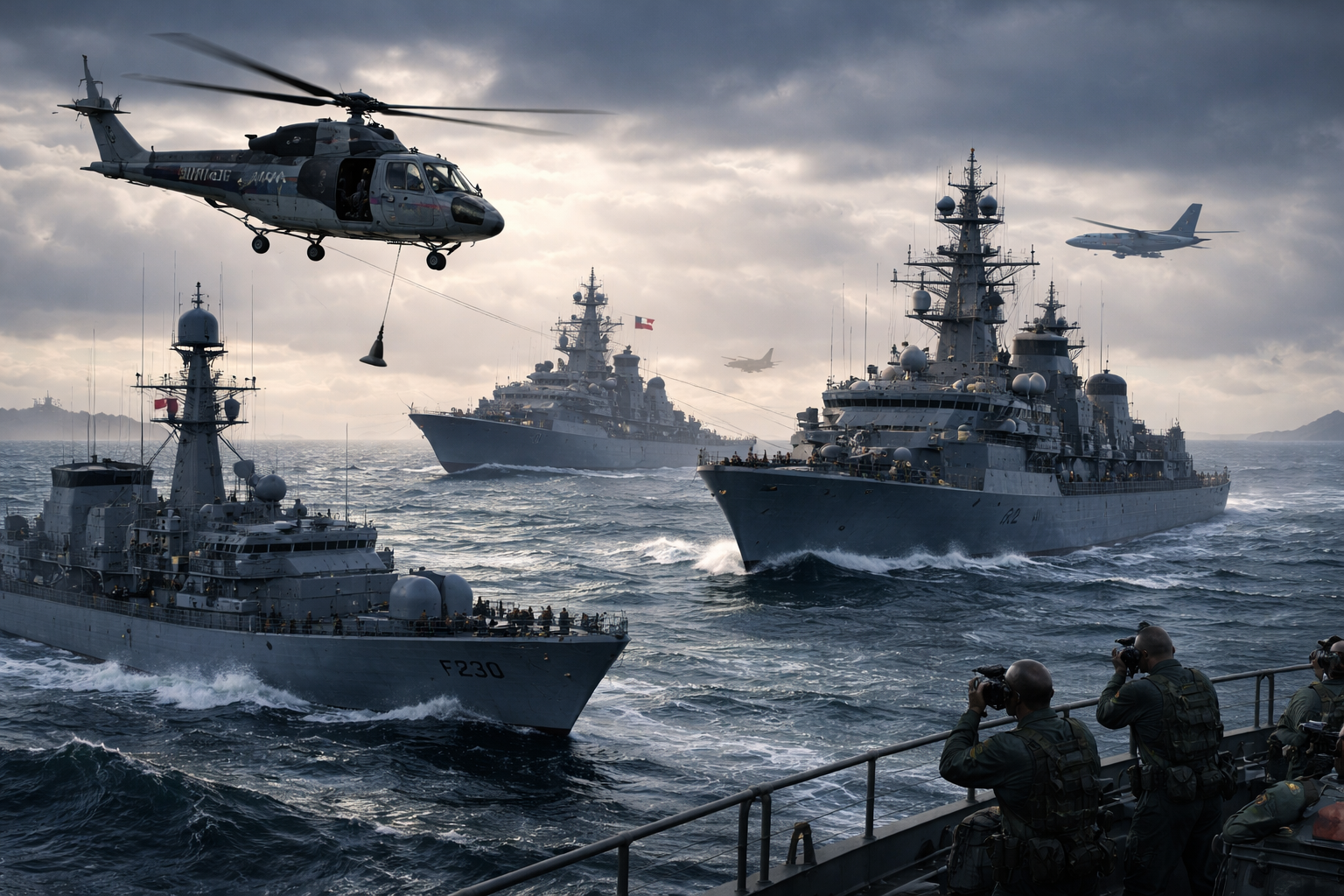
Royal Navy intensifies monitoring of Russian naval movements in UK waters over a continuous 72-hour operation
The Royal Navy conducted an intense three-day operation last week to track Russian vessels passing through UK maritime zones, underscoring growing concerns over Russian naval activity near British shores. This operation involved sustained radar surveillance of four ships navigating from the North Sea into the English Channel.
The task was carried out by HMS Duncan, HMS St Albans, and HMS Severn, with additional support from a Merlin helicopter providing aerial intelligence. Among the vessels monitored was the Russian destroyer Admiral Levchenko, escorting cargo ships General Skobelev and Sparta, both currently under UK sanctions.
Russia responded by deploying its own military ships, including the Neustrashimy frigate, to safeguard the sanctioned shipment, highlighting escalating tensions in the region. These developments follow warnings by the Royal Navy about increased Russian naval presence in UK waters earlier this year. This report is based on information from official UK naval sources.
Escalating naval shadowing between Royal Navy and Russian fleet
The continuous tracking effort comes amid a rise in Russian naval activity, with UK authorities noting a 25% increase in Russian ships monitored in UK maritime zones compared to the previous year. July saw a 21-day surveillance stretch, noticeably longer than prior observations, particularly in the Dover Strait and the North Sea where Russian warships have been persistently spotted.
The Royal Navy’s First Sea Lord, General Gwyn Jenkins, emphasized that there is no room for complacency regarding these shadow fleets, which pose what he described as an unacceptable risk to UK security. He stated that the UK and its allies’ vigilance forces Moscow to divert Russian warships from their main objectives, maintaining readiness to act if necessary.
Recent UK measures and escalating geopolitical tensions
In a marked escalation, British forces seized the Russian tanker Smyrtos in June, marking the first direct boarding of a sanctioned shadow fleet vessel by Royal Marines. The UK has sanctioned over 500 such vessels, underscoring increasing efforts to disrupt Russian maritime logistics.
These naval confrontations occur alongside geopolitical tensions fueled by British Prime Minister Andy Burnham’s recent visit to Kyiv. His promise of military aid, including missile component blueprints, has drawn Kremlin ire. Russian officials have accused the UK and its allies of “playing with fire” and have not ruled out so-called “semi-military” retaliatory actions, raising concerns about possible covert strikes on British defence infrastructure such as drone manufacturing facilities.
Outlook on UK-Russia maritime security dynamics
The Royal Navy’s robust presence in UK waters serves as both a deterrent and a monitoring mechanism against increasing Russian naval incursions. British military officials continue to stress vigilance and preparedness in the face of evolving threats. The recent three-day operation exemplifies the UK’s strategic commitment to safeguarding its maritime borders and countering destabilizing Russian activities near its critical waterways.