

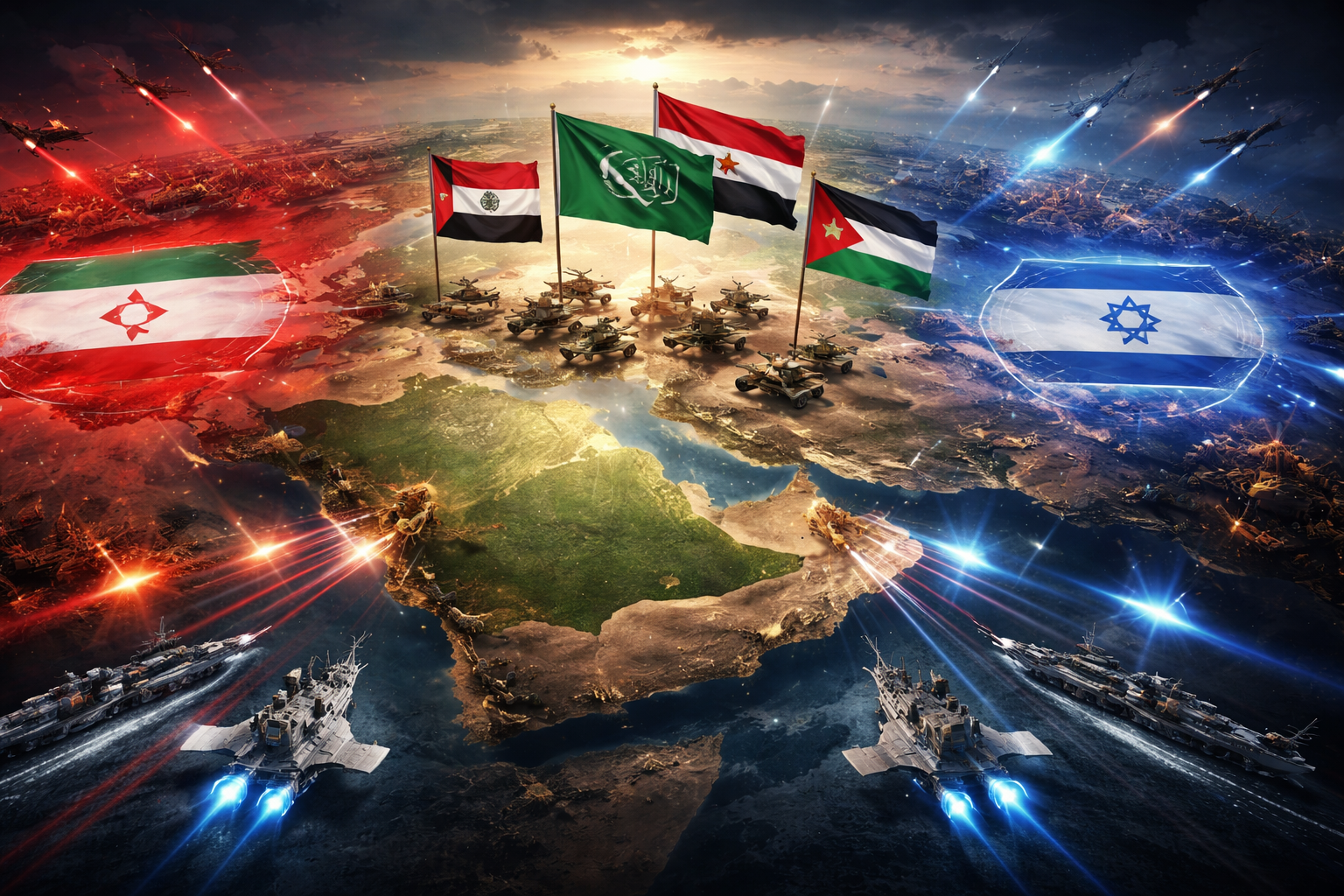
Saudi Arabia, Turkey, and Pakistan signed the Mecca Joint Defense Agreement, a historic pact intended to enhance collective deterrence against aggression in the Middle East. The alliance, signed by the leaders of these Sunni Muslim-majority countries in Mecca, aims to increase regional cooperation amid ongoing threats, particularly focusing on countering Iran and Israel’s growing influence.
While the agreement has been likened to a NATO-style alliance, analysts note that it functions more as a deterrent than a promise of military intervention. Experts point out that Turkey and Pakistan, both maintaining relations with Iran and the United States, are unlikely to engage directly in conflicts involving Saudi Arabia’s regional tensions.
Focus on Deterring Iran and Israel
The pact is widely understood as a strategic move to prevent either Iran or Israel from dominating the Middle East region. Though the agreement is officially defensive and open to other regional partners, observers emphasize it serves as a third power bloc designed to counterbalance the influence of these two nations without launching direct combat operations.
Saudi Arabia faces ongoing threats, including attacks from Iran-aligned Houthi rebels in Yemen, yet neither Turkey nor Pakistan has responded militarily to such incidents. Instead, the alliance is seen as an “elastic defense pact” offering layered deterrence for Saudi Arabia during this uncertain period.
Complementary Capabilities Among Members
Each member brings different strengths to the alliance. Saudi Arabia offers vast oil wealth but lacks advanced defense technology, historically relying on the United States. Turkey contributes a sophisticated defense industry and military capacity while seeking investment, and Pakistan brings a nuclear deterrent and military institutions but requires financing and industrial support.
The pact could foster technology sharing and investment among the three countries to enhance their collective defense capabilities over time rather than immediate coordinated military action.
Regional and International Reactions
The agreement complicates regional dynamics, especially between Turkey and Israel, whose relations are currently strained due to Israeli actions in Gaza and Syria. Saudi Arabia and Pakistan do not officially recognize Israel, further heightening tensions.
Iran’s response has been mixed. While some Iranian officials welcomed Muslim unity as a way to resist external interference, others criticized Saudi Arabia’s reliance on alliances, doubting the pact’s ability to offer security.
Despite these tensions, the Mecca pact does not replace existing agreements and remains formally open to neighboring countries, though none have joined so far.