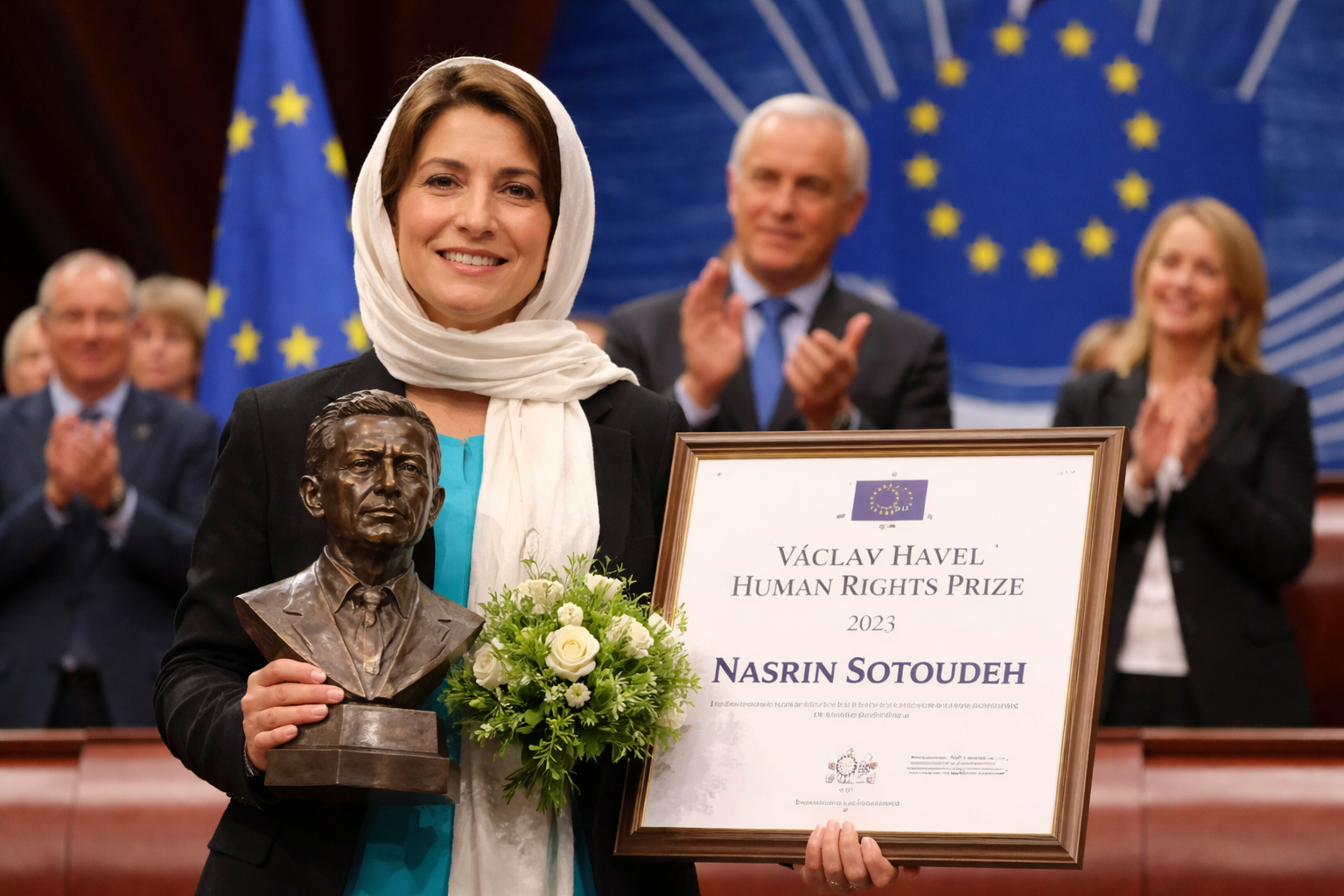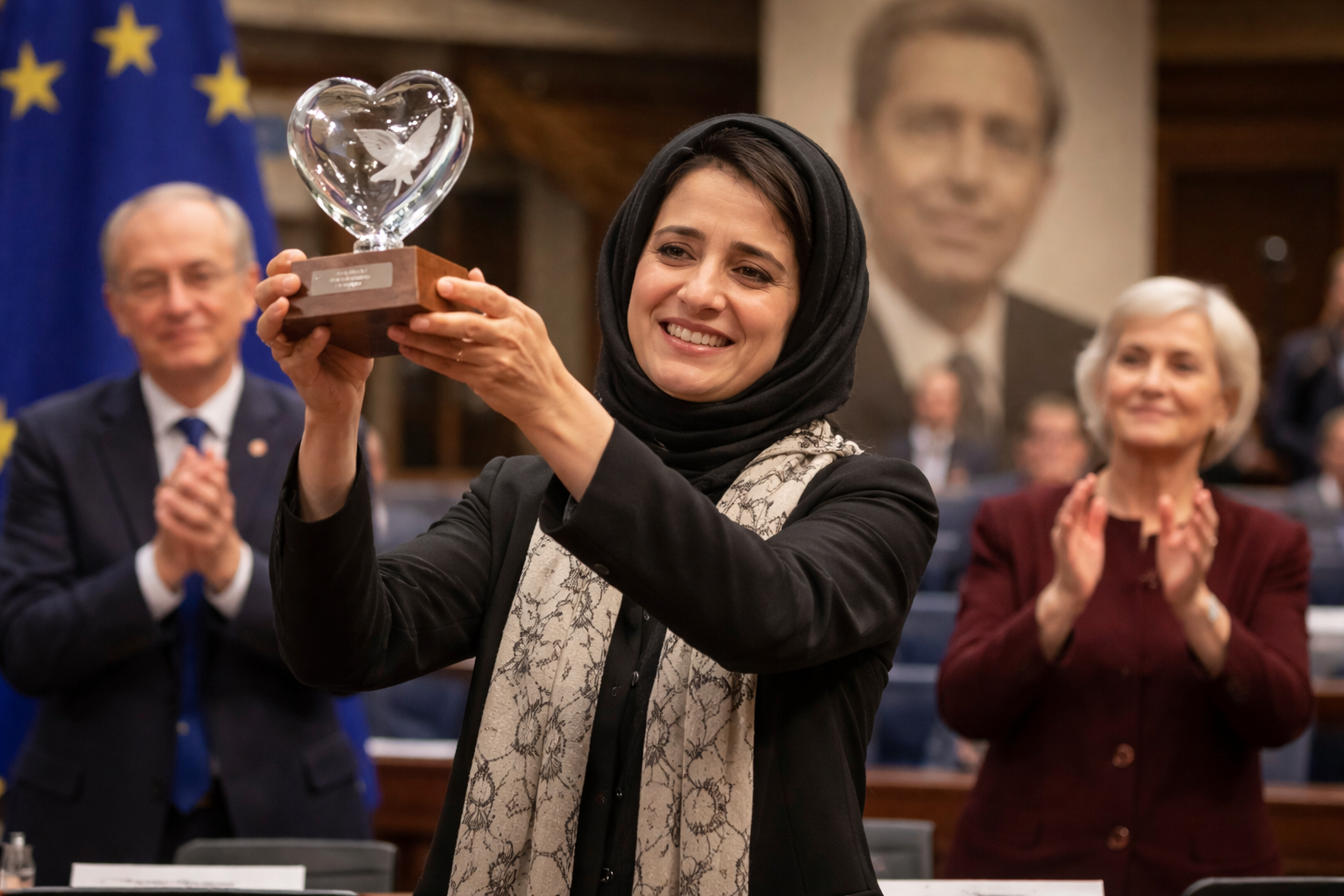
Human rights lawyer Nasrin Sotoudeh, a prominent Iranian activist, has been awarded the Vaclav Havel Human Rights Prize by the Council of Europe. The prize honors her longstanding commitment to defending human rights in Iran despite enduring repeated arrests and imprisonment.
Selected as one of three finalists for the 2026 prize, Sotoudeh was recognized alongside Iranian-American journalist Masih Alinejad and Hungarian human rights lawyer Marta Pardavi. The Vaclav Havel Prize celebrates outstanding civil society actions in defense of human rights across Europe and beyond.
The Council of Europe highlighted Sotoudeh’s advocacy against mandatory hijab laws and the death penalty, activities she pursued despite significant personal risk and severe penalties.
A Lifelong Advocate for Women’s and Political Rights
Nasrin Sotoudeh has focused her legal career on representing women, political prisoners, religious minorities, journalists, and individuals condemned to death. She is known for her defense of activists protesting Iran’s compulsory hijab mandate and broader human rights abuses under Iranian judicial enforcement.
Her resilience despite imprisonment exemplifies her determined activism. In 2019, she was sentenced to 33 years in prison and 148 lashes, a sentence tied to her legal work defending women protesters. While incarcerated at Tehran’s Evin Prison, Sotoudeh protested conditions through a hunger strike in 2020 and continued to advocate for prisoner rights.
International Recognition of Her Work
Sotoudeh’s dedication has brought international attention. She was honored with the European Parliament’s Sakharov Prize in 2012, though she was in prison at that time and unable to receive it in person. In 2020, she was awarded the Alternative Nobel Prize, known as the Right Livelihood Award, which she also learned about while detained.
Her role as a leading voice has persisted amid national upheaval in Iran, especially during the 2022 “Woman, Life, Freedom” protests sparked by the death of a young woman in police custody because of hijab laws. Sotoudeh’s activism symbolizes ongoing resistance to political and social repression in Iran.
Legacy and Ongoing Impact
Alongside the prize recognition, Sotoudeh’s story has been featured in exhibitions showcasing the creativity and resistance of Iranian women imprisoned for political reasons. These displays include art and handcrafted items made inside Evin Prison, representing the courage of women detainees and their hopes for freedom.
After her latest arrest in April 2026, Sotoudeh was released on bail in May, continuing to face ongoing challenges from the Iranian regime. The Council of Europe’s €60,000 prize reaffirms her significance as a human rights defender and highlights the risks faced by activists inside Iran.