
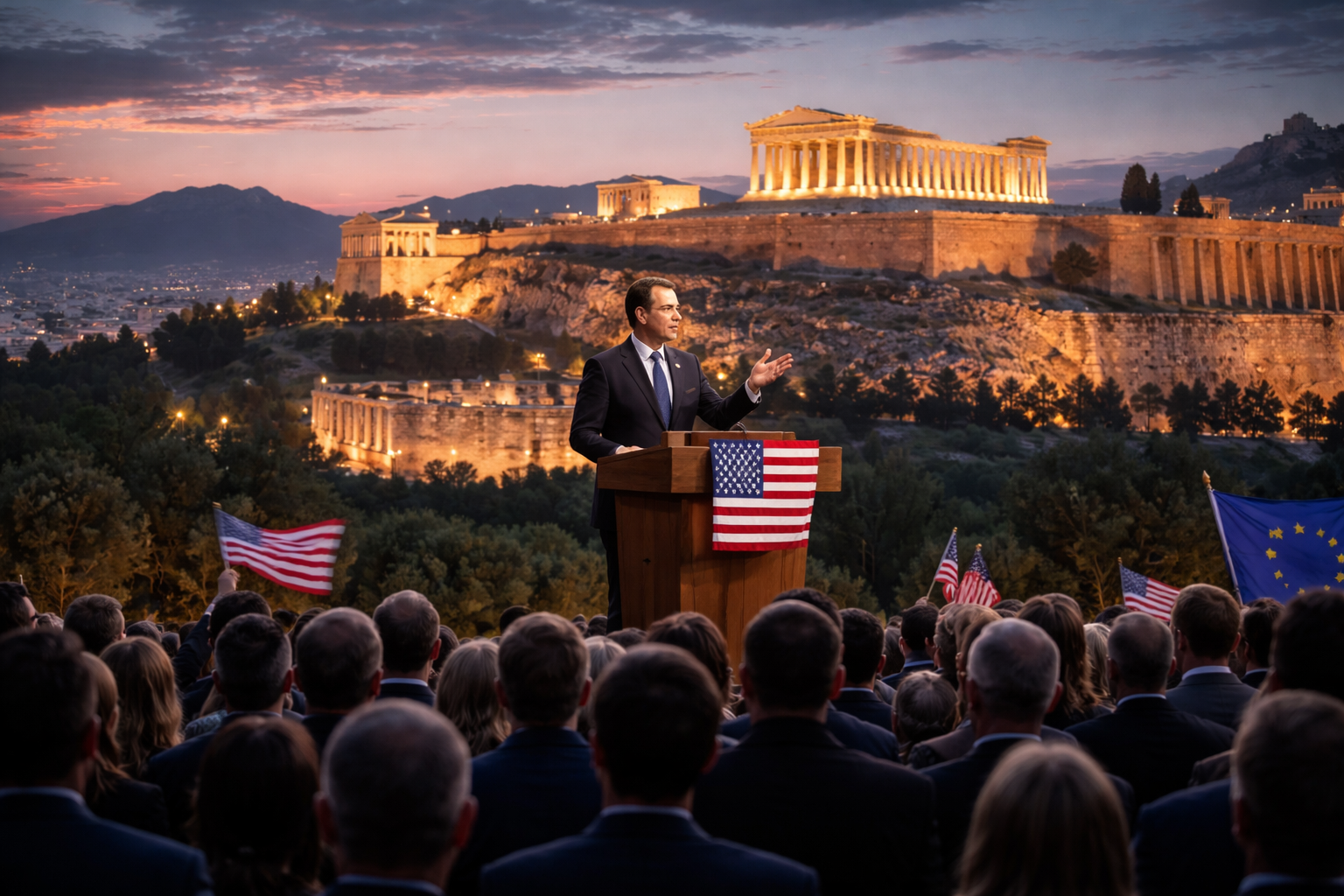
U.S. Secretary of State Marco Rubio delivered a wide-ranging speech in Athens on Wednesday, invoking historical legacies and his own heritage to advocate for a resurgence of nationalism and the “America first” approach attributed to former President Donald Trump. Addressing an audience of Greek and European officials against the backdrop of the Parthenon, Rubio urged Europe to “awaken from its long slumber” and reject a future marked by decline, servitude, and loss of influence.
In his address, Rubio framed the West at a critical juncture, highlighting challenges such as illegal immigration, manufacturing outsourcing, and ideological divisions. He defended America’s “unapologetic pursuit of national power,” emphasizing efforts under Trump’s administration to control supply chains, revitalize industry, and maintain technological dominance.
Call to Renew Western Strength and Partnerships
Rubio criticized what he described as a globalist agenda that has undermined national pride, stating, “The word nationalism became a dirty word, so we tore down our monuments.” He stressed the need for the West, led by the US and its allies, to reclaim its position at the forefront of global affairs.
Highlighting Greece as a model ally, particularly in defense and energy cooperation, Rubio encouraged European countries to follow its example and deepen partnerships with the United States. He praised rising European defense spending and an increase in manufacturing and production, expressing hope that Europe can reignite the legacy of its ancient civilizations.
Historical Themes and Personal Reflections
The speech traced historical continuity from ancient Athens through Rome and medieval Europe to the founding of the American republic. Rubio attributed American character to these legacies, mentioning figures like Christopher Columbus and Hernán Cortés as bearers of a frontier spirit despite their controversial histories.
Rubio also connected the speech to his own family history, noting he is a great-grandson of Spanish settlers and emphasizing a lasting debt to the transatlantic ties between Europe and America.
Geopolitical Context and Transatlantic Tensions
Rubio’s address came amid strained U.S.-European relations characterized by disputes over Ukraine policy, U.S. military involvement in Iran, NATO disagreements, including Greenland sovereignty, and ideological rifts within American political leadership.
He acknowledged these tensions but stressed the necessity of maintaining the U.S.-Europe alliance to address contemporary global threats. Rubio cited the recent U.S.-Denmark-Greenland agreement as an example of efforts to strengthen NATO’s security, particularly in the Arctic region.
His speech suggested that the Trump-era geopolitical stance favoring assertive national power and skepticism toward globalism may continue to influence U.S. foreign policy beyond the current administration, as reflected by remarks from other Republican officials.