In Kherson, Ukraine, the Richelievsky hotel now serves as a sanctuary for displaced people living on the city’s frontline, just across the river from Russian forces. With nightly drone patrols and continuous artillery explosions, the hotel’s manager, Yevhen Emtsov, oversees a fragile refuge where civilians seek safety amid relentless attacks and blackouts.
Located less than a kilometer from the Dnipro River—the frontline since Ukrainian forces recaptured Kherson in November 2022—the Richelievsky has transformed from a commercial hotel hosting tourists and conferences into a shelter for those fleeing conflict zones. Rooms and meals are provided at no cost, housing around 41 residents despite a pre-war capacity of 120.
A Night of Drones, Explosions, and Darkness
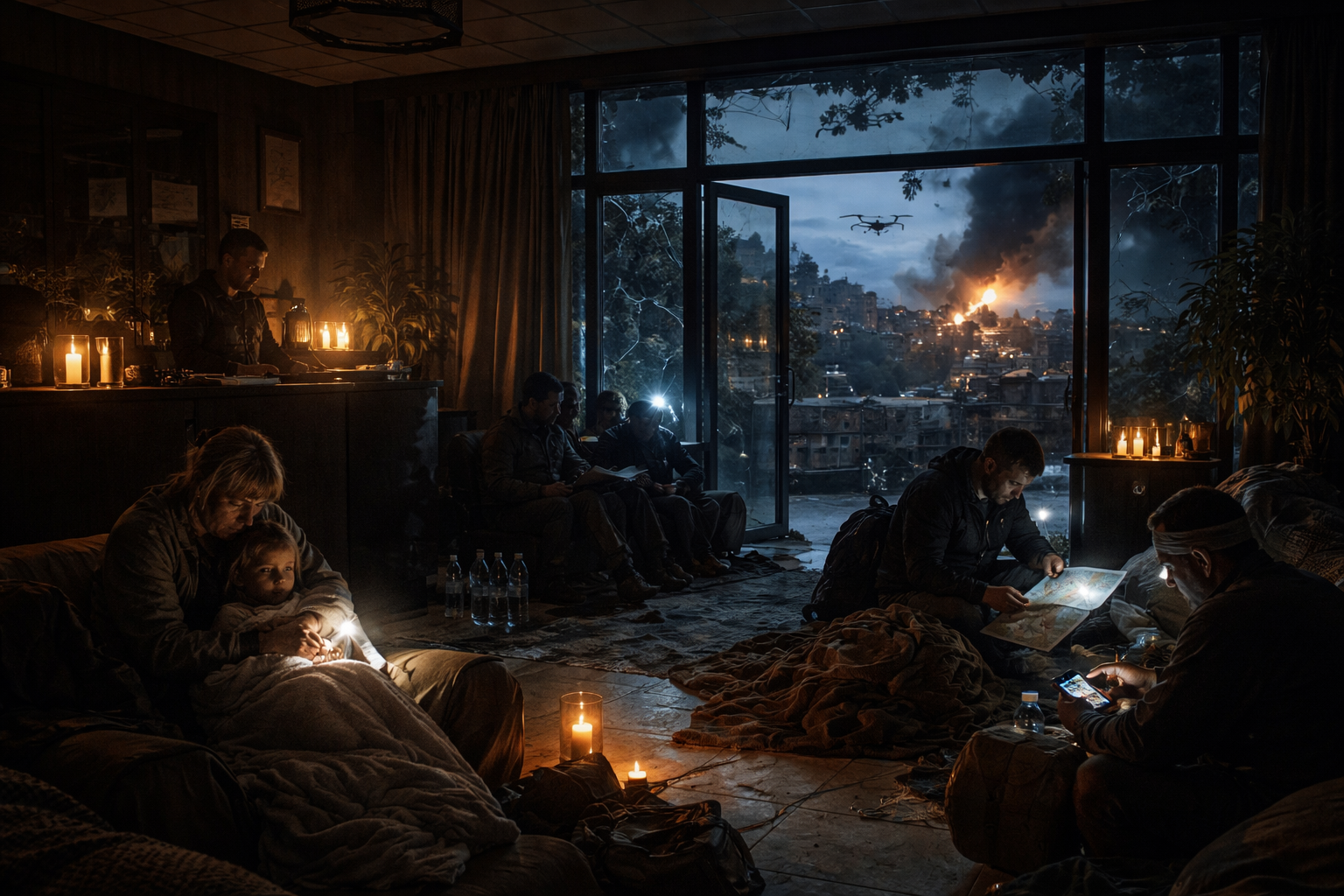
When night falls, the hotel enforces a strict rule: curtains must be closed to avoid detection by Russian drone operators, who are known for targeting civilians in what has been described as a “human safari.” The blackout plunges Kherson into darkness, with only distant explosions and the drone’s mechanical hum breaking the silence.
“Drones and artillery can be heard throughout the night,” Emtsov said. “By morning, you will be able to smell the smoke.” Despite the danger, no one is turned away. The hotel continues to operate as a hub providing shelter, even as conditions worsen and resources grow scarce.
Daily Life Amid Danger and Loss
Residents like Nina and Viktor Tsokurenko start their day quietly, coping with trauma as explosions persist outside. Viktor, who has difficulty speaking after a stroke, and Nina recall sleepless nights following nearby blasts.
Tatyana Nesterchuk, a long-term resident, commutes daily through dangerous parts of Kherson to work, carrying an emergency bag with cherished possessions. Her home has been destroyed, leaving only memories of peaceful mornings before the war.
Eleven-year-old Alisia Logvinenko, the only child resident, highlights the war’s impact on her childhood with her mother, Iryna. While most of her childhood friends have left Kherson, Alisia finds comfort in her online YouTube channel, sharing moments of joy during a grim time.
Ongoing Threats and Uncertain Futures
The hotel remains under constant threat. Recently, a Russian FPV drone attacked a van carrying Emtsov and helpers returning from gathering supplies. Though they escaped injury, the incident underscores the risks involved in keeping the shelter operational.
“As a hotel, we will not be able to operate,” Emtsov said. “But as a hub, we will continue for as long as we have enough strength.” Efforts are underway to find safer places for vulnerable residents like Iryna and Alisia to relocate, with charities seeking options in Odesa.
For now, life in the Richelievsky hotel continues amid a precarious frontline environment—offering refuge and resilience where few other choices remain.