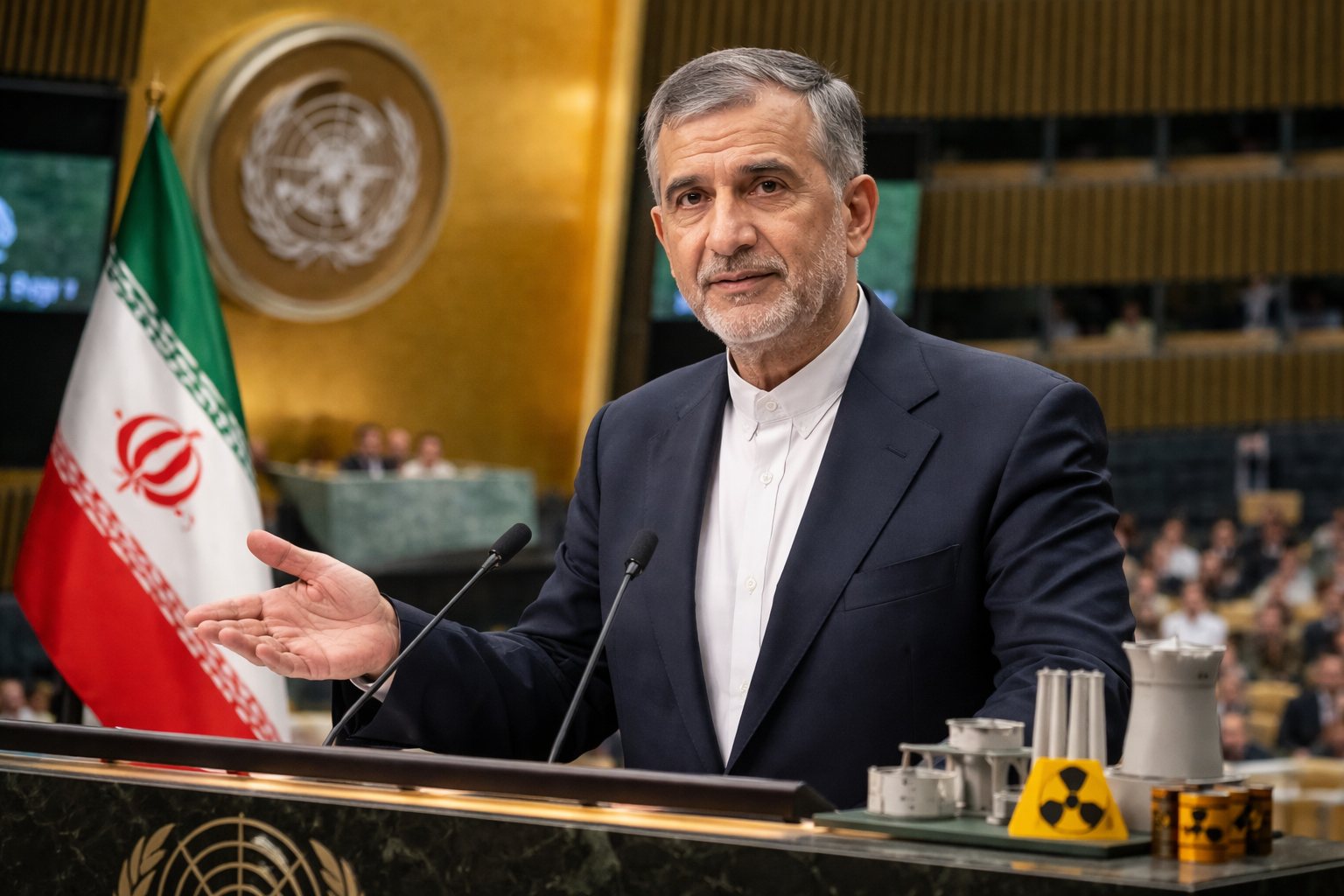

An Iranian official, Masoud Pezeshkian, attending the United Nations General Assembly this week in New York, indicated Iran’s willingness to make concessions on its nuclear program. In an interview with Fox News, Pezeshkian said Iran would comply with its international obligations under the Nuclear Non-Proliferation Treaty and rejected the notion that Iran seeks nuclear weapons.
Though diplomatic breakthroughs remain unlikely soon, experts suggest Pezeshkian’s visit could open communication channels between Tehran and Washington, with possible frameworks for future negotiations emerging in New York.
Nuclear Dispute and Compliance Signals
During the interview, Pezeshkian emphasized Iran’s commitment to legal obligations concerning nuclear material, despite the International Atomic Energy Agency (IAEA) reporting that Iran has enriched uranium up to 60%, far beyond civilian needs. He referenced religious rulings declaring weapons of mass destruction as forbidden for Iran, firmly denying any intent to develop nuclear arms.
Since reported US-Israeli attacks on Iranian nuclear sites in 2025, Iran has suspended cooperation with the IAEA, which continues to seek access and updated information on Iran’s nuclear materials.
Diplomatic Prospects Amid Hardliner Influence
Iran expert Arman Mahmoudian from the University of South Florida noted that Pezeshkian lacks authority to initiate broad de-escalation. Hardliners and the Islamic Revolutionary Guard Corps maintain significant sway over decision-making. Nevertheless, Mahmoudian sees potential in the visit fostering direct communication and establishing a negotiation road map.
Recent meetings between Iranian and US delegations, described as “positive and constructive” by the White House, suggest preliminary diplomatic engagement may be advancing.
Leverage Through Strategic Shipping Routes
The Strait of Hormuz remains pivotal in US-Iran tensions, with Tehran reportedly proposing conditions for reopening the vital oil corridor. Iran’s demands likely include the release of frozen assets, lifting port blockades, and assurances against US interference in its internal affairs.
The US has struggled to fully neutralize Iran’s naval threat in the strait, and the conflict’s expansion to Yemen’s Bab al-Mandab Strait, controlled by Iran-backed Houthis, adds another layer of strategic leverage for Tehran over major shipping lanes.
Balancing Military Pressure and Negotiations
Mahmoudian anticipates Iran will persevere with a dual strategy, applying military pressure via critical waterways while engaging in diplomatic talks either directly or through intermediaries. Iran’s ongoing rebuilding of military infrastructure suggests preparation for continued tensions but an understanding that the current standoff is unsustainable in the long term.
US officials emphasize that reaching a deal will require time and complex negotiations, with military options maintained alongside diplomacy.