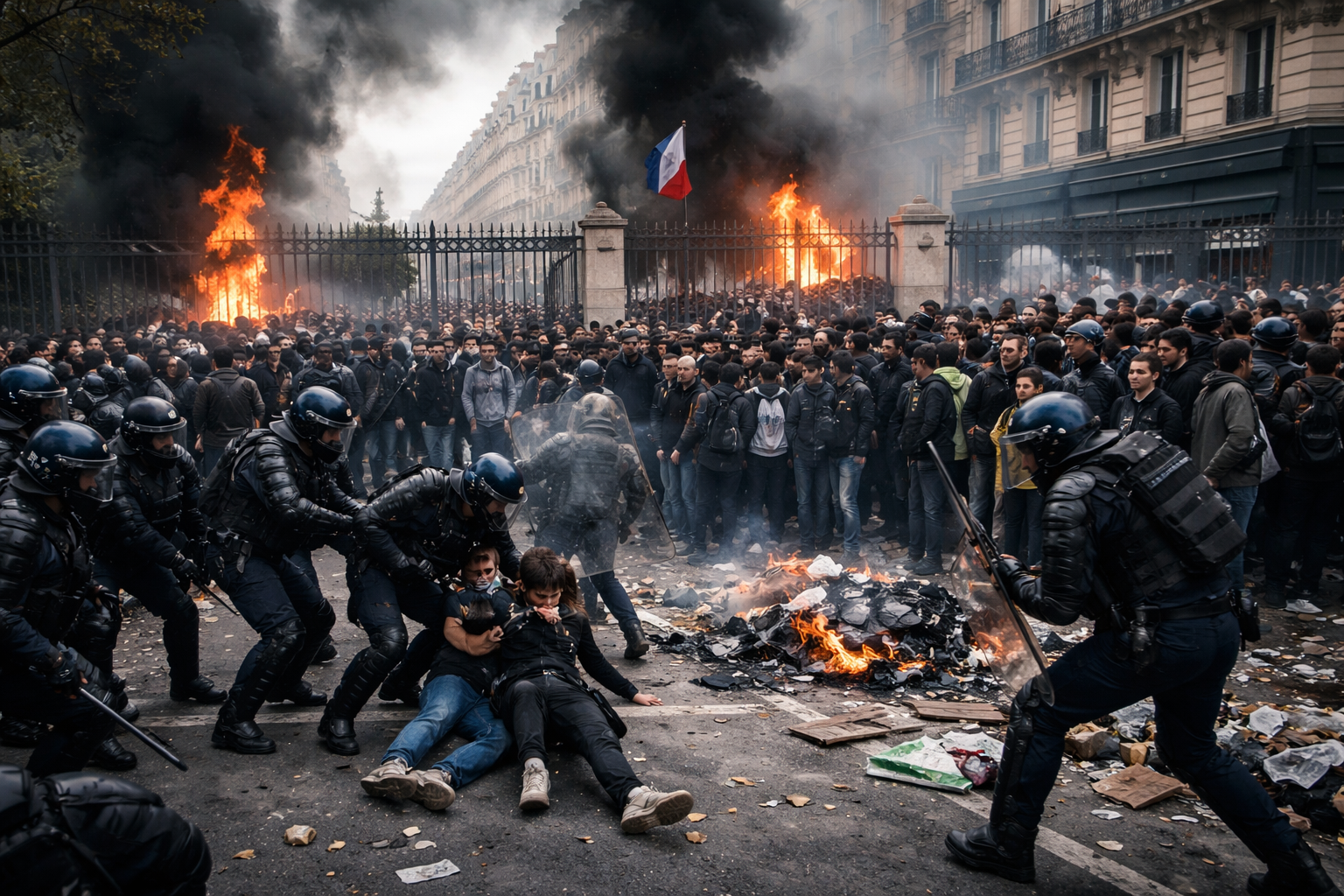

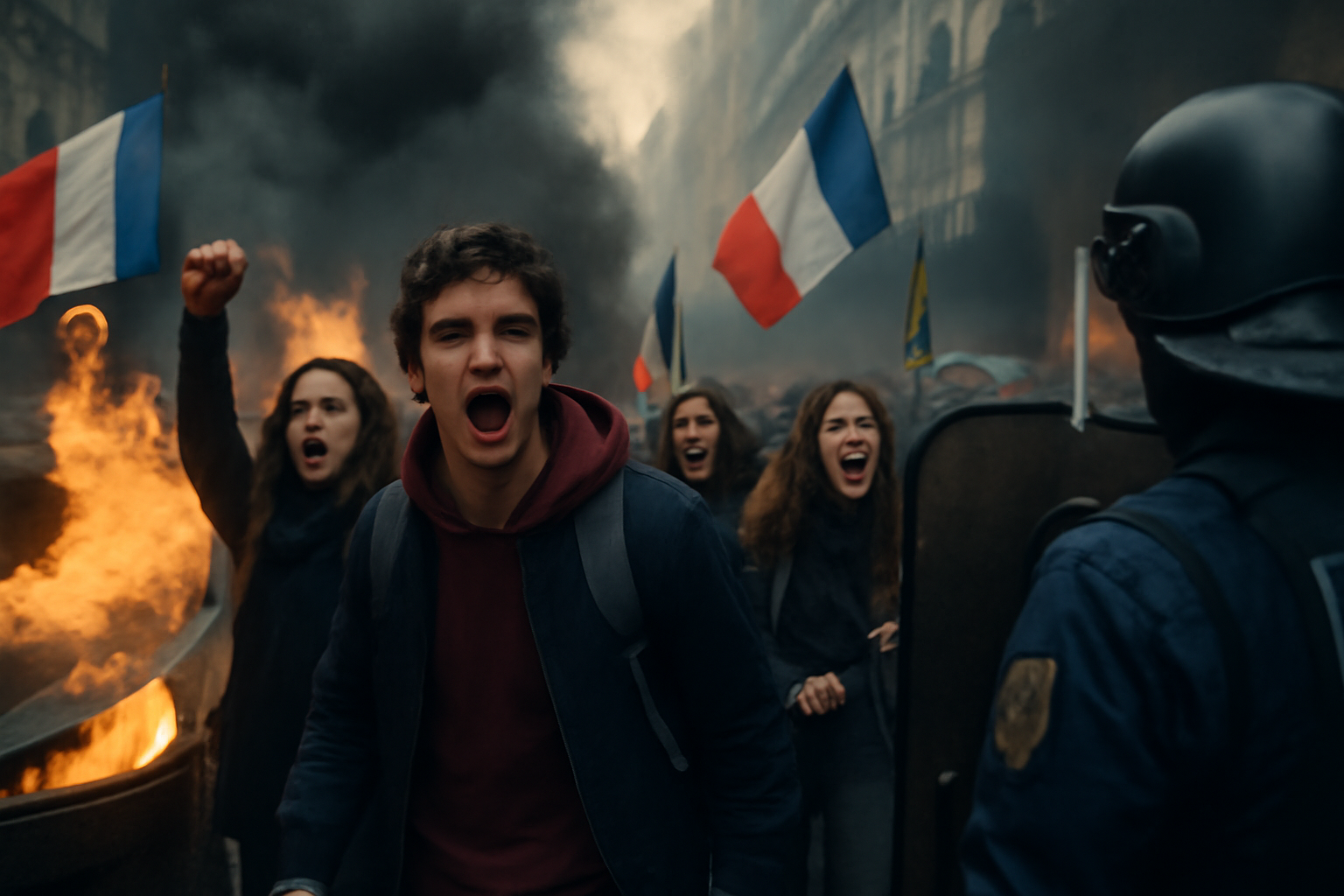
Protests by high school students over long hours, teacher shortages, and deteriorating facilities have intensified into widespread unrest and violence, prompting French officials to take emergency action. The prime minister convened a crisis cabinet meeting on Thursday to address the expanding disruptions to public education.
The unrest began last week in the Paris region but has quickly spread nationwide. Authorities reported about 900 demonstrations, blockades, and related incidents outside high schools, resulting in over 160 school closures. In addition, access to approximately 30 university campuses, including those in Paris and Marseille, was blocked on Thursday.
Escalation of Violence and Disruptions
French officials described the situation as “urban violence” that threatens the continuity of education and puts students and staff in danger. Nearly 3,000 students aged 15 to 18 have been detained since the protests began, with almost 2,000 arrested on Thursday alone. Police have deployed riot units to control the increasingly aggressive demonstrations, which have included setting rubbish bins on fire, arson attempts inside some schools, and destruction of public property such as bus stops.
The education ministry announced plans to switch many schools to online teaching to safeguard teachers and pupils amid the unrest. A senior government office emphasized that the surge in violence made it nearly impossible to maintain normal school operations.
Student Grievances and Responses
Students have cited several grievances, including overloaded schedules, overcrowded classrooms, inadequate staffing, and substandard infrastructure exacerbated by the effects of recent heatwaves. In cities like Strasbourg and Caen, students have pointed to insufficient budgets, building decay, and lack of basic amenities such as toilets and air conditioning.
While many educators have reported threats and attacks, some teachers expressed solidarity with the protesters. A high school Spanish teacher in Paris said she participated in blockades to protect students from confrontations with police, condemning the authorities’ use of force.
Political Reactions and Investigations
The government accused the left-wing party La France Insoumise (LFI) of encouraging the protests. Several LFI politicians have been openly supportive, including the mayor of Saint-Denis and the party’s 2027 presidential hopeful, Jean-Luc Mélenchon, who advocated for nonviolent protest methods and criticized police violence against youth demonstrators.
The interior ministry announced an internal investigation into allegations of excessive force used by police against students during recent clashes.