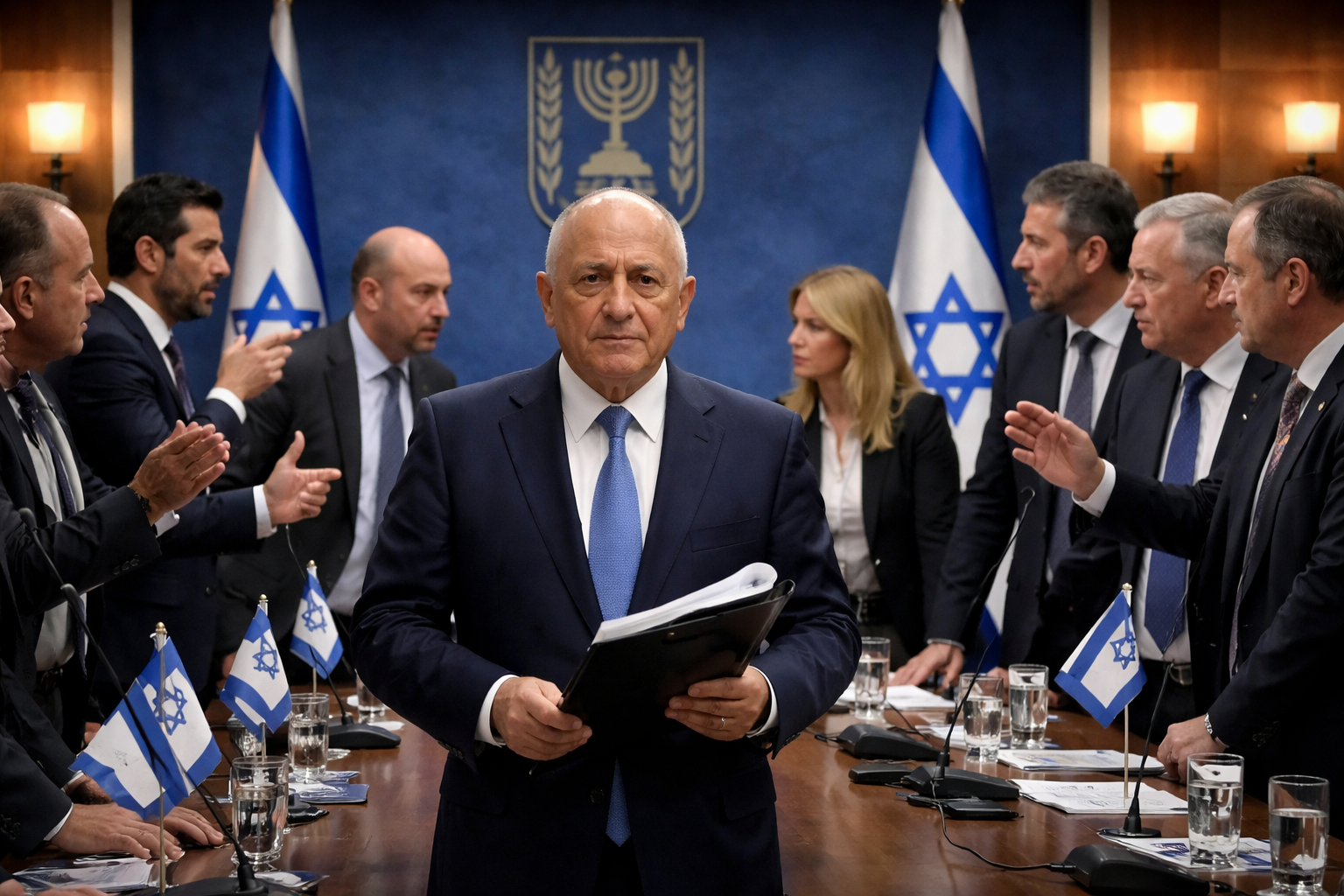
Israel’s president Isaac Herzog has officially assigned Gadi Eisenkot, leader of the centrist Yashar party, the responsibility to form a new government. Eisenkot has 28 days to build a coalition that could replace the current religious-nationalist government led by Benjamin Netanyahu, with the possibility of a 14-day extension granted by Herzog.
Herzog noted that Eisenkot received the clearest support from the majority of members of the Knesset, Israel’s parliament, when it came to the task of forming the next government. He emphasized the urgent national and regional challenges, including threats from Iran and the need to advance peace plans in Gaza and negotiations with Lebanon.
Complex Coalition Dynamics and Political Landscape
In the recent October elections, Eisenkot’s Yashar party secured 21 seats, making it the second-largest party after Netanyahu’s Likud, which holds 27 seats. Despite this, Eisenkot earned 67 Knesset members’ recommendations to form a government, compared to Netanyahu’s 46. Notably, the ultraorthodox United Torah Judaism (UTJ) party, aligned with Netanyahu in the past, abstained from recommending any candidate.
Should Eisenkot fail, Herzog may delegate the task to another Knesset member, likely Netanyahu. Failure by all contenders to form a coalition could trigger another election round.
Challenges in Coalition Building and Election Promises
Eisenkot faces a difficult divide, as Netanyahu’s religious-nationalist coalition holds 53 seats versus 48 held by Eisenkot’s bloc. Arab parties, including Ra’am and the Joint List, which together hold 19 seats, have expressed willingness to support the anti-Netanyahu bloc despite both blocs campaigning against reliance on Arab party votes. While this would require Eisenkot’s coalition to diverge from campaign promises, polls indicate significant support for including these parties to form a stable government.
Another potential ally could be the ultraorthodox parties UTJ and Shas, but their demands, especially opposition to military conscription reforms, contrast with Eisenkot’s election pledges. Shas’s leadership is also politically sympathetic to Netanyahu.
Implications for Palestinian Territories and Regional Policies
The makeup of the new government is expected to significantly affect Palestinians in the Occupied West Bank and Gaza Strip. Netanyahu’s current coalition includes far-right parties that support annexing the West Bank and resettling Gaza’s population elsewhere, policies internationally viewed as illegal or controversial.
Eisenkot has promised to eliminate Hamas’ control over Gaza within 18 months, a shift from Netanyahu’s current acceptance of Hamas’ governance there under a ceasefire agreement. While Eisenkot’s coalition includes right-wing parties, some leaders, such as Naftali Bennett, have condemned settler violence—attacks frequently supported by Netanyahu’s coalition members.