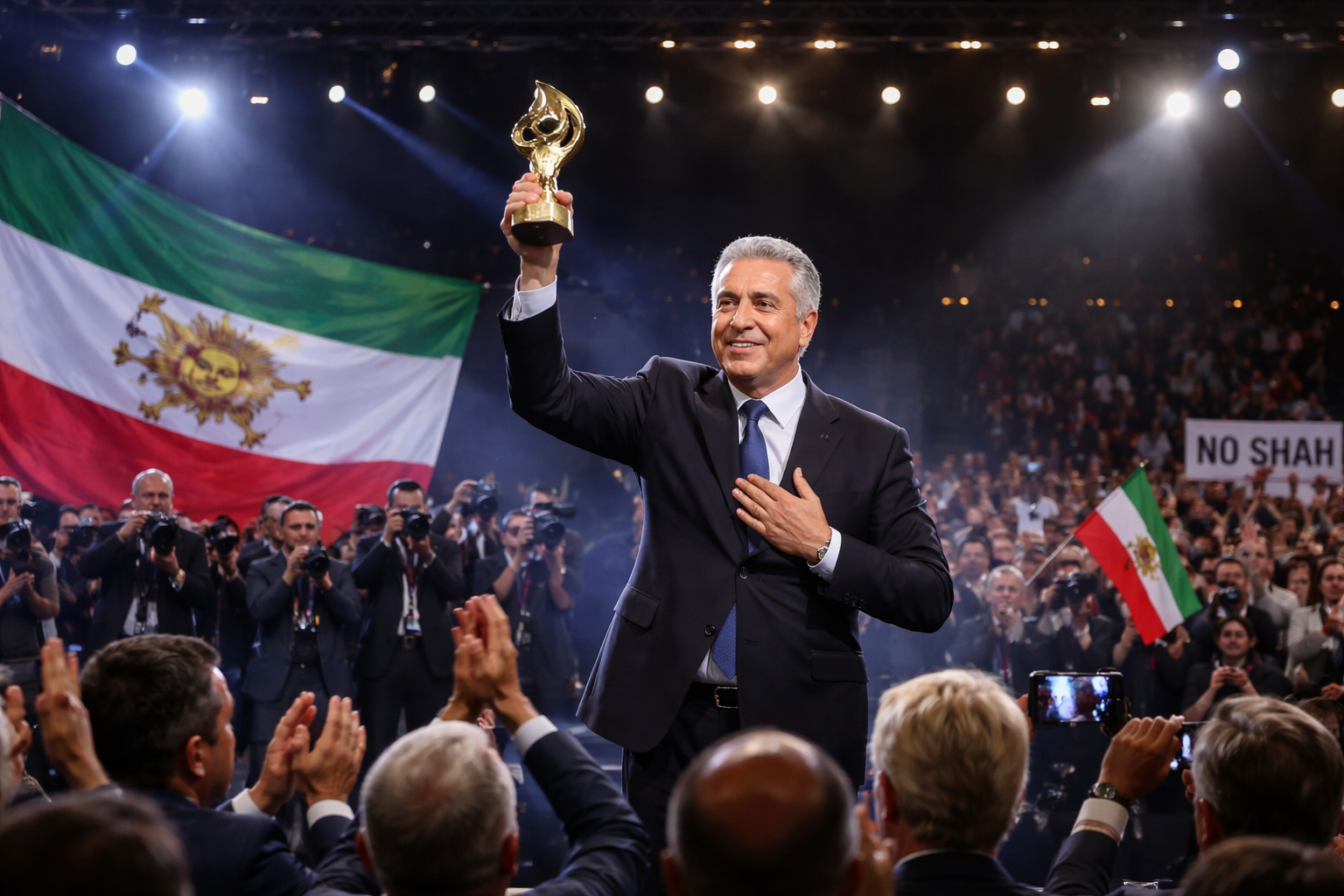
Reza Pahlavi, the son of the last shah of Iran, was honored with a “Freedom Prize” on Saturday in Frankfurt, Germany, at an event held in the historic St Paul’s Church—the site of Germany’s first elected parliament in 1848. The award was presented by the Friedrich Naumann Foundation, linked to Germany’s Free Democratic Party.
The event drew a crowd of approximately 18,000 people rallying in support of Pahlavi, highlighting his role as a prominent figure in the Iranian opposition movement. Pahlavi emphasized that Iran is a country “being prevented from practicing” democracy rather than one that needs to be taught democratic principles. He remarked that Iranians are “ready to die for the right to vote” and stressed his intention to hold the prize only temporarily until a democratically elected government is established in Tehran.
Significant Support and Symbolism
The award and accompanying rally received chants from supporters, including “Long live the shah, long live Iran!” Pahlavi has previously offered to lead a transitional government during a possible democratic transition, underscoring his commitment to leaving the choice of Iran’s future political system to a referendum rather than reinstating the monarchy by decree.
Criticism and Opposition
Despite the public backing, Pahlavi’s recognition has provoked criticism. Around 200 Iranian prisoners held in Iran signed a letter condemning the award, referring to Pahlavi as a symbol of “bygone dictatorship.” Additionally, local branches of Germany’s Social Democrats and the Greens boycotted the event, questioning his legitimacy as a representative of the Iranian people. The socialist Left Party also expressed concerns over the use of St Paul’s Church for a political gathering, citing Frankfurt city statutes.
Context and Implications
The 1979 revolution that deposed Pahlavi’s father transformed Iran into an Islamic republic dominated by Shiite clergy. Human rights organizations have reported that thousands were killed during government crackdowns on protests earlier this year. Pahlavi’s outspoken support for Israel and his family legacy contribute to the divisions within the Iranian opposition and diaspora regarding his role and legitimacy.