

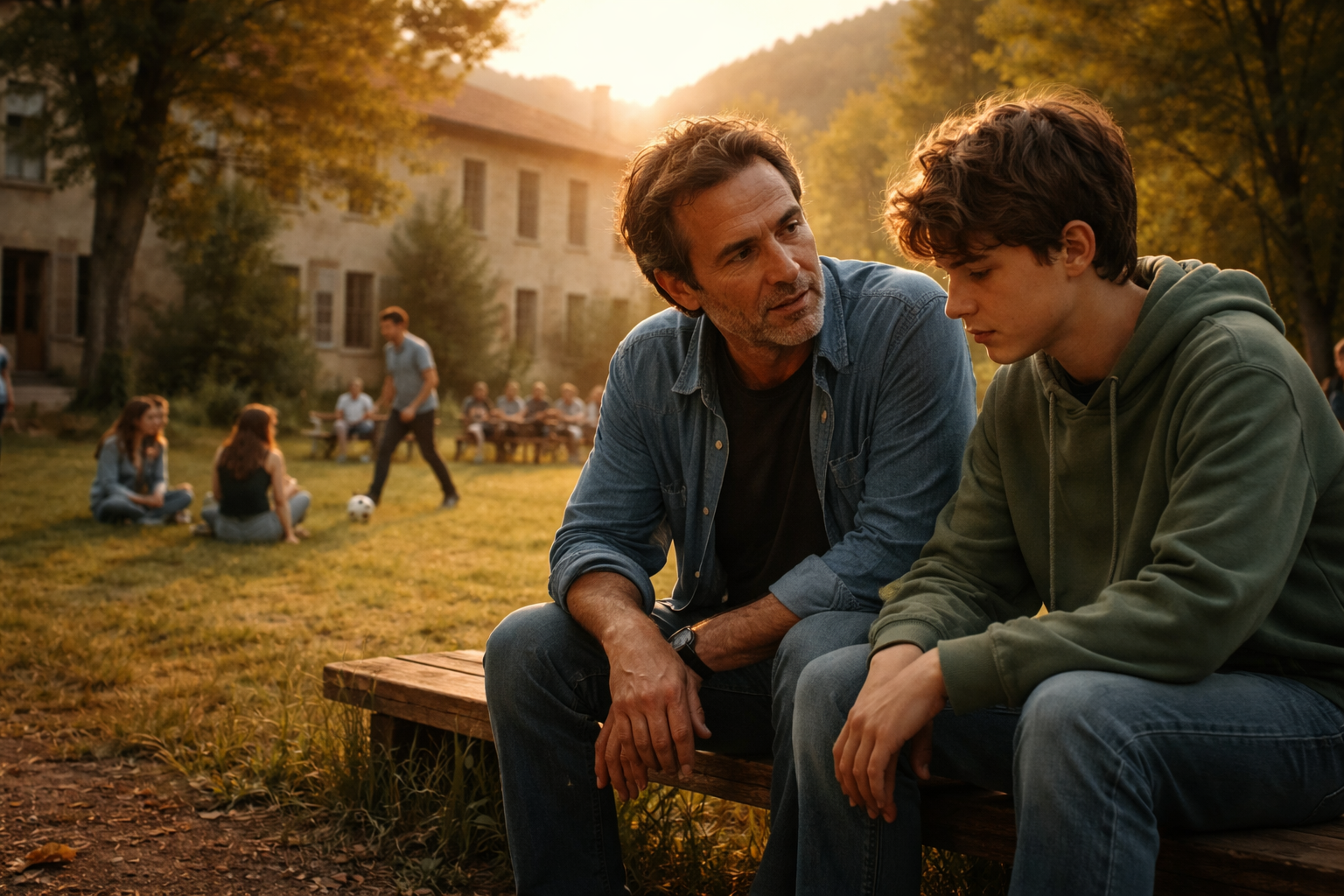
French filmmaker Cédric Kahn presents a deeply committed and compassionate portrayal of a state psychiatric institution for adolescents aged 15 to 18 in his film A Place to Heal, showcased at the Venice Film Festival. The movie blends docu-realism with narrative storytelling, spotlighting the challenges within such facilities through a narrative centered around troubled teens and their caretakers.
The film provides an unvarnished look inside the institution, with scenes unfolding in treatment rooms, recreational areas, dormitories, and interview settings. Kahn’s approach merges thoughtful forensic observation with genuine empathy, though certain acting moments verge on improvised youthful intensity. Notably, Kahn also appears as one of the senior medical staff, underscoring the burden felt by authority figures in this environment.
Central Narrative Focus: The Love Triangle
The story revolves around a fraught love triangle among three patients. Lucia, portrayed by Malou Khebizi, is a defiant, sexualized young woman with a history of abuse and a troubled relationship with her mother. She quickly becomes infatuated with Enzo (Kenji Peyran), a teenager detained for stabbing a social worker. Enzo, in turn, forms a complicated, potentially exploitative bond with Eloïse (Zoé Monpart), a quieter abuse survivor who seems more submissive and receptive to his repeated expressions of love. Eloïse is also the key figure in an escape plan that shapes the film’s climax.
Breaking Genre Boundaries
The narrative’s final act departs from the enclosed walls of the institution, following the characters beyond its confines. This shift pushes the film beyond typical genre limits and culminates in a powerful moment for Eloïse. The soundtrack’s use of Purcell’s Funeral Sentences—music famously featured in Stanley Kubrick’s A Clockwork Orange—adds an intriguing layer, juxtaposing a classical, somber tone with themes of troubled youth and harsh institutional treatment.
Comparative and Thematic Context
Kahn’s film draws parallels with other notable docu-realist works such as Laurent Cantet’s The Class, Nicolas Philibert’s On the Adamant, and Denis Côte’s That Kind of Summer. Like these, A Place to Heal combines documentary-style authenticity with scripted drama to offer a nuanced exploration of institutional life and the human stories within.