
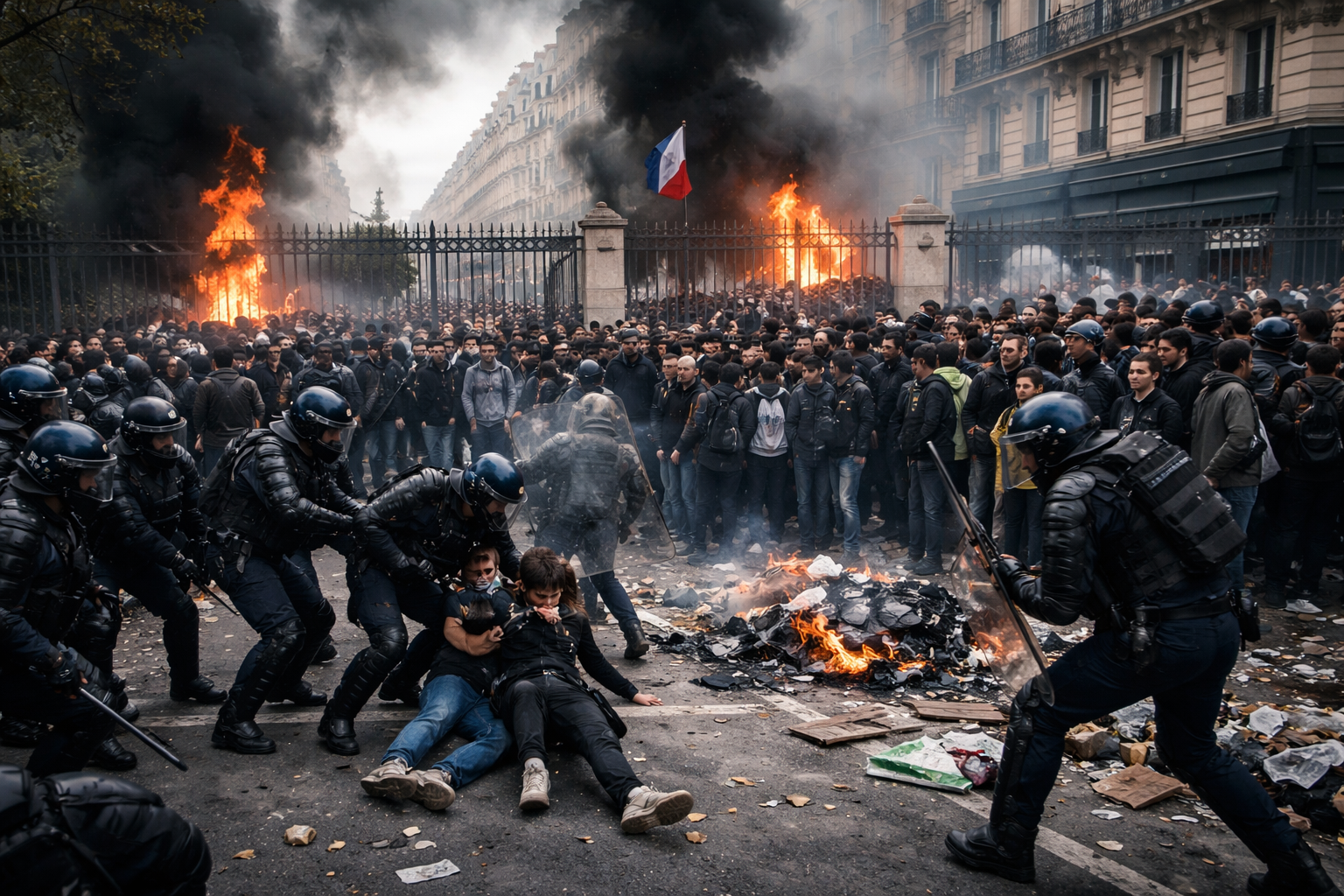
French security forces detained more than 600 people on Wednesday amid escalating student protests targeting high schools across the country. The unrest has led to violent confrontations with police and has resulted in dozens of injuries among security personnel, teachers, and pupils.
Authorities confirmed the protests have affected 356 schools, with incidents of arson and projectiles thrown at officers. Interior Minister Laurent Nunez condemned the surge in violence outside some schools, reporting that 83 police officers and gendarmes were wounded on Wednesday alone, along with 32 teachers and students.
Reasons Behind the Protests
Students at French lycées have been blocking access to their schools since last week, demanding improvements in overcrowded classrooms, excessive workloads, inadequate learning materials, and teacher shortages. A 17-year-old student named Fadila described hazardous school conditions, including infestations of cockroaches and rats, as well as extreme temperature swings within classrooms.
The movement began in the Ile-de-France region near Paris but quickly spread to other major cities such as Bordeaux, Lyon, and Lille. In Lille, police used tear gas to disperse demonstrators during clashes.
Government Response and Political Accusations
President Emmanuel Macron acknowledged the legitimacy of the students’ grievances but firmly rejected any justification for violent acts or attacks on law enforcement and educators. He emphasized that high schools should remain open spaces for education, not locations for blockades or arson.
Both Macron and Interior Minister Nunez accused far-left groups of instigating violence during the protests. Nunez highlighted the presence of agitators who moved between schools to incite violent acts among students.
Opposition party La France Insoumise and its presidential candidate Jean-Luc Melenchon have been criticized by officials for rhetoric perceived to fuel student anger. Melenchon accused the government of a crackdown with racist overtones and called on supporters to back the protests. Prime Minister Sebastien Lecornu rejected these accusations as divisive, emphasizing the need to restore calm.