
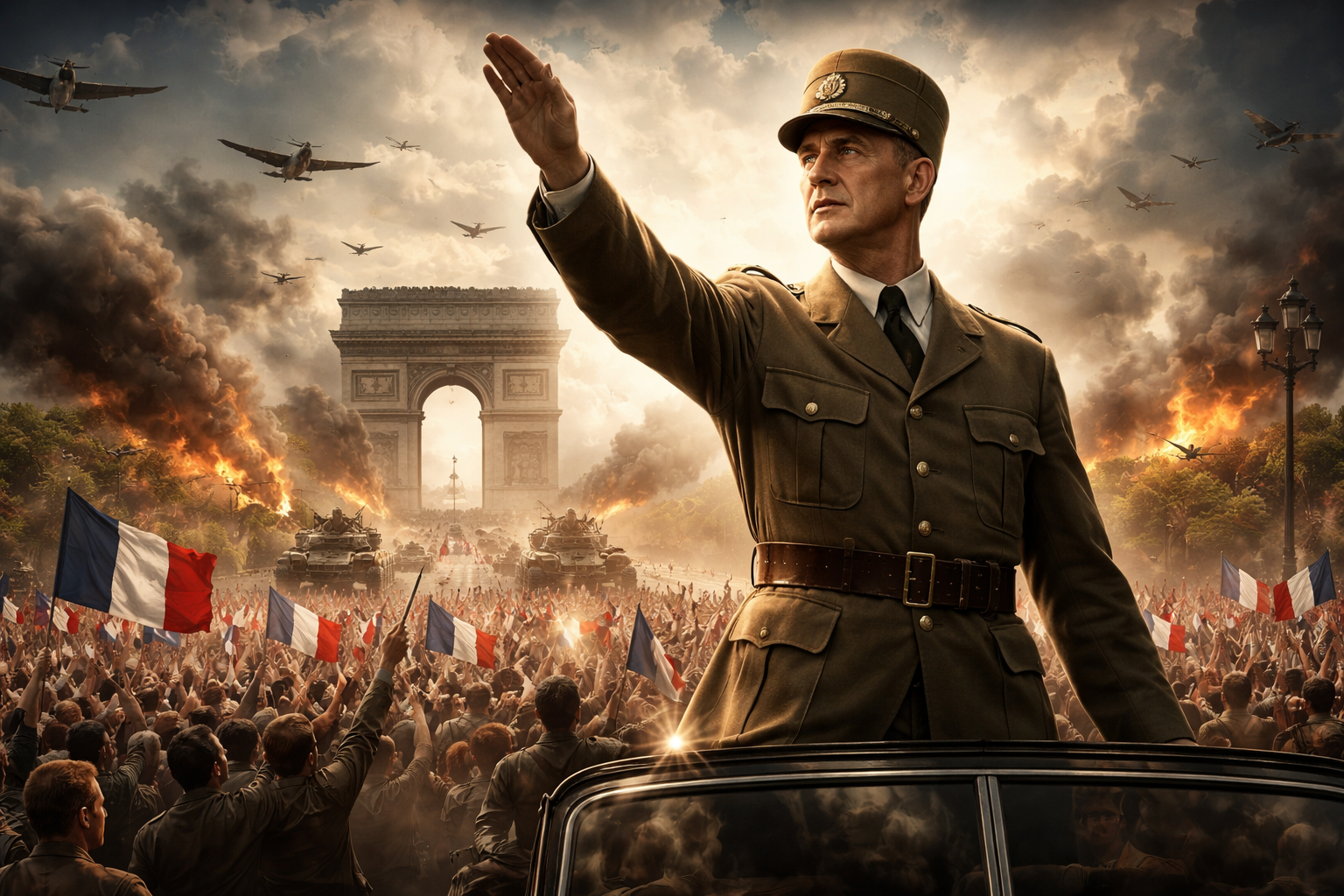
The two-part French biopic about General Charles de Gaulle concludes with De Gaulle: Liberté, focusing on his emergence as a dominant political figure during and after World War II. The film portrays de Gaulle’s complex journey from an exiled symbol of Free France to a leader who secured France’s independence from American and Allied influence following the liberation.
Simon Abkarian delivers a sharp portrayal of de Gaulle, capturing the leader’s keen political instincts and strategic maneuvers. The narrative highlights de Gaulle’s diplomatic victory over U.S. President Franklin Roosevelt, convincing the Americans not to treat postwar France as a subsidiary power like Japan, preserving France’s sovereignty.
Depiction of Key Allied Relationships and Rivalries
The film explores de Gaulle’s tense yet influential relationship with British Prime Minister Winston Churchill, portrayed by Simon Russell Beale, shedding light on Churchill’s Francophilia. It also dramatizes de Gaulle’s rivalry with General Henri Giraud, showing how de Gaulle skillfully established his authority in the provisional French government.
Set partly in the African theater of war, the film introduces General Leclerc, played by Niels Schneider, depicted as an inspired and daring military figure advancing the French cause under de Gaulle’s leadership. Other notable cast members include Campbell Scott as Roosevelt and Pip Torrens as Montgomery.
Stylistic and Thematic Elements
Stylistically, Liberté balances dramatic military scenes with subtle dark humor, often highlighting de Gaulle’s vigilance toward perceived slights that reflect on France’s status. While it may lack some of the intimate intrigue present in the first installment, Résistance, it remains an engaging portrayal of a complex historical era.
The film conspicuously omits German perspectives or representations, emphasizing a mythic retelling aligned with French national pride.
Release and Reception
De Gaulle: Liberté is scheduled to open in UK and Irish cinemas on September 18. Given the commercial success of the first part and the detailed historical narrative presented, the biopic provides a compelling look at one of France’s most iconic wartime leaders.