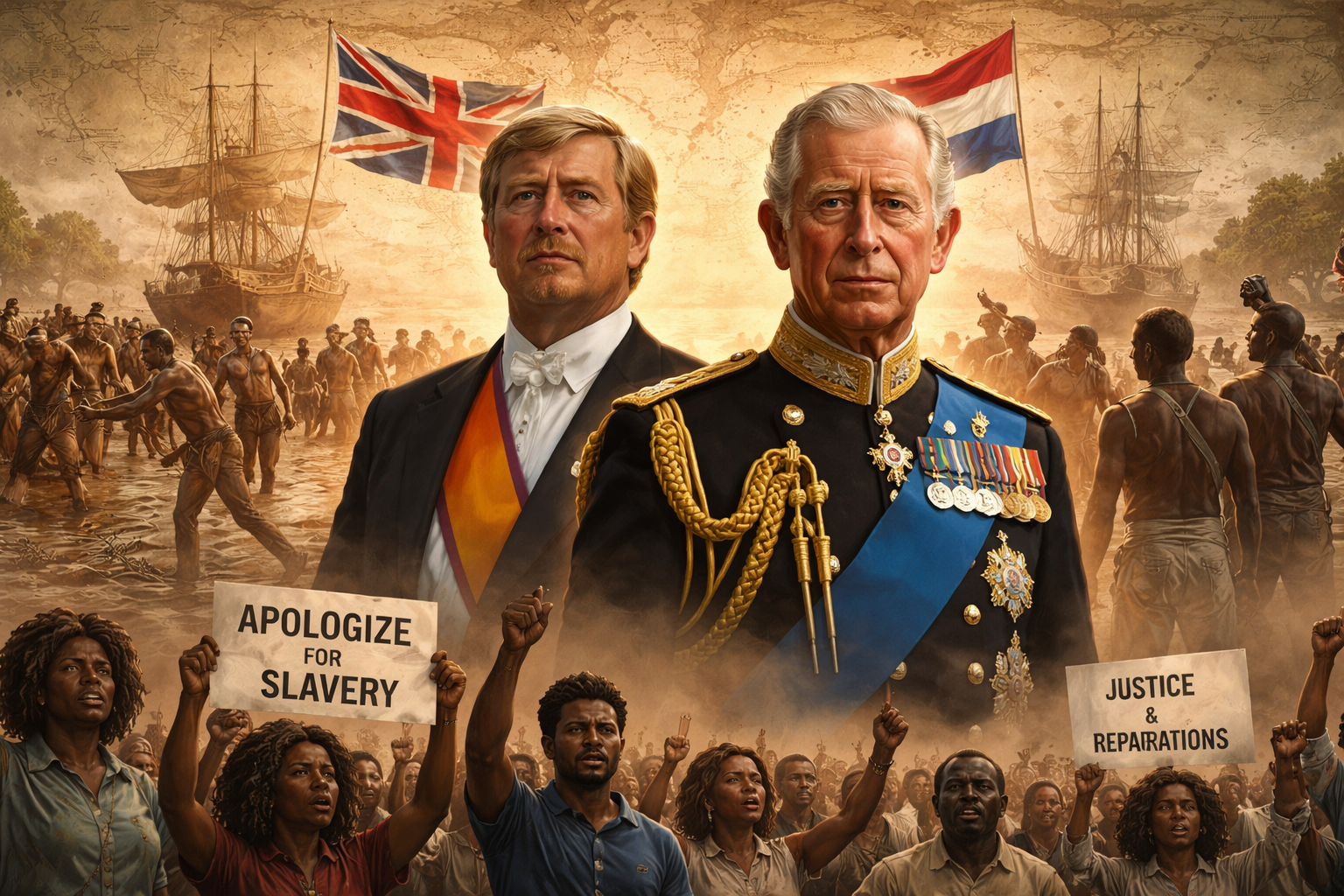
As King Charles embarks on a royal tour of the Caribbean, visiting the Bahamas, Guyana, and Antigua and Barbuda, there is mounting public pressure for him to offer a formal apology for Britain’s involvement in the transatlantic slave trade. However, he is expected only to express “sorrow” without delivering an official apology or addressing the role of the British royal family in the historical atrocity. This approach has drawn criticism for enabling political figures to avoid fully confronting the past, with some commentators dismissing an apology as a “navel-gazing distraction” while others voice support but reject reparations.
In contrast, three years ago, King Willem-Alexander of the Netherlands issued a formal apology for the Dutch state’s role in slavery and acknowledged his family’s failure to oppose it. Speaking on July 1, 2023, during Keti Koti—the Dutch national holiday marking the abolition of slavery—the Dutch monarch admitted slavery was “a crime against humanity” and recognized that the rulers of the House of Orange-Nassau took no action to end it. The apology was directed at people of color, including those with ancestral ties to enslavement, but was also intended for the broader population to confront this history.
A Novel Perspective on Royal Acknowledgment
Raoul de Jong, a Dutch novelist and descendant of enslaved Surinamese ancestors, has openly responded to King Charles’s expected stance. De Jong highlights the disparity between the swift action of the Dutch king and the anticipated hesitation of the British monarch. De Jong’s family history embodies centuries of suffering caused by kidnapping, forced labor, and the brutal legacy of slavery, yet also emphasizes resilience and survival despite these horrors.
The Importance of Truth and Reconciliation
De Jong stresses that the apology by Willem-Alexander was significant not only for descendants of enslaved people but also for the wider population often unaware of the enduring impact of slavery’s legacy. He argues that acknowledging these truths fosters understanding and healing, and challenges those in positions of power to choose how history will remember them. According to De Jong, the decision to apologize or not will be a defining moment for King Charles in shaping his legacy.
Continuing Debate and Impact
The issue of formal apologies and reparations remains divisive, with political and royal figures navigating complex national sentiments. King Charles’s approach during his Caribbean tour will test the balance between symbolic acknowledgement and the demands for concrete action. Meanwhile, voices like de Jong’s highlight the continuing demand for honest reckoning with colonial and slavery histories and the role such acknowledgments play in justice and reconciliation.