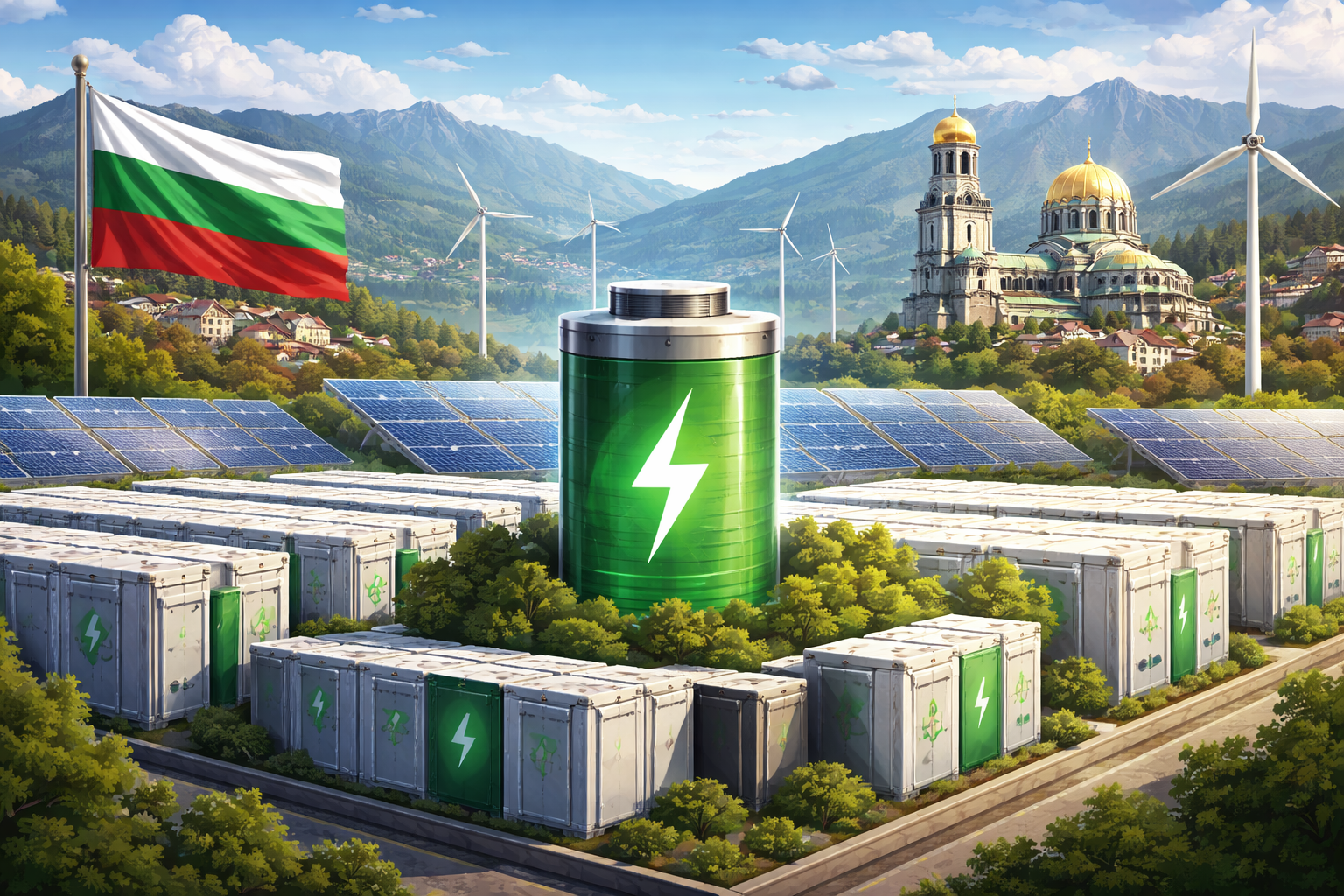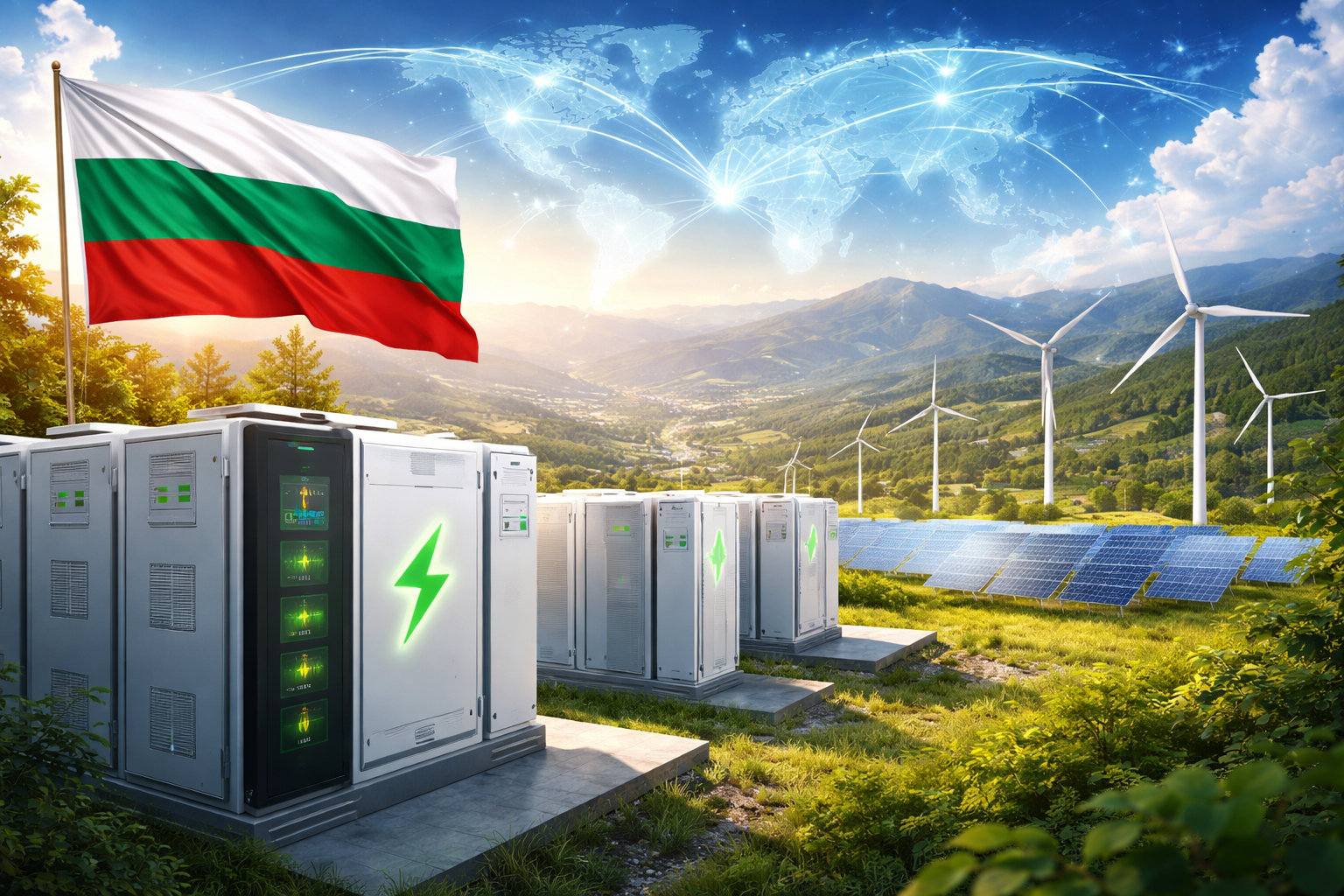
Bulgaria has swiftly risen to become a global frontrunner in battery storage, a surprising achievement for a country of just 6.4 million people. In under two years, its battery storage capacity surged from zero to nearly 25% of its total installed power capacity, surpassing larger and traditionally advanced markets such as California, Germany, and China.
This boom has been driven by extensive European Union funding alongside significant private investment, nearing €3 billion ($3.4 billion). According to Bulgaria’s business publication Capital, this investment significantly outpaced initial official forecasts.
Scale and Strategic Impact of Battery Storage
According to the Bulgarian Ministry of Energy, the nation’s battery capacity reached approximately 5.7 gigawatts by late 2026, tripling from an estimated 1.66 gigawatts reported earlier in the year. This capacity is sufficient, when fully charged, to theoretically power the entire country for several hours, reflecting the scale of Bulgaria’s rapid development in the sector.
The country produces substantial solar energy and imports additional renewable energy from neighbors Greece and Romania. During peak sunlight hours in summer, electricity prices often drop to low or even negative levels, enabling batteries to store inexpensive energy and sell it during evening peaks when prices rise. This dynamic turned Bulgaria into a key regional hub for battery storage, exporting energy particularly to drought-affected Romania, which experienced struggles with nuclear capacity reductions.
Economic and Grid Stability Effects
The expansion of battery storage has contributed to lower average electricity prices in Bulgaria relative to regional neighbors during the summer months. Industrial consumers have seen benefits as prices during evening peaks dropped, although residential customers remain on fixed state-set prices and have yet to experience reductions.
The batteries also enhance grid reliability both domestically and in neighboring countries, while creating new revenue streams from exports and potential tax income. However, the long-term sustainability of this rapid growth model remains uncertain, especially outside summer periods when demand and price dynamics evolve.
Challenges and Strategic Considerations
Experts caution that the swift rise in battery capacity presents challenges for conventional power generators, which face revenue pressures during evening peak hours due to lower wholesale prices. This shifts costs to baseload power and raises questions about how the energy sector will evolve strategically over the next decades.
Bulgaria is concurrently planning to phase out coal mining, rehabilitate a major pumped-storage hydro plant, and construct two new nuclear reactors, indicating a multifaceted approach to its energy transition.
The rapid growth has been supported by streamlined permitting processes and a quadrupling of photovoltaic installations since 2022. Discussions with major companies like Tesla for further battery projects suggest the trend will continue. However, market experts note that as battery capacity grows, revenue per unit may decline unless new ancillary services are developed to leverage battery storage for grid stabilization.
While Bulgaria capitalized on regional energy market volatility this summer, the future trajectory of battery storage’s impact on prices and grid stability remains to be seen.