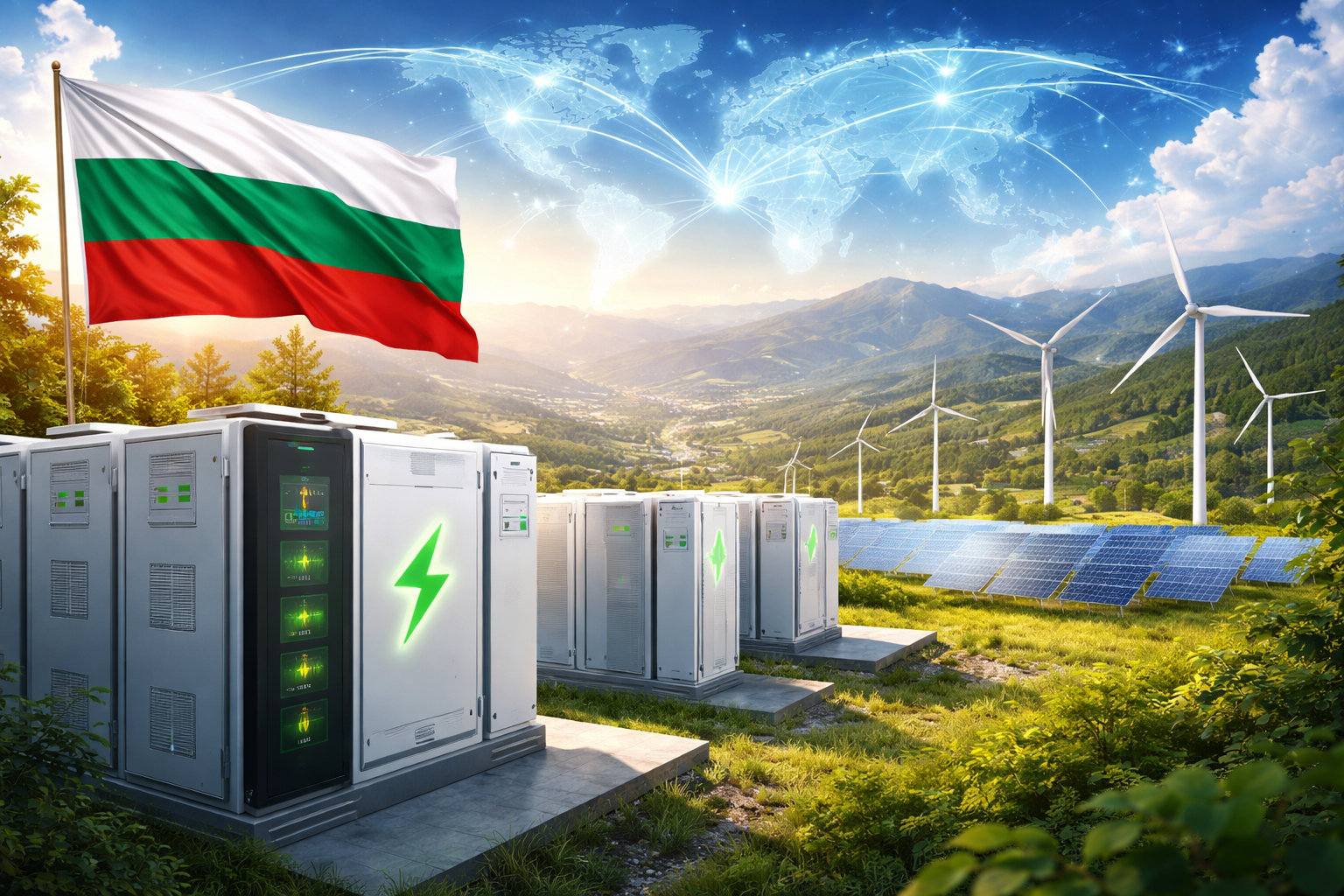

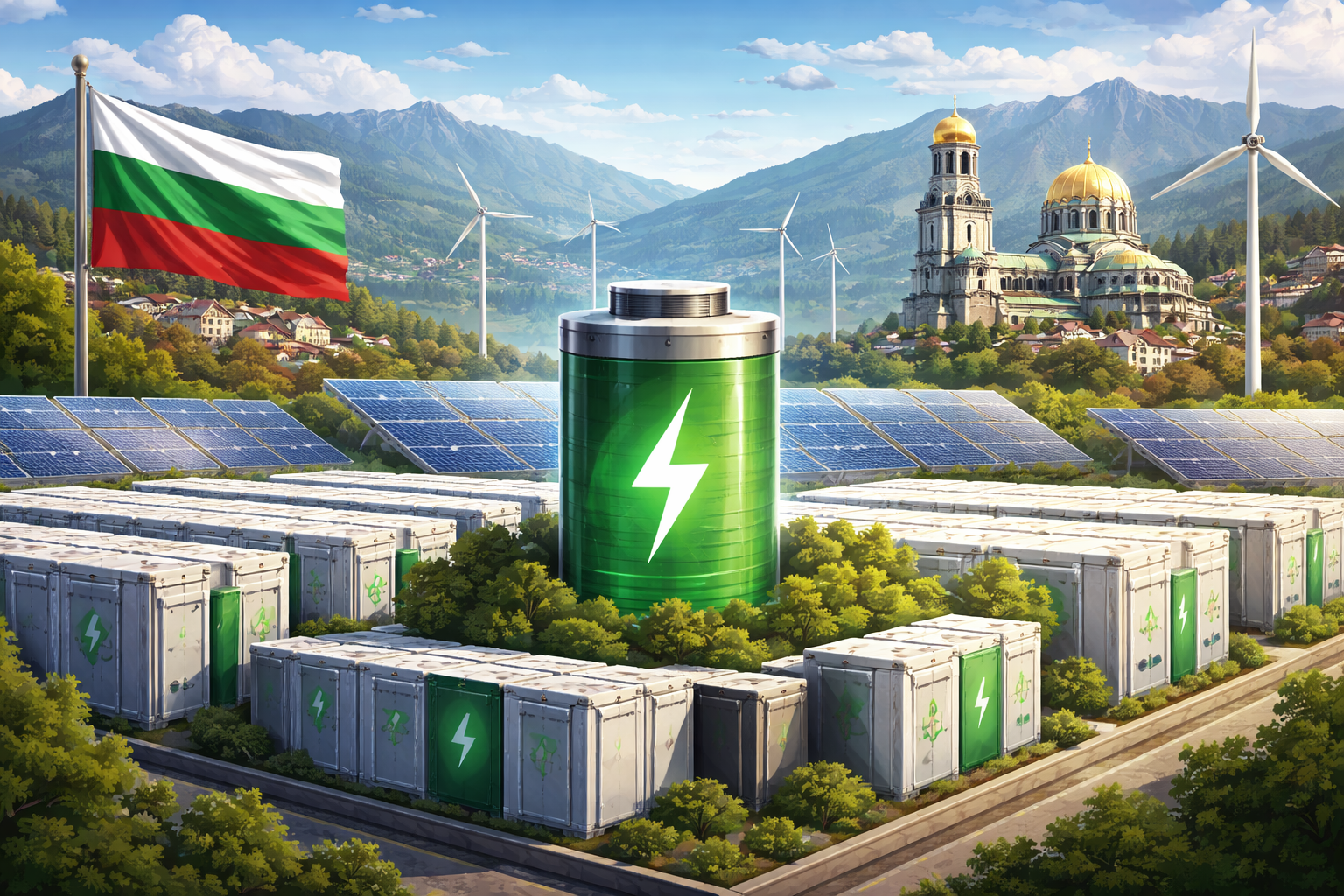
Bulgaria, a Southeast European nation with a population of about 6.4 million, has quickly become one of the world’s leaders in battery storage capacity relative to its total power generation. According to calculations by the Bulgarian business publication Capital and data from the European Network of Transmission System Operators for Electricity (ENTSO-E), Bulgaria’s battery capacity expanded from zero to nearly 5.7 gigawatts in under two years, representing nearly 25 percent of its total installed power capacity.
The surge is largely driven by close to €3 billion ($3.4 billion) in combined European Union funding and private investments. This rapid growth has made Bulgaria a significant regional battery hub, surpassing neighboring countries such as Greece and Romania in operational storage capacity, and enabling the nation to export stored energy to markets with higher evening prices.
The battery boom has materially influenced Bulgaria’s electricity prices and grid stability, especially during the recent summer when drought conditions hampered nuclear and hydroelectric output in surrounding countries.
Accelerated Growth Fueled by EU and Private Investment
The remarkable expansion in Bulgaria’s battery storage began with EU recovery funds and the RESTORE program, which allocated approximately €700 million ($797 million) for 113 projects. Yet private investment has played an even larger role, with estimates around €2 billion. Most lithium batteries are sourced from China, but investors are predominantly Bulgarian and European entities attracted by the growing market.
Impact on Regional Energy Markets and Grid Stability
Bulgaria utilizes its battery storage to capture cheap solar energy, especially during midday when prices can be low or negative due to high solar output daily. Electricity stored in batteries is then sold in the evening peak hours when demand and prices rise, generating revenue and helping stabilize the grid. Romania has been a primary export recipient, particularly strained during the summer by nuclear capacity reductions caused by drought.
This operational model resulted in Bulgaria’s average electricity prices becoming more competitive compared to neighboring countries. Industrial consumers have especially benefited, though fixed household prices have not changed. Moreover, the batteries add reliability domestically and regionally, contributing to export earnings and potential tax revenues.
Challenges and Questions on Long-Term Sustainability
Experts caution that while the initial summer performance has been positive, the long-term impacts remain uncertain. The rapid battery expansion affects revenues of conventional power generators, pushing up baseload prices. There is also concern that private investments in batteries may outpace national strategic energy planning, shifting control of the sector’s development.
Bulgaria continues to pursue broader energy transition goals, such as phasing out coal, rehabilitating a large pumped-storage hydropower plant, and planning new nuclear reactors. Meanwhile, photovoltaic solar capacity in Bulgaria has quadrupled since 2022, encouraging battery installations at solar parks due to favorable permitting processes.
Future Prospects and Market Adjustments
Looking ahead, Bulgarian officials and analysts suggest the key to continued success will be expanding battery uses to include grid ancillary services, which help balance supply and demand beyond simple energy storage and release.
Large projects remain under discussion, including talks with Tesla for what could be one of the largest battery complexes in Europe. However, as battery capacity grows, revenue per unit may decline. Market participants and grid operators face the challenge of integrating this rapid development sustainably while maximizing economic and grid stability benefits.