

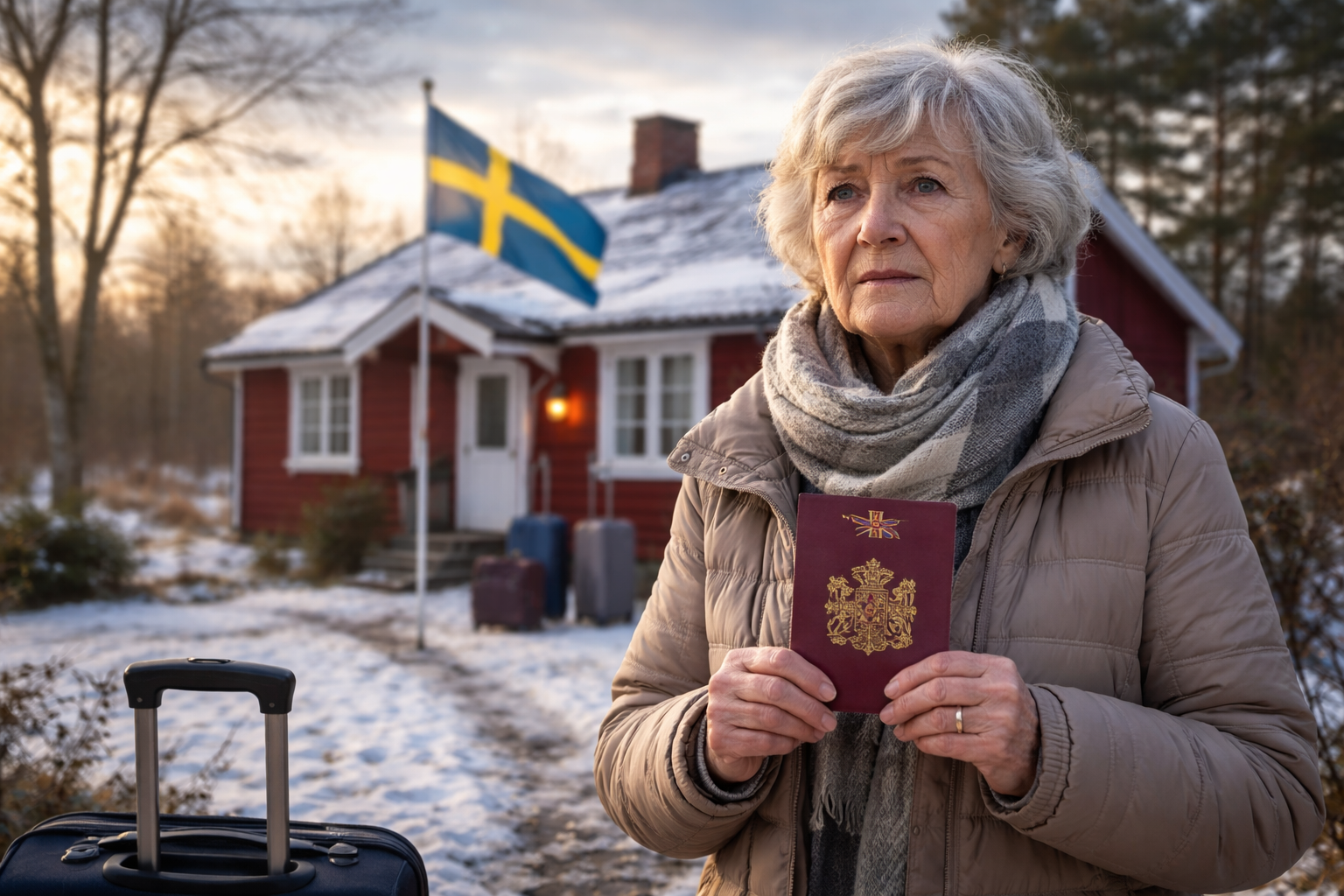
Sweden enforces strict Brexit residency rules, ordering British nationals like 78-year-old Joyce Thomas to leave despite long-term residence and family ties
Joyce Thomas, a 78-year-old British widow who has lived in Sweden for over two decades, is facing deportation after Swedish authorities ruled her Brexit residency application was submitted too late. Her case highlights a growing issue affecting 2,500 British nationals ordered to leave Sweden under post-Brexit immigration rules, sparking criticism of Sweden’s stringent approach compared to other EU countries.
Living in a small apartment near her son, grandchildren, and her late husband’s grave, Thomas is devastated by the prospect of uprooting her life after 21 years and three years as a widow. Despite having no criminal record and financially supporting herself, her residency application was denied because she could not prove “reasonable grounds” for applying late, even though the UK-EU Withdrawal Agreement allows for late submissions under exceptional circumstances.
The British Foreign, Commonwealth & Development Office (FCDO) and UK officials have expressed concern about Sweden’s policy, noting it imposes significantly more deportation orders on UK nationals than any other EU member state. Legal support is now helping Thomas challenge the decision in a higher court, as campaigners urge Swedish authorities to reconsider the humanitarian and family factors involved. This report is based on information disclosed by the Guardian and official government sources.
A personal struggle amid complex post-Brexit residency rules
Joyce Thomas, a retired nurse, was given just four weeks in November to leave Sweden, three years after her husband Gwynne died from cancer in 2023. The couple had lived quietly in Hammarö, close to family and resting near her husband’s grave, cherished after 55 years of marriage. It was only during a trip to the UK in 2022 that they learned a formal residency application was necessary under new Brexit rules.
Her husband meticulously handled their household’s affairs, including Brexit-related paperwork, leading Thomas to believe he would have applied on time. After his death, she sought to submit the required application but was told it was too late, as she could not show “reasonable grounds” for the delay—a requirement Sweden enforces more strictly than other EU countries.
Sweden’s tough stance on British residents contrasted with other EU nations
Sweden has issued about 2,500 removal orders to British nationals since Brexit, representing one-third of all EU deportations of UK citizens. By comparison, Bulgaria, with a similar applicant volume, refused only five applications, while Belgium rejected 605. The FCDO analysis shows Sweden’s refusal rate is approximately 27.5%, which is three times higher than other EU member states and well above the EU average of 3 to 4 percent.
A spokesperson for Sweden’s immigration authority, Migrationsverket, explained that late applications require a written explanation. Simply being unaware of the application deadline is not accepted as a valid reason to apply late, indicating Sweden’s exceptionally strict interpretation of the Withdrawal Agreement’s rules on late submissions.
Calls for compassion and reconsideration from UK officials and campaigners
Former UK business secretary Peter Kyle, MP for Brighton, described the case as “deeply concerning” and urged Swedish authorities to take a compassionate, fair approach given Thomas’s long residency and strong family connections. He emphasized that UK nationals who exercised free movement rights before Brexit should have their rights respected despite the legal complexities.
The FCDO also regularly raises concerns with Swedish and EU authorities about protecting the rights of British nationals in Sweden post-Brexit. UK government sources have criticized Sweden for adopting a considerably stricter approach than other member states, making it unlikely that “reasonable grounds” for late residency applications will be accepted.
Impact on British nationals and the search for justice
Joyce Thomas’s case exemplifies the distress endured by many older British residents facing deportation after decades abroad. She fears the upheaval will destroy the stability she found after her husband’s death. Supported by pro bono lawyers, she plans to appeal to a higher court to overturn the denial and prevent forced removal.
This case underscores ongoing tensions in post-Brexit immigration enforcement and highlights the urgent need for policies balancing legal frameworks with humanitarian compassion, especially for vulnerable individuals with deep roots in their host countries.