
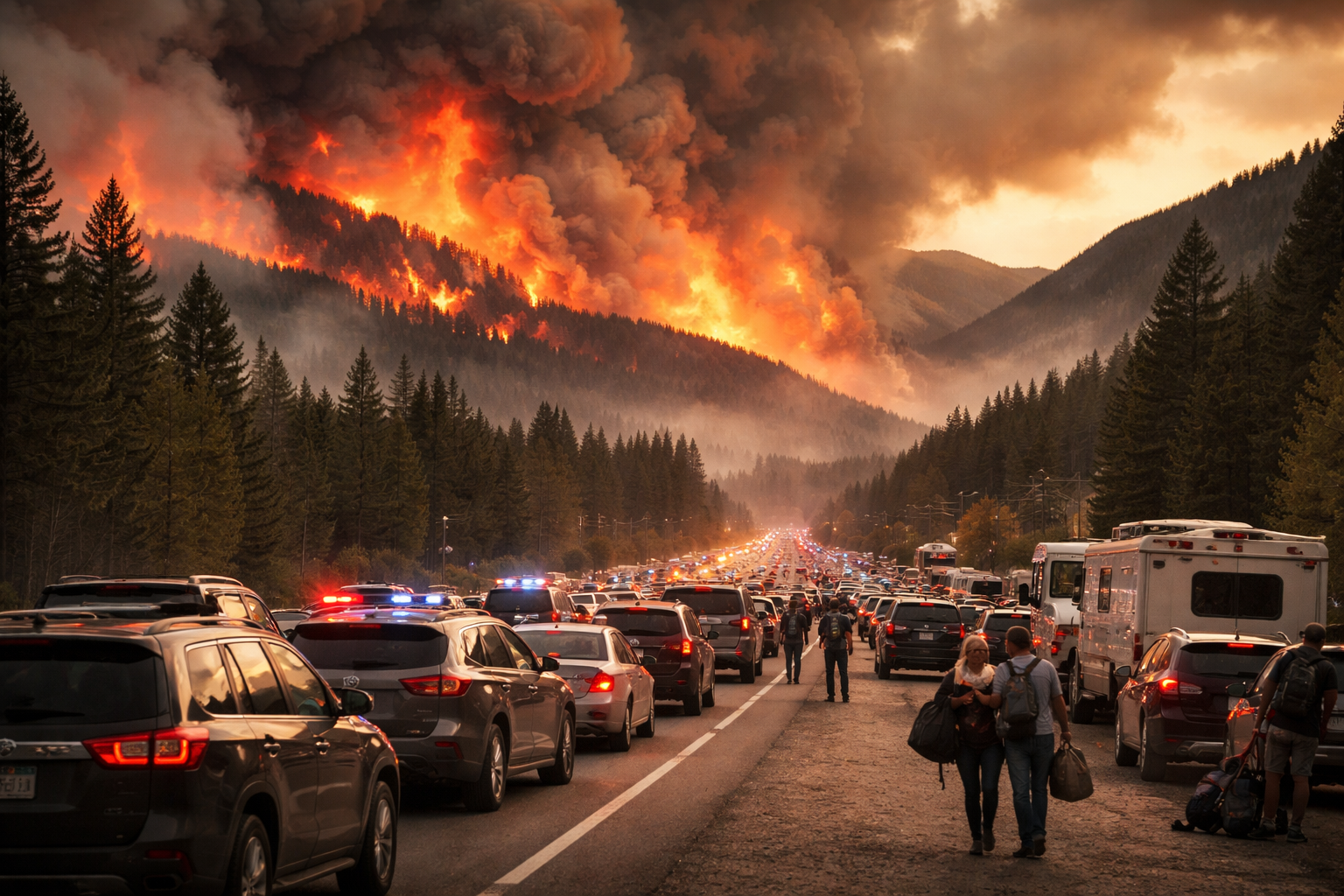
Officials in British Columbia have declared a state of emergency following the rapid expansion of wildfires that have forced over 20,000 residents to evacuate. The fires have grown dramatically in size, with one of the major blazes reaching approximately 9,500 hectares overnight.
The Summerland district experienced a full evacuation of its 12,000 residents as the fire activity intensified, creating dangerous conditions that required emergency rescues. British Columbia’s leadership described the wildfire with descriptions highlighting its extreme behavior and destructive impact.
Wildfire Intensity and Impact
According to British Columbia’s Premier David Eby, fire officials compared the blaze to “a bomb going off,” describing flames engulfing 100-foot trees and extending 200 feet above them. The fire reportedly generated its own weather system, producing lightning that can potentially ignite additional fires.
Many homes and properties have been lost, and some residents were trapped by quickly shifting fire conditions before being rescued by emergency crews.
Widespread Fire Activity Across the Province
The Summerland fire is just one of numerous wildfires challenging firefighting efforts in the region. Over the last week, 70 new fires have been reported, and a total of 105 wildfires are currently burning across British Columbia, according to the Minister of Forests, Ravi Parmar.
The increasing frequency and scale of these wildfires reflect a broader trend of severe wildfire seasons in Canada during recent years.
Wildfire Challenges Across Canada in 2026
Across Canada, wildfires have scorched about 4 million hectares in 2026 so far, with widespread blazes affecting regions including Ontario and Quebec. Hot and dry weather conditions have fueled these fires in densely forested areas, creating significant challenges for firefighting agencies nationwide.