

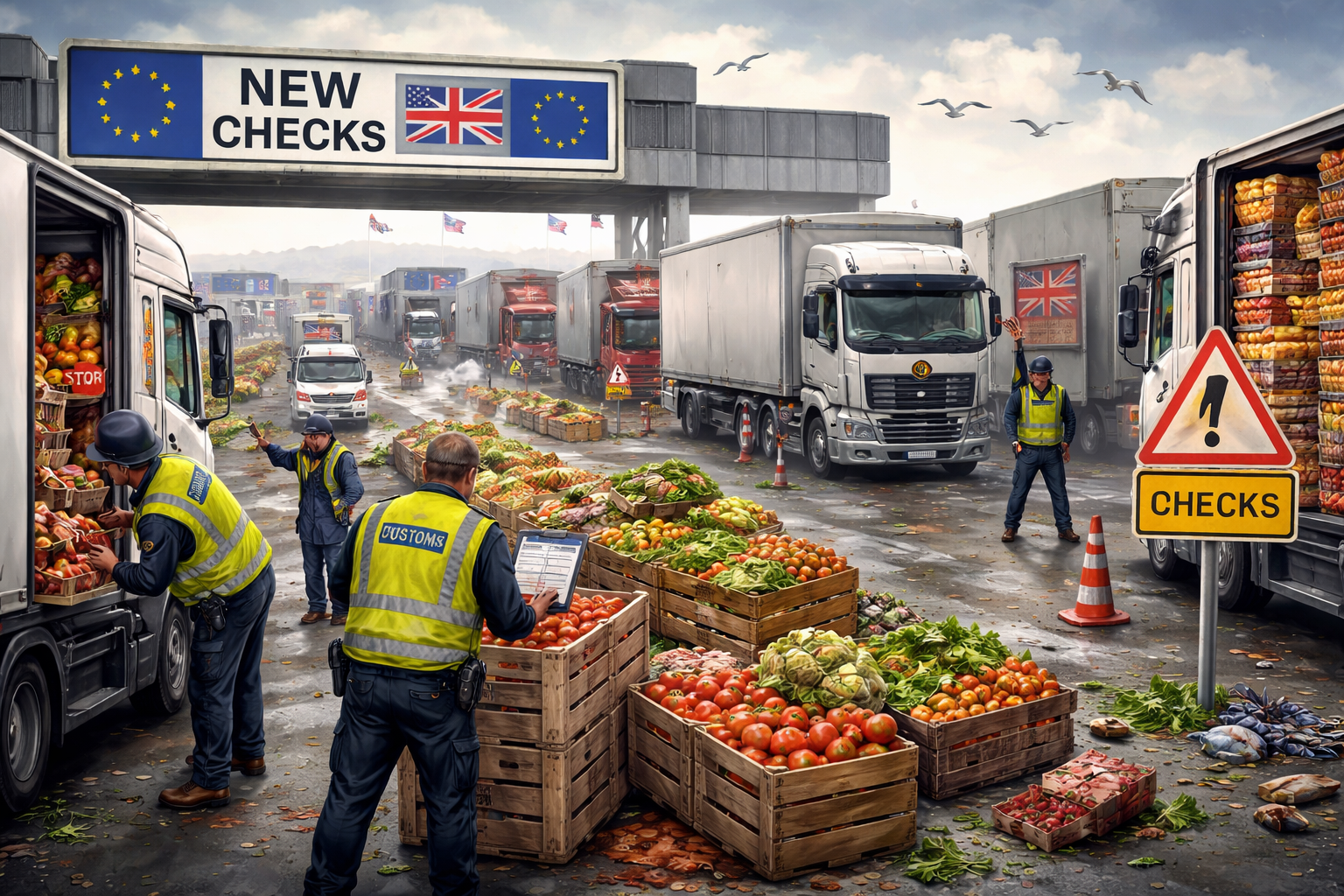
Hauliers transporting fresh food from the UK to the EU are still facing significant delays and administrative hurdles nearly four years after Brexit’s implementation, as new customs and sanitary checks remain in place. These complications have disrupted deliveries of perishable goods, including British staples like steak and ale pies and cheddar cheese, to destinations such as Gibraltar and continental Europe.
At the Eurotunnel terminal in Calais, a shipment of spinach and ricotta cannelloni was held for nine hours and removed from a refrigerated truck due to a paperwork error involving an incorrect date on a health certificate. Drivers must now navigate a complex system requiring as many as 78 different documentation files, covering customs declarations and export health certificates, none of which existed when the UK was part of the EU single market.
Inspection Challenges and Economic Impact
Food safety inspections also lead to destruction of goods, as seen in cases where improper storage risked contamination. For instance, pig carcasses fell from hanging racks inside a truck, forcing officials to confiscate and destroy them under EU safety rules. Such incidents highlight the stringent standards exporters face.
A report from the UK Department for Environment, Food and Rural Affairs found that small and medium-sized exporters have been the hardest hit, with some ceasing exports to the EU altogether. Trade volumes have fallen more than 20% since Brexit, particularly in sensitive sectors like poultry and eggs.
Anticipating the Sanitary and Phytosanitary Agreement
Next Friday, UK and EU leaders plan to sign a sanitary and phytosanitary (SPS) deal aimed at easing restrictions for fresh food and animal products. Once implemented, this agreement will eliminate many health certificate requirements and reduce paperwork complexity, potentially cutting crossing costs by an order of magnitude. However, full implementation is unlikely before January 2028 due to necessary legislation aligning UK rules with EU standards.
Officials from Eurotunnel’s operator Getlink acknowledge the challenges but also express optimism that the SPS deal could help recover some lost trade. The company invested around €60 million in infrastructure to manage Brexit-related border controls. Meanwhile, drivers and freight companies hope the agreement will shorten wait times and reduce costly unloads triggered by minor paperwork errors.
Ongoing Frictions and Transition Hurdles
Despite improvements, hauliers continue to face checks and occasional long delays. Some report being stopped multiple times monthly, especially when carrying “high-risk” items like chilled meats. Pet travel also remains complicated, requiring costly health certificates for journeys to the continent, although the SPS deal is expected to restore a version of the former pet passport system, easing travel for owners.
This transitional period underscores the lingering trade frictions following the UK’s departure from the EU single market. While the SPS agreement promises to alleviate some barriers, the full normalization of food trade remains years away, with ongoing costs and procedural complexities impacting businesses and consumers on both sides of the Channel.