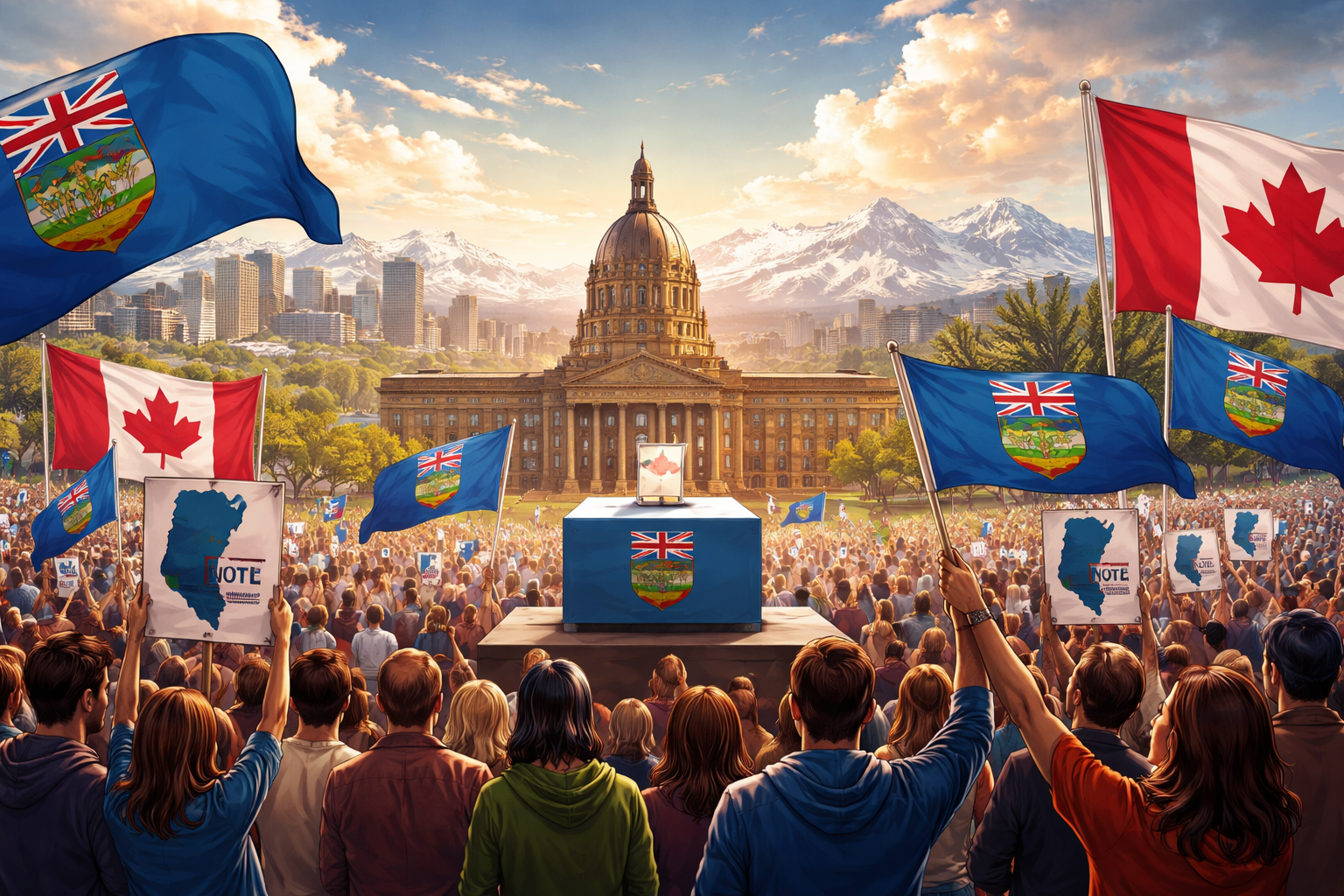
Alberta began voting on a referendum to decide whether the province should initiate a process that might eventually lead to independence from Canada. Although the motion is unlikely to pass, the referendum underscores growing economic and political grievances within the province, which is rich in oil resources.
The vote opened at 9 a.m. local time in Edmonton, Alberta’s capital, and was scheduled to close at 8 p.m. Results were to be published as they became available. Opinion polls indicated the outcome was largely predictable, but suggested that up to one-third of voters might support the independence proposal.
Referendum Context and Political Positions
This referendum marks the first such vote on independence in a Canadian province other than Quebec, which has long-standing separatist movements based on linguistic and cultural distinctions. Alberta, nearly twice the size of Germany by land area but with fewer than 5 million residents concentrated mainly in Edmonton and Calgary, is an oil-centric region asserting economic frustrations.
The United Conservative Party, led by Danielle Smith, heads Alberta’s provincial government. Smith does not support independence and urged voters to reject the motion, but authorized the referendum to address growing pressure from separatist factions within her party. Independence advocates accuse the federal government of hindering Alberta’s oil industry through environmental policies and argue that Alberta disproportionately funds the national government.
Cory Morgan, founder of the pro-independence group Pathway to Independence, stated, “Canada has an imbalanced system which feeds the central population and government at the expense of the outlying producing provinces such as Alberta.”
National Reactions and Broader Implications
Mark Carney, who grew up in Alberta and serves as Canada’s prime minister, campaigned actively against independence, appealing to national unity and pride. He stressed that Canada is more than economic transactions between provinces, dismissing the separatist focus on financial disputes.
Separatist sentiments, while less pronounced recently in Quebec, remain a salient issue in Canadian politics, as demonstrated by the separatist Parti Quebecois’ recent local election success. At the same time, Carney faces pressure on national unity from ongoing contentious trade negotiations with the United States, where President Donald Trump has made provocative statements about Canada, including proposals for it to become the U.S.’s “51st state.” These external tensions add complexity to internal discussions of sovereignty.