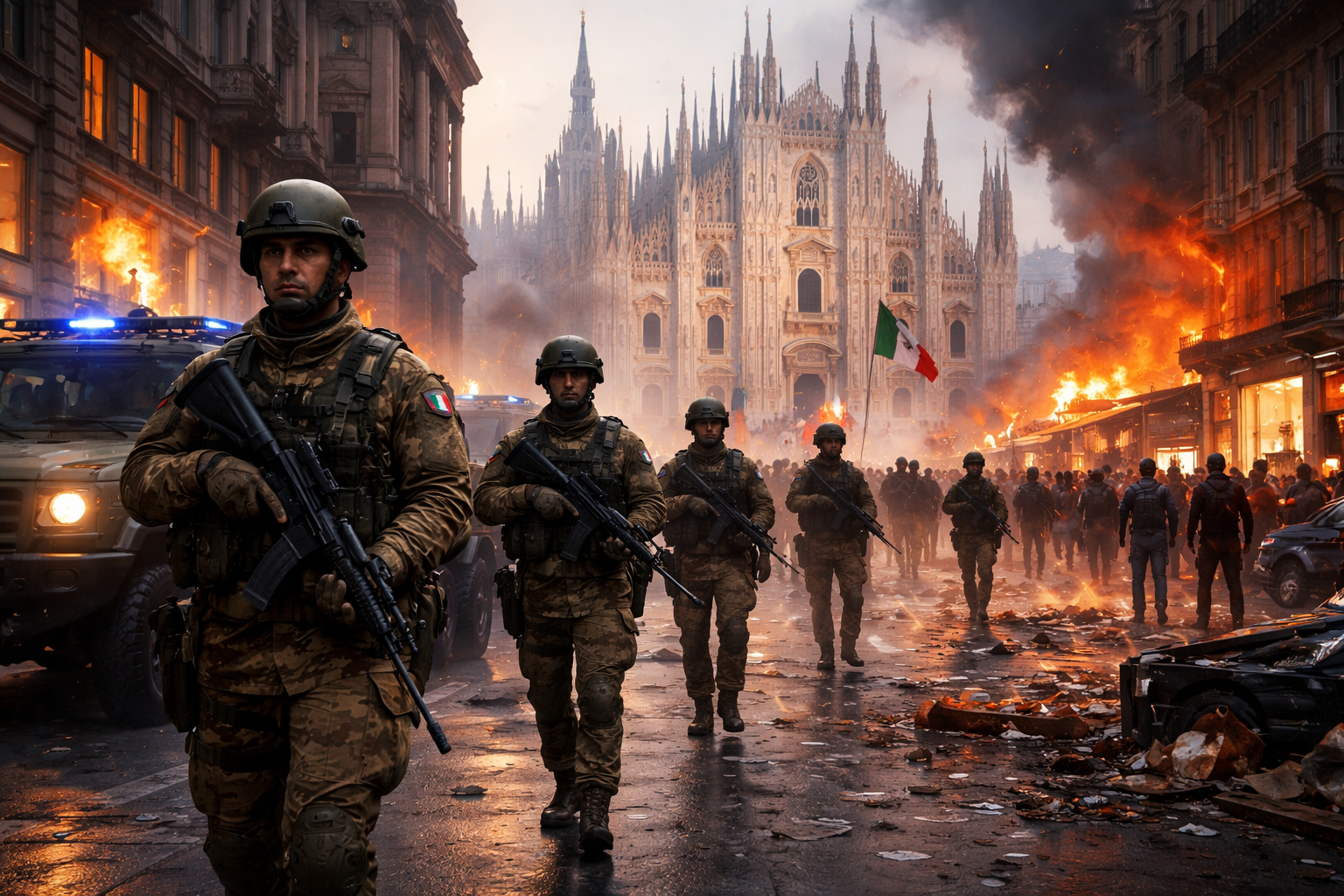
Italy is deploying 500 soldiers to Milan after days of protests against the cost of living escalated into clashes, vandalism, and looting. The government plans to introduce stricter security measures in response to the unrest, which has spread across several northern cities and follows similar turmoil in France.
Authorities detained 271 young people in Milan after violent groups, initially part of peaceful protests, set fires and damaged shops near the city’s cathedral. Among those arrested were minors and foreign nationals. This move comes alongside France’s decision to deploy military forces to support police during upcoming demonstrations.
Escalating Violence and Security Response in Italy
The protests in Milan on the weekend saw masked youths setting fire to trash bins, smashing shop windows, and looting, affecting luxury brands like Chanel, Tiffany, and Dior that closed stores or removed merchandise as a precaution. Sports retailers and mobile providers were also targeted. Police used teargas and water cannons to disperse rioters.
Italy’s far-right government’s response includes plans for tougher security laws: extending preventive detention for minors, cracking down on youth gangs—particularly targeting marginal communities including second-generation immigrant youths known by the slang term “maranza”—and banning gatherings deemed threats to public order.
Deputy Prime Minister Antonio Tajani emphasized a firm response to “attacks on the state,” signaling increased penalties for disruptive protests such as road blockades, especially amid ongoing truck driver strikes over fuel costs in southern Italy.
Parallel Unrest in France and Broader European Protests
France is also escalating its response, with interior minister Laurent Nuñez announcing the deployment of military forces to assist police during planned Saturday protests. French Prime Minister Sébastien Lecornu promised a “massive” police presence and quick restoration of order following violent weekend riots that included looting and arson. France imposed partial curfews in cities including Paris, Bordeaux, Lille, and Nice. Paris authorities renewed curfews and banned carrying petrol cans, bottles, masks, and helmets in certain areas.
The unrest in France triggered travel advisories from several countries, including the U.S., China, and Germany. Nearly 2,400 arrests were made during France’s latest wave of violent demonstrations, which drew comparison to Italy’s escalating protests.
Protests Extend Across Italy and Portugal
Beyond Milan, other northern Italian cities including Bologna, Brescia, Bergamo, and Turin also reported arrests during demonstrations over living costs. A new protest group, 17 October, has emerged on social media declaring intent to organize weekly demonstrations across Italy until they see governmental change.
In Portugal, thousands gathered in Lisbon’s Rossio Square protesting rising housing costs, reclaiming removed tent camps from earlier police crackdowns. The campaign aligns with similar protests in Spain demanding affordable housing solutions.
The unrest highlights widespread discontent with economic pressures and social marginalization across parts of Europe, prompting governments to enhance public security efforts while facing criticism that underlying social issues remain insufficiently addressed.