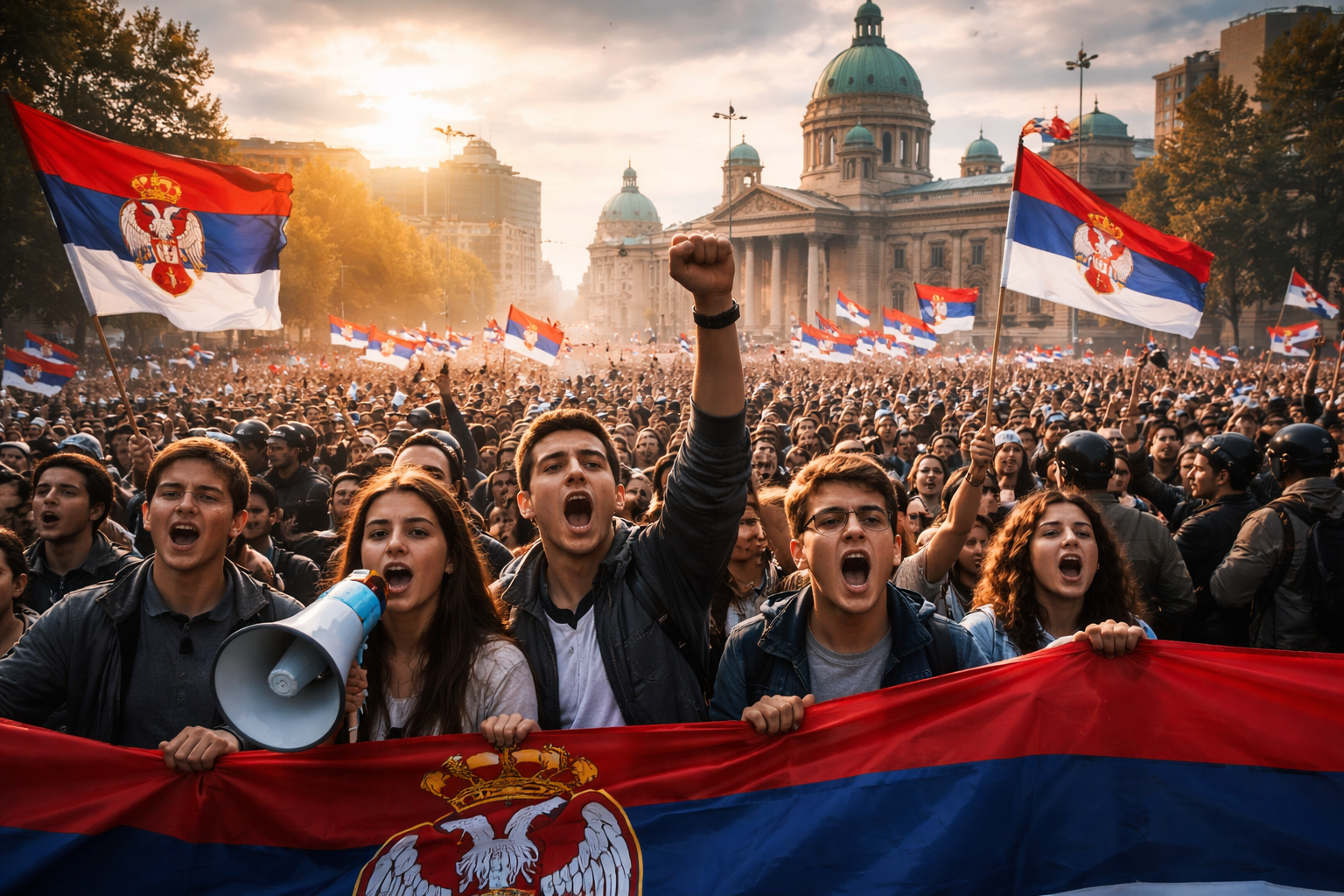
As Serbia approaches parliamentary elections this Sunday, a student-led movement named Student List is presenting a significant challenge to Aleksandar Vučić’s Serbian Progressive Party (SNS), which has dominated the country’s political landscape for over a decade. The group, born out of continuous protests in response to corruption and infrastructure failures, hopes to replicate recent democratic upsets seen in Central Europe.
Student volunteers have been actively canvassing suburbs like Krnjača in Belgrade, engaging residents on critical local issues such as neglected infrastructure and the underperforming sewage system. Despite the economy’s growth, citizens expressed frustration over widespread corruption and inequitable distribution of wealth, echoing concerns that fueled the protests beginning in late 2024.
Election Dynamics and Political Context
The election represents Vučić’s most serious political test in 12 years marked by increasing authoritarianism. Though he stepped down early from the presidency last month, he remains a candidate for prime minister leading the SNS. Polls show a varied picture, with support for the Student List rising but some surveys still favoring the SNS, often criticized as pro-government. Tensions run high, with neither side prepared to accept defeat, increasing the risk of unrest on election day.
The Student List’s 250 candidates, mostly university-affiliated experts with diverse backgrounds, operate without a traditional leadership hierarchy. Their platform avoids divisive foreign policy phrases and defers sensitive issues like European Union membership to future referendums, focusing instead on domestic reform and anti-corruption measures.
Challenges and Strategies
The SNS maintains a strong grip on national media and state institutions, making it difficult for opposition voices to gain broad exposure. The government has also faced accusations of manipulating diaspora votes to favor Vučić. Student activists, meanwhile, aim to counter this by extensive door-to-door campaigns, including outreach in rural areas where SNS influence remains robust.
Concerns persist over potential election day violence and irregularities. Opposition groups plan to monitor polling stations more closely than ever to prevent intimidation and misconduct. Past attacks on political opponents by unidentified groups loyal to the SNS have heightened fears of post-election clashes.
Implications and Future Prospects
Observers note that the collapse of a railway station canopy in Novi Sad, which killed 16 people in 2024, galvanized the student protests and increased political engagement among previously apolitical citizens. Whether this momentum sustains in rural areas and among ethnic minority voters could determine the election’s outcome.
If the Student List succeeds in winning seats, their lack of traditional political experience may present operational challenges in parliament, though supporters argue their expertise and fresh approach offer a chance for meaningful change. Both supporters and skeptics agree that the election marks a critical juncture in Serbia’s ongoing struggle between entrenched power and growing demands for democratic reform.