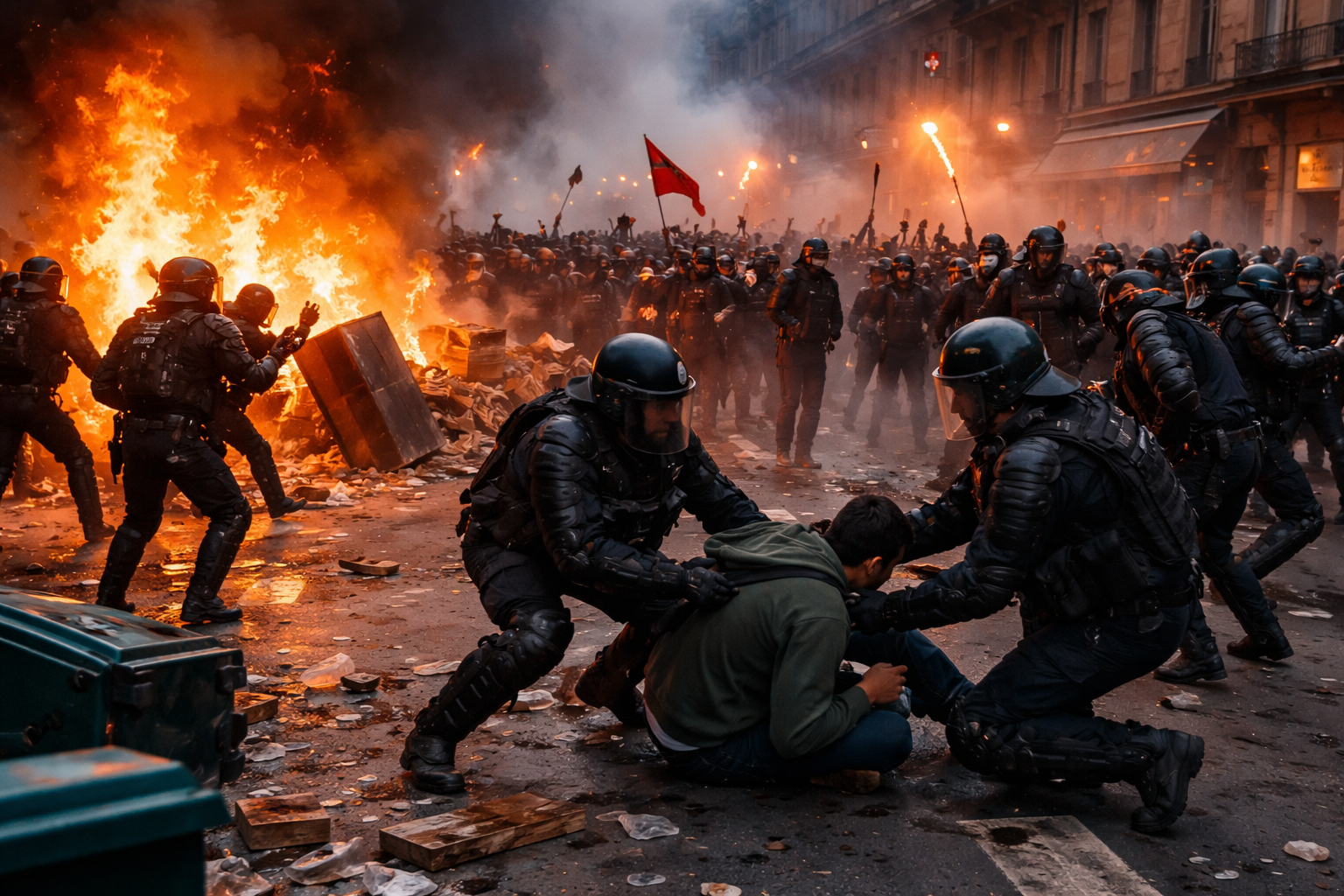
On Saturday, more than 400 people were arrested during protests across France that began with demands from high school students but grew to include widespread anger about inflation, social inequality, and alleged police violence. Authorities reported that most of those detained were adults unaffiliated with the student movement.
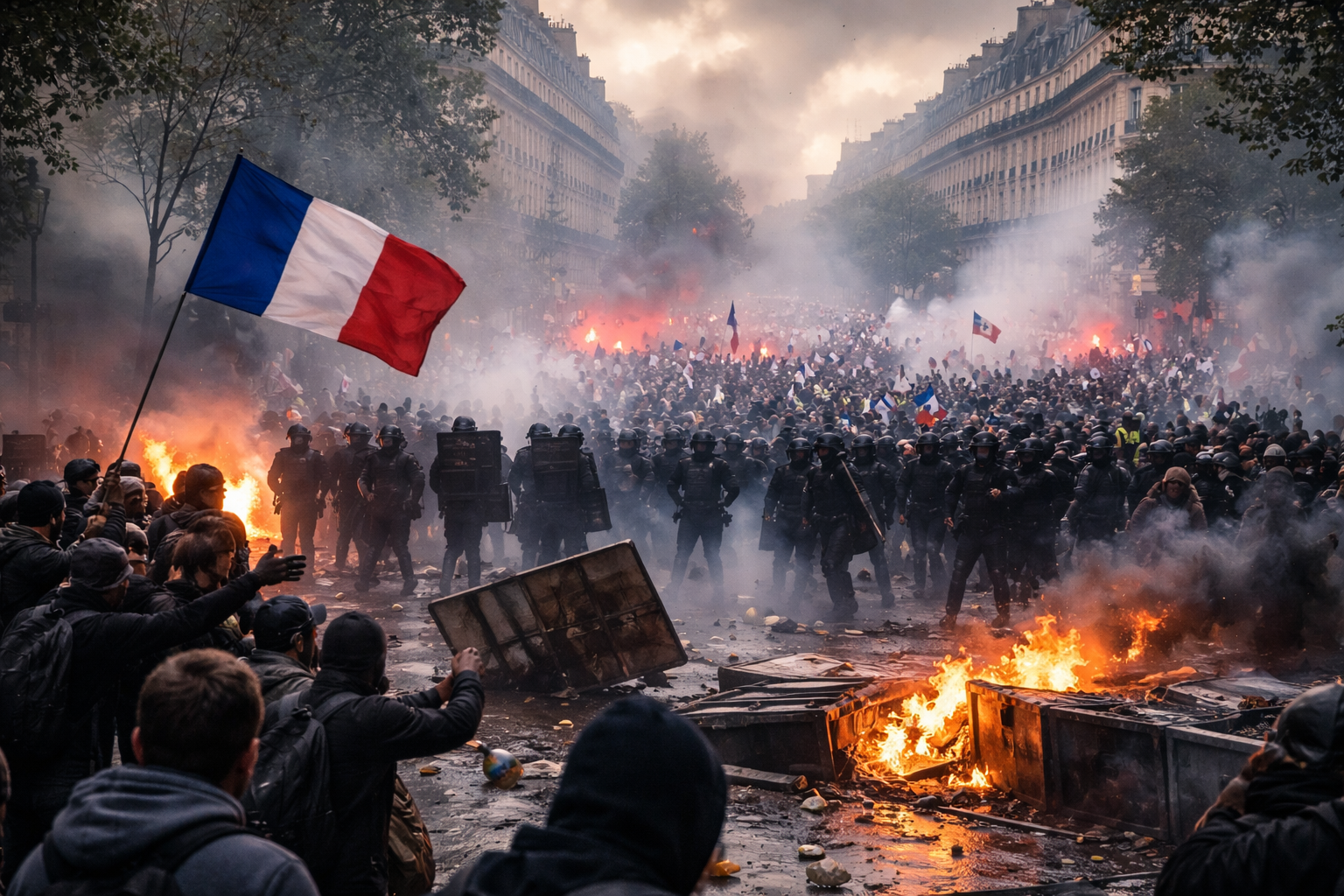
The unrest erupted in multiple cities including Paris and Marseille, where police used tear gas to disperse demonstrators who engaged in vandalism, looting, and violent confrontations.
Key Details of the Nationwide Protests
The initial demonstrations were fueled by student complaints about absent teachers and poor school conditions but quickly expanded to a larger national movement criticizing rising costs of living and perceived governmental neglect of public services. Around 140 protests with tens of thousands of participants were recorded outside Paris by midday.
In central Paris, what started as a peaceful march near Place de la République turned chaotic as masked rioters threw fireworks and stones, attacked a bank, and looted shops. Fires were set to trash bins and a truck, spreading flames to nearby buildings.
In Marseille, protesters forcibly entered the town hall after removing security barriers. They spray-painted anarchist symbols before being removed by police. The protests also took on echoes of the 2018 “yellow vests” movement, with some demonstrators wearing hi-vis vests and blocking streets.
Government Response and Official Statements
Laurent Nuñez, the Interior Minister, condemned the violent acts and said the official demonstrations had been hijacked by “casseurs,” described as opportunistic criminals exploiting the situation for looting. While he rejected the need to declare a state of emergency, Nuñez emphasized the government’s firm response toward those responsible for violence.
President Emmanuel Macron acknowledged the constitutional right to protest but stressed respect for people and property, denouncing the presence of individuals intent on causing damage as “unacceptable.” He characterized the protests as part of a deeply polarized political environment as he approaches the end of his term.
Broader Social Context and Union Support
The protests have drawn support from France’s largest labor union, CGT, which is calling for higher wages, better pensions, lower prices, and improved public services. Social media campaigns sought to revive the tactics of the 2018 yellow vests, highlighting widespread public frustration with inflation and inequality.
Amid the tensions, investigations into police conduct are underway, with over 900 officers reportedly injured and multiple allegations of excessive force, including serious injuries to minors. After a teenager lost a hand due to a police stun grenade, the government suspended the use of certain riot control weapons against young protesters but allowed their continued use during the Saturday protests.
Notably, climate activist Greta Thunberg joined student demonstrators earlier in the week, bringing international attention to the movement.