

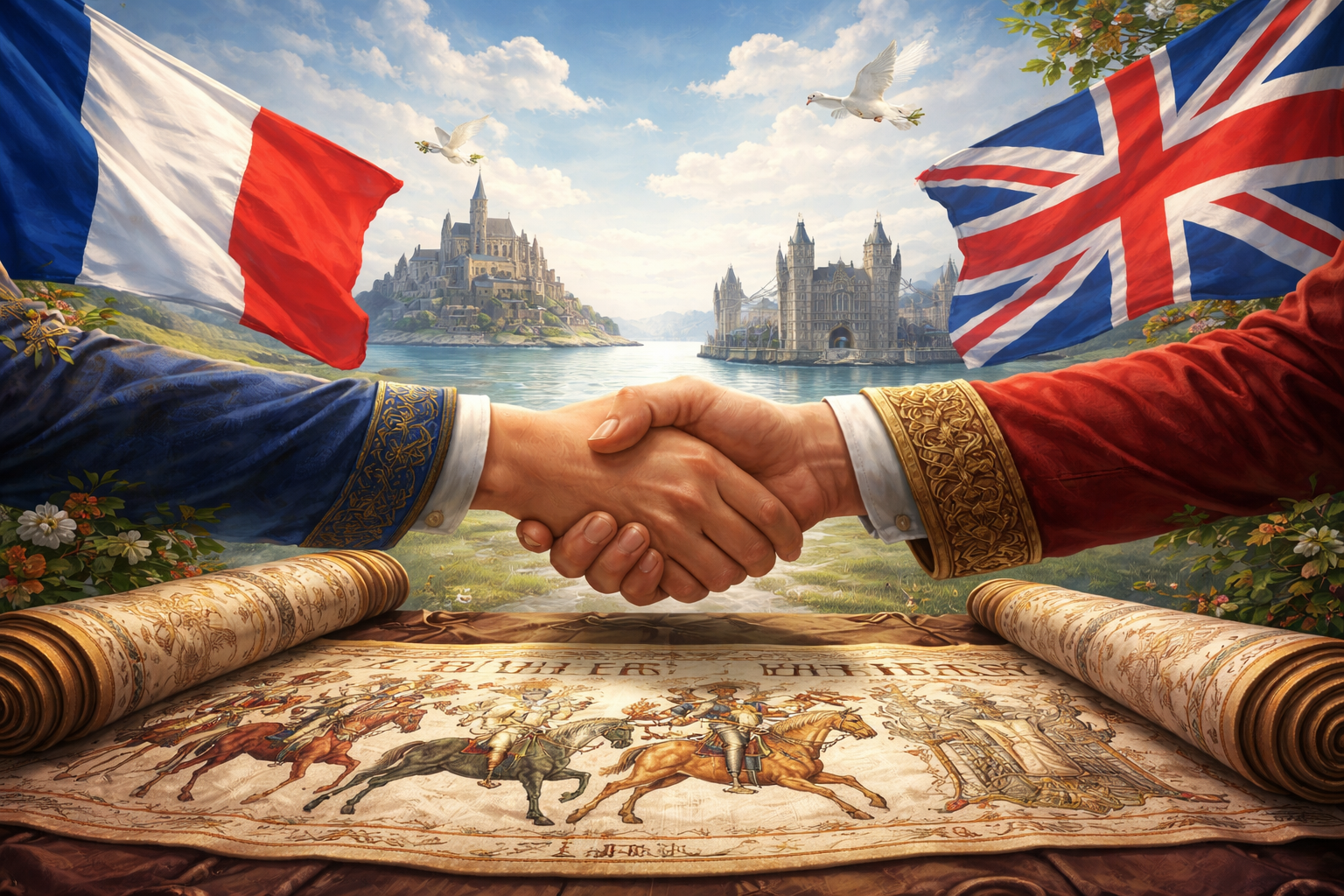
After nearly a decade of negotiations, the Bayeux tapestry—a priceless medieval artifact depicting the Norman conquest of England—has been loaned by France to the British Museum in London. The loan, unveiled with a display of goodwill between French and British officials, represents more than just an art exhibition; it underscores the enduring and intricate relationship between the two nations.
French President Emmanuel Macron fulfilled a pledge made in 2018, during a politically tense period following the United Kingdom’s Brexit vote, when he announced the tapestry’s return. At that time, Macron emphasized that history and geography bind France and Britain together, regardless of political upheavals.
Diplomatic Significance Beyond the Artifact
While the tapestry alone cannot mend all diplomatic frictions, Macron described it as symbolizing “a whole chapter of French, British and European history.” He suggested that generations to come may view this exhibition as a meaningful milestone in Franco-British relations, reflecting a bond as intertwined as the tapestry’s threads.
UK figure Andy Burnham echoed this sentiment, calling the loan “a tremendous demonstration of goodwill” that illustrates the power of collaboration. The gesture arrives amid pressing shared interests in defense, security, migration, and broader global challenges.
The Tapestry’s Political Roots and Complex Legacy
Originally created to legitimize William the Conqueror’s invasion of England in 1066, the tapestry was likely commissioned by Bishop Odo, William’s half-brother. Historians note that its intricate embroidery tells a politically charged story, including depictions of an oath betrayal by Earl Harold, which justified William’s invasion.
The tapestry’s margins also poignantly illustrate the horrors of war, showing civilians fleeing homes and scenes of death on the battlefield. These details offer a nuanced view rather than simple propaganda.
The Long Journey to the Loan
The Bayeux tapestry has experienced a turbulent history, surviving near destruction during the French Revolution and being used symbolically by Napoleon and even the Nazis for political narratives. France has repeatedly resisted loaning the tapestry to Britain, citing conservation concerns and nationalist objections since requests began in the early 20th century.
Macron’s perseverance in securing the loan, despite opposition from French artists and experts, reflects his broader commitment to enhancing Franco-British relations. Helen Drake of Loughborough University noted that Macron sees this as part of his international legacy and a strategic move to strengthen ties amid global uncertainties.
Continuing Tensions Alongside Cooperation
Despite the display of friendship surrounding the tapestry, experts caution that underlying tensions persist, especially in negotiations post-Brexit where France often adopts a firm stance in EU dealings with the UK. These competing dynamics coexist as intrinsic features of the two countries’ relationship.
The Bayeux tapestry exhibition thus stands as an emblematic event illustrating both the historical depth and the contemporary complexity of Franco-British ties.