
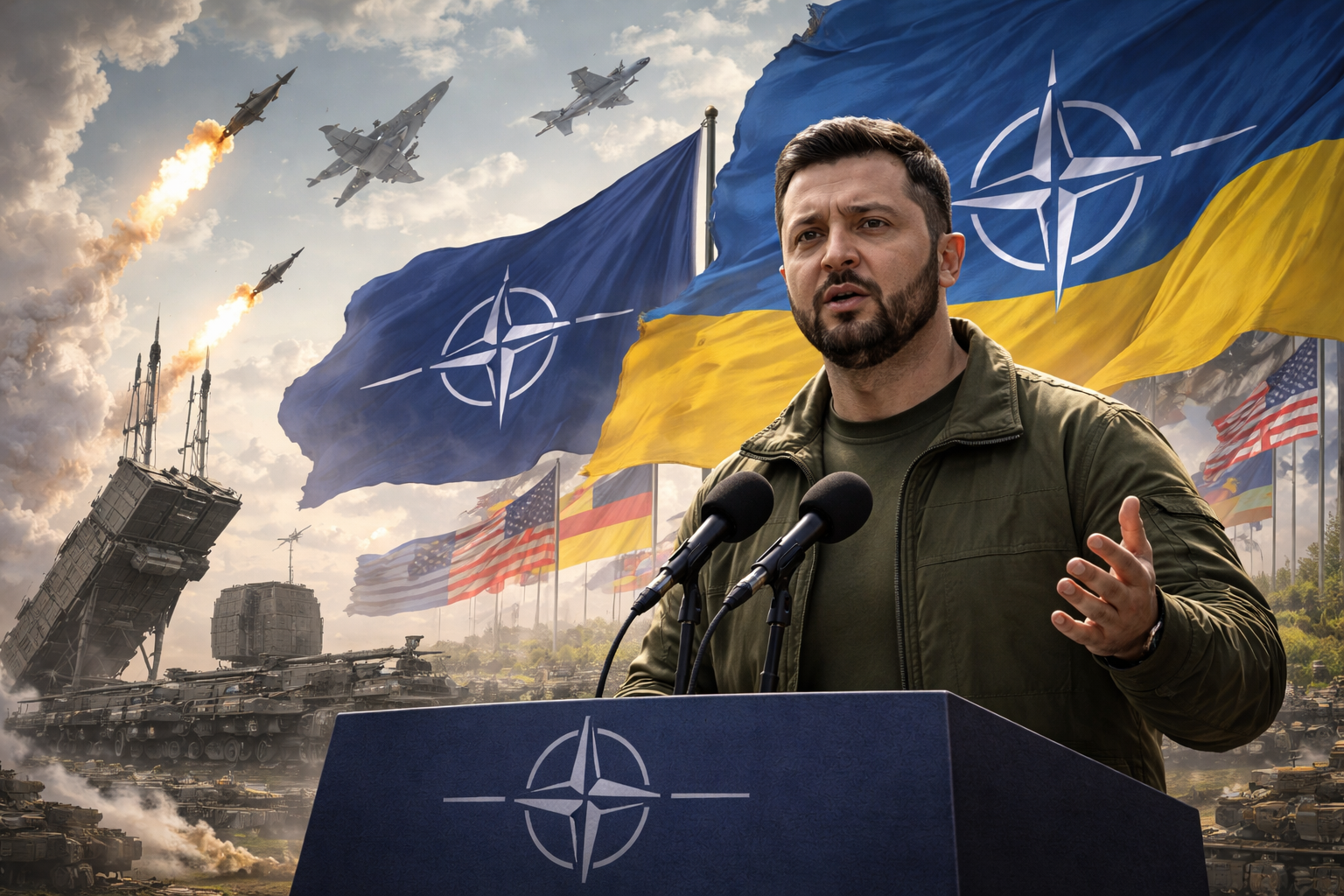
During the NATO Parliamentary Assembly’s 72nd annual meeting in Berlin, Ukraine’s president made a direct appeal to representatives of 32 NATO member states for increased support, particularly emphasizing the need for enhanced air defense systems. He stressed that Ukraine faces a critical threat from extensive Russian aerial bombardments as winter approaches.
Highlighting the urgency, the Ukrainian leader specifically requested additional Patriot missile systems and other comprehensive anti-air defenses, noting that NATO countries possess missiles capable of stopping Russian ballistic missiles that should not remain unused in storage.
Renewed Call for NATO Membership Amid Divisions
The Ukrainian president reiterated his longstanding demand for Ukraine’s accession to NATO, emphasizing that strong security guarantees will be essential after the conflict ends. He questioned why it would not be more effective, cost-efficient, and reliable for NATO to simply admit Ukraine as a member rather than handle ongoing security assurances piecemeal.
However, NATO members remain divided on the issue. While the alliance maintains that Ukraine’s path to membership is open in the long term, the current war and the obligations it would impose on member states create a barrier to near-term accession. The NATO Secretary General clarified that membership decisions require unanimous agreement among members, which does not presently exist.
German Leaders Reflect on NATO Commitments and Ukraine
At the summit, Germany’s chancellor acknowledged that denying Ukraine NATO membership during the 2008 Bucharest summit was a regrettable decision, advocating for enhanced security guarantees that resemble those offered to NATO members in the event of a future ceasefire.
Germany’s chief of defense detailed the nation’s substantial military buildup, noting that the defense budget has tripled since 2021 and will surpass €139 billion for the coming year. The Bundeswehr is expanding its forces to 460,000 personnel by the mid-2030s to meet NATO capability goals.
NATO Faces Pressure to Accelerate Defense Spending and Arms Production
NATO members have committed to raising their defense expenditures to 5% of GDP by 2035. However, alliance officials stress the need for a credible and accelerated path to reach these targets, citing a current mismatch between weapons demand and supply. Germany’s recent military investment exemplifies this broader NATO effort to strengthen defense capabilities in response to the ongoing conflict in Ukraine.