
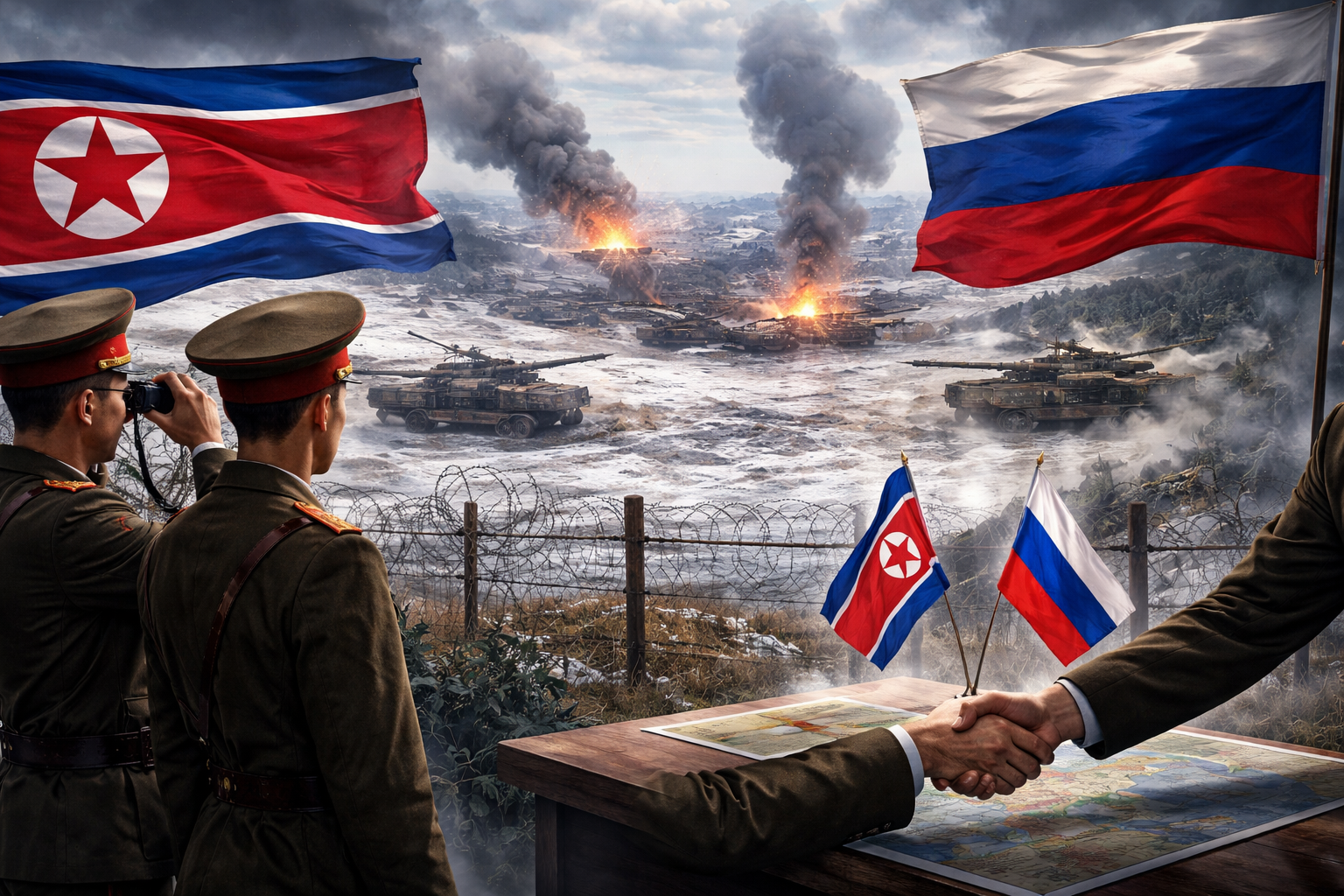
North Korea has so far withheld deploying the large numbers of troops reportedly expected to bolster Russian forces in Ukraine. Ukrainian sources and analysts indicate that while North Korea continues to provide material aid, another major troop buildup remains unlikely for now.
Over the summer, Ukrainian President Volodymyr Zelenskyy anticipated that North Korea would send between 30,000 and 50,000 soldiers to Russia, backing Moscow’s war effort. However, recent intelligence assessments and expert commentary suggest this has not materialized, with Pyongyang limiting its military contributions mainly to logistical and missile support.
The reasons behind North Korea’s restraint center on strategic calculations, battlefield realities, and diplomatic considerations involving Russia and China, according to analysts and former intelligence officials.
Unfulfilled Troop Requests and Strategic Limits
Andrii Kovalenko, who led Ukraine’s Center for Countering Disinformation until September, relayed that an August intelligence report indicated Kremlin requests for 30,000 additional North Korean troops for an autumn offensive. Yet a scheduled summit between North Korean leader Kim Jong Un and Russian leadership did not occur, and further deployments have not been observed.
Kovalenko suggests Pyongyang may have declined participation in offensive operations in contested areas like Donetsk, viewing this as a red line. He also notes North Korea maintains around 8,500 support personnel in rear areas of Russia, including drone operators and engineers, while actively increasing ammunition production and showcasing new weapons technology.
Winter, Battlefield Conditions, and Diplomatic Visits
Han Ki-bum, a former deputy director of South Korea’s National Intelligence Service, explained that the seasonal lull in fighting reduces Pyongyang’s immediate incentive to reinforce the front lines with combat troops. He highlighted a recent visit by a senior North Korean official to Moscow that might clarify future plans, whether to strengthen political ties or possibly pave the way for Kim’s visit.
Another former North Korean soldier, Ahn Chan-il, now a researcher, pointed out that Moscow weighs troop needs against logistical costs. Unless the war expands significantly, Russia may not request a larger North Korean troop presence. Both analysts agree that Russia continues to rely on North Korean weapons and material support despite fewer combat troops arriving.
Weapons Supply and Military Cooperation Dynamics
Ukrainian officials report sustained flows of North Korean ballistic missiles to Russia, with President Zelenskyy warning that these transfers help Pyongyang refine its own weapons technology, creating regional security concerns. Pyongyang retains a missile unit in Russia’s Voronezh region and continues to supply drones along with other military materials.
The cooperation between North Korea and Russia serves dual purposes: supporting Moscow’s war ambitions and enabling Pyongyang to advance its drone development and naval strength. Yet Pyongyang appears to adopt a “containment strategy” — maintaining ties with both Russia and China, limiting troop commitments while preserving benefits from alliances.
Balancing Relations Between Russia and China
Experts say North Korea is simultaneously deepening relations with China to ensure economic and political support, partly because Moscow has not fully reciprocated North Korean military assistance. Strengthening ties with Beijing is seen as a strategic hedge and a way to potentially encourage Moscow to provide more in return.
According to former South Korean officials, North Korea’s dual approach helps it manage risks stemming from the uncertain trajectory of the Ukraine war while securing vital backing from its two key allies. This balancing act might explain Pyongyang’s cautious troop deployment decisions amid ongoing cooperation with Russia.