

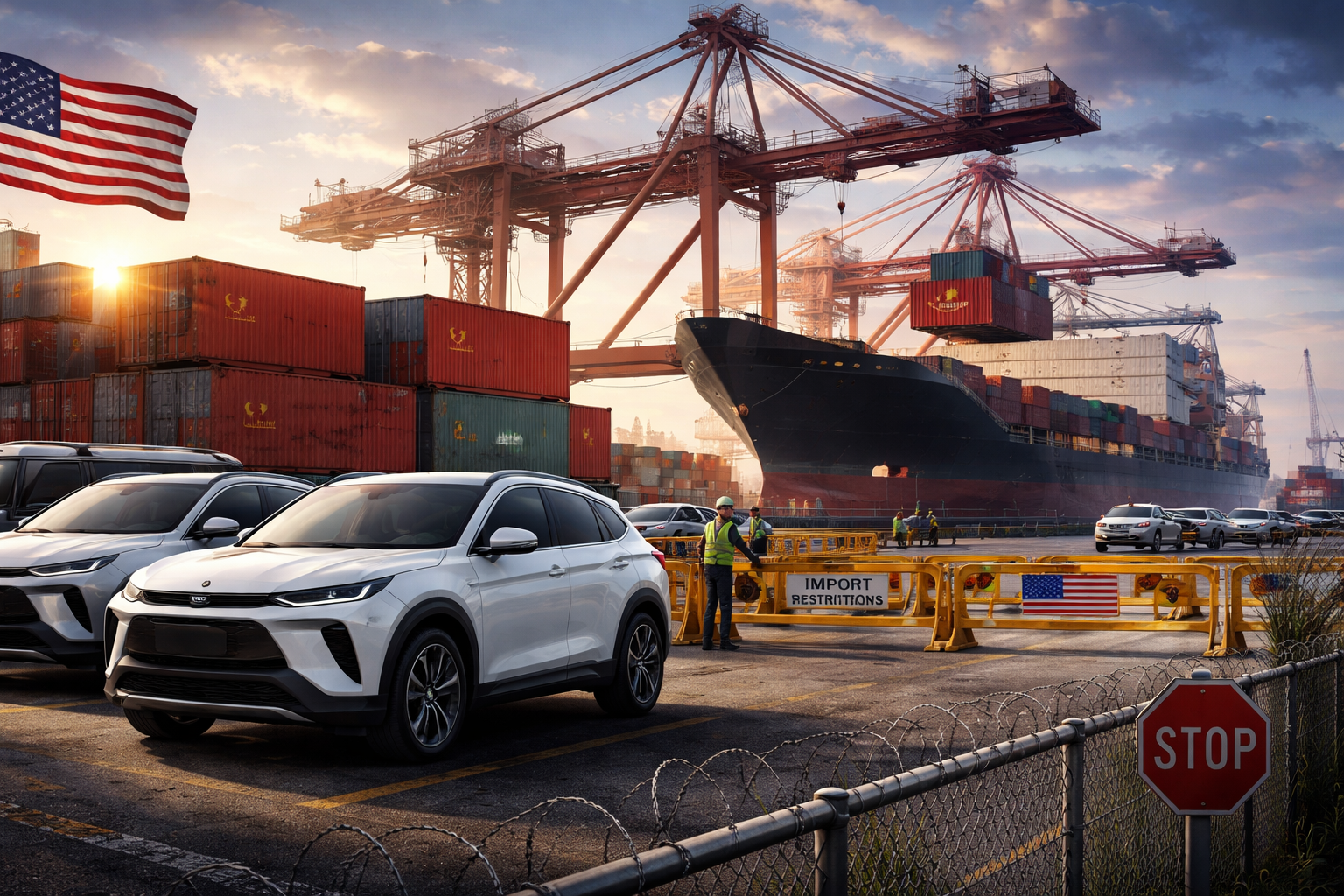
Starting December 1, the European Union will impose temporary import quotas on Chinese hybrid electric vehicles (EVs) to address concerns about their rapid increase in the European market. The move, announced by the European Commission, aims to shield the EU’s domestic industry from potential harm and address the trade imbalance with China.
The quotas, applying to plug-in and battery-powered hybrid vehicles, will last for 200 days and limit tariff-free Chinese hybrid car imports to 350,000 units in the first year. This cap is approximately half the expected number of hybrids from China to be imported into the EU over the next 12 months.
Import Caps Extend to Other Countries
While the primary focus is on Chinese imports following a surge after an October agreement with Beijing, similar quotas will also cover hybrids from Japan, Turkey, South Korea, and the United Kingdom. Initial quotas set for the first year are 310,000 for Japan, 230,000 for Turkey, 105,000 for South Korea, and 190,000 for the UK. Other countries such as Mexico, Morocco, Serbia, and the United States are also subject to these safeguard measures but with less restrictive limits.
Market Impact and Industry Concerns
Imports of Chinese EVs increased dramatically from 21,000 units in 2020 to 438,000 in 2024, before a tariff was applied. Following tariffs, the EU observed a shift from fully electric vehicles to hybrids among Chinese exports, with worldwide Chinese hybrid exports expected to climb from 191,000 in 2023 to 1.124 million in 2025. The commission cited sufficient evidence that these imports threaten serious injury to the union’s hybrid vehicle industry, which it described as strategically important for innovation, electrification, and employment.
Responses and Ongoing Disputes
Several non-EU countries have expressed concern over the fairness and transparency of the EU’s investigation and quota allocation process. At a recent World Trade Organization goods council meeting, South Korea questioned the investigation’s impartiality. Japan, the UK, Switzerland, and Turkey emphasized the need for transparency and due process. China’s commerce ministry urged adherence to prior agreements but reserved the right to defend its industry’s interests vigorously.
The UK continues to contest a forthcoming 10% tariff on its EV exports to China, slated to start January 1 under the 2020 Brexit trade deal. Efforts by UK officials to have the country recognized as a European manufacturer under the EU’s “Made in Europe” framework remain linked to these tariff disputes, which seek to protect against cheap imports from China.