

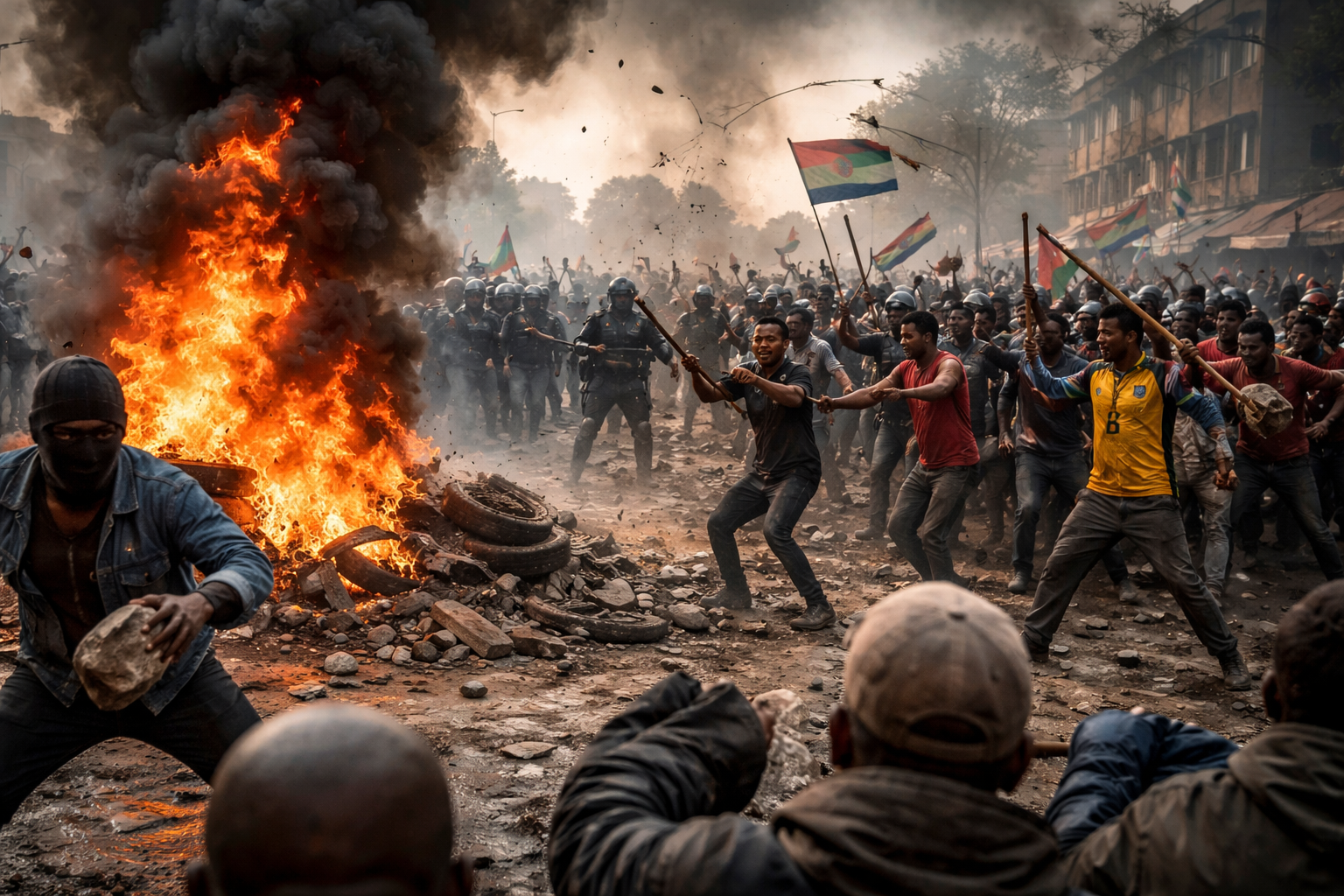
Anti-migrant protests flared into violence in South Africa after a court ruled that the government must resume processing asylum applications, reigniting tensions surrounding immigration in the country. The unrest saw cars set on fire and gunshots reported in Durban and Soweto, Johannesburg, according to local authorities and media.
The protests followed a court ruling that declared parts of the government’s refugee policy unconstitutional, particularly provisions barring certain individuals from accessing asylum procedures due to reasons like illegal entry. This has prompted an influx of people to refugee centers, including some who reportedly do not qualify for asylum.
Authorities have emphasized that the court judgment does not automatically grant refugee status or permanent residency to anyone entering South Africa. The violent episodes are part of ongoing xenophobic protests that have affected parts of the country this year.
Details of the Protests in Durban and Soweto
In Durban, protesters demanded that a refugee center cease processing asylum applications. The situation escalated as about 10 vehicles were overturned and burned, and foreign-owned shops were looted. In Soweto, residents and foreign shop owners clashed, with gunfire heard in the area.
Johannesburg Metropolitan Police confirmed that at least nine vehicles were set ablaze. Authorities reported clashes between foreign nationals and South African citizens but stated that no injuries have been confirmed so far.
Impact of the Court Ruling on Refugee Policy
The court ruling challenged government restrictions that had hindered asylum seekers’ access to the refugee system, marking these provisions as unconstitutional. It criticized rules that excluded individuals from asylum processing based on procedural grounds, such as entering South Africa illegally.
Following the ruling, hundreds have reportedly approached refugee centers, some without qualifying conditions for asylum. The government acknowledged the ruling but clarified that it does not grant asylum status or permanent residence by default.
Context of Xenophobic Sentiment in South Africa
South Africa has experienced persistent anti-immigrant protests this year, fueled by populist groups demanding undocumented foreign nationals leave by a set deadline. These movements have led to tens of thousands fleeing the country or being repatriated amid international criticism.
Despite a high unemployment rate affecting about a third of the population, South Africa remains Africa’s largest economy and a destination for migrants. Immigrants are often blamed for job losses, crime increases, and public service strain, though social scientists note a lack of evidence to support these claims.