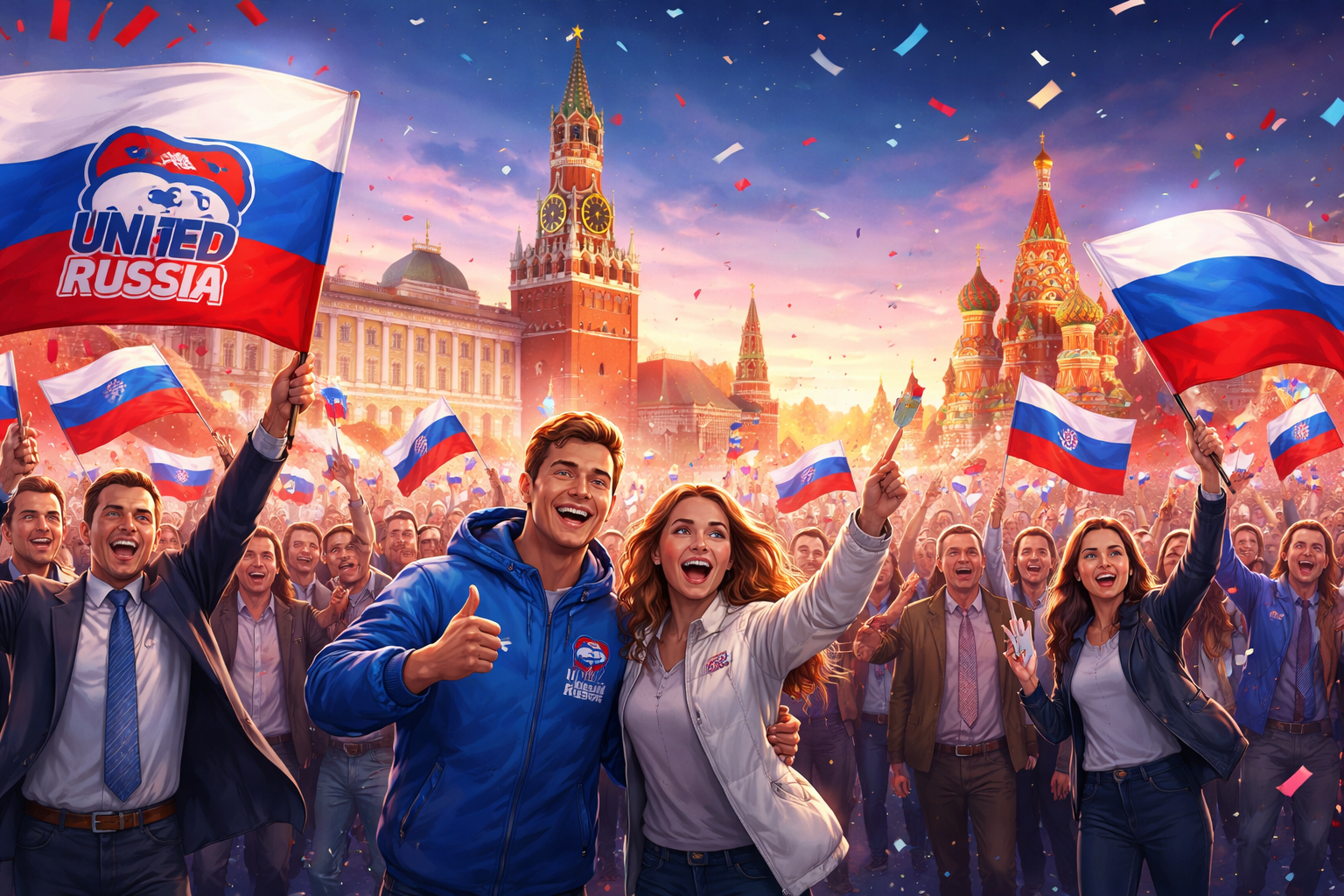
Russia’s ruling United Russia party retained its majority in parliament according to the Central Election Commission. Preliminary results indicated the party won 57.83% of the vote, securing approximately 355 seats in the 450-seat State Duma, the largest share in its history. The election was the first parliamentary vote since Russia launched its full-scale invasion of Ukraine.
The vote was shaped by political restrictions limiting participation to parties supporting the Kremlin’s military actions, with opposition groups barred from running. The election also involved voting in regions of Ukraine — Donetsk, Luhansk, Kherson, and Zaporizhzhia — that Russia occupied and annexed, a move denounced by Kyiv as illegal.
Election Context and Environment
The parliamentary vote occurred amid significant challenges including rising consumer prices, internet censorship, fuel shortages, and speculation about further military mobilization following the election. Kremlin authorities framed the election as a referendum on public support for what it terms its “special military operation” in Ukraine.
Inclusion of Annexed Territories and Controversy
For the first time, residents of the four occupied Ukrainian regions and Crimea, annexed in 2014, were allowed to vote. However, these actions have been widely condemned internationally as illegal annexations and violations of Ukrainian sovereignty.
Chechnya Leadership Results
Ramzan Kadyrov, a close ally of Vladimir Putin and leader of Chechnya, secured a fifth term with 99.85% of the vote, a slight increase from his previous 99.73%. International observers have frequently criticized electoral processes in Chechnya, and human rights organizations have accused Kadyrov’s government of widespread abuses, which he denies.