
As world leaders converge for the annual United Nations gathering, a notable realignment is underway among middle powers seeking to protect their interests from the volatility of U.S. foreign policy. Concerns intensify amid the anticipation of continued disruption by President Donald Trump following the November midterm elections, particularly if legislative gridlock constrains domestic initiatives.
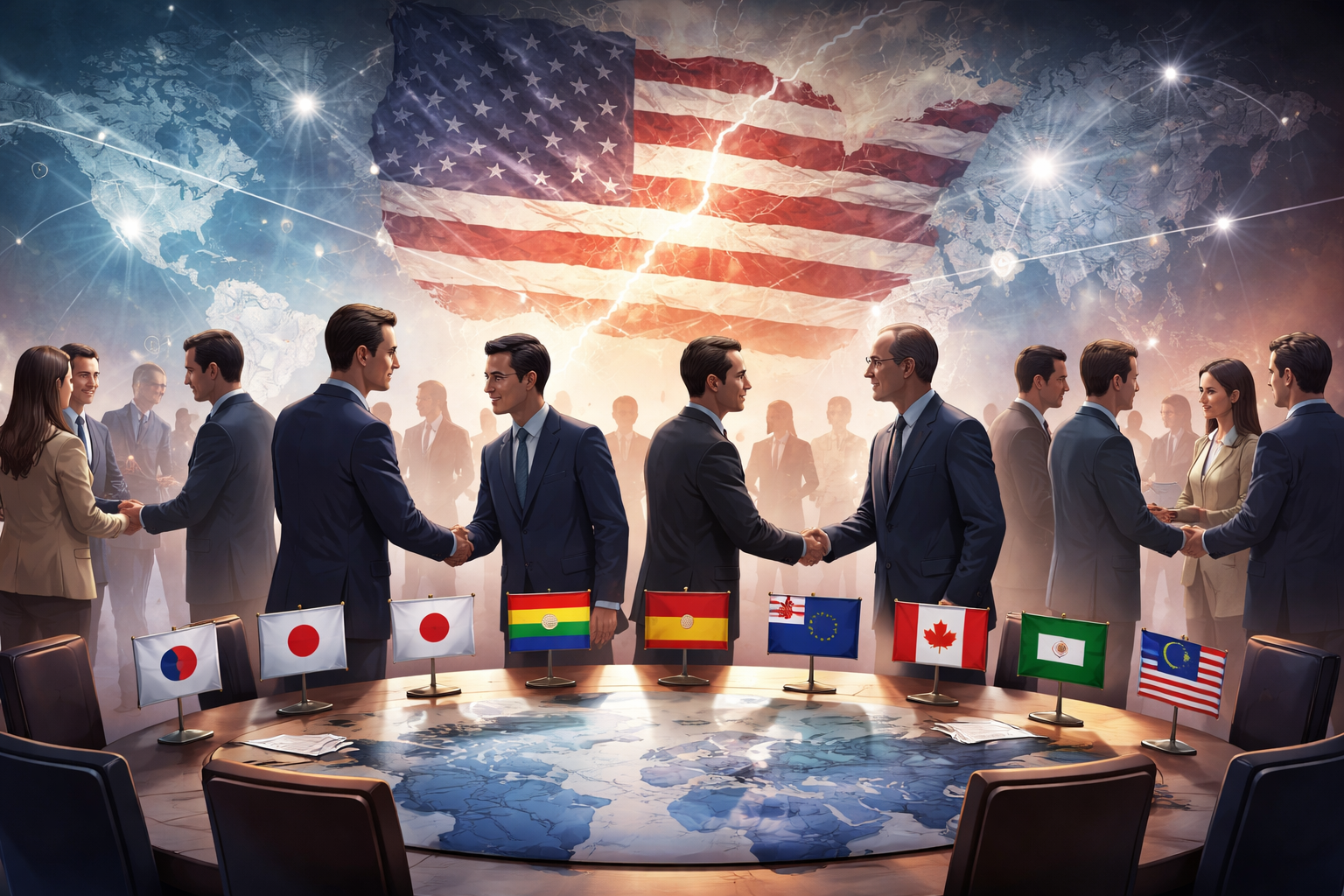
Experts predict that Trump, facing potential irrelevance in Congress, may double down on a confrontational international stance, accelerating a trend of diverse diplomatic, military, and trade partnerships worldwide designed to mitigate reliance on the United States. These evolving alliances often sideline the U.S. and increasingly engage with other global powers, most notably China.
Formation of Hedging Alliances and Alternative Blocs
Countries formerly aligned with the U.S. are now prioritizing alliances formed on the premise of self-defense and strategic autonomy rather than integration with American grand strategy. According to policy advisers, this shift is cultivating a “sub-threshold international order” where sovereign nations create complex networks as safeguards against unpredictable U.S. policies.
Prominent examples include the increasingly influential BRICS and Shanghai Cooperation Organization (SCO) gatherings, which focus on economic resilience and infrastructure, offering alternatives to Western financial systems. Recent BRICS declarations underscore efforts to insulate economies from “weaponized” Western financial networks while avoiding overtly anti-American positioning.
Regional Security Reconfigurations and the Middle East Pact
A significant new development occurred in the Middle East with the August signing of the Mecca pact by Turkey, Pakistan, and Saudi Arabia, which some analysts interpret as a move to reduce dependence on the U.S. military umbrella and recalibrate regional security dynamics, particularly amid rising tensions with Iran.
U.S. military vulnerabilities were exposed as Iranian missile and drone attacks compromised bases and shifted Gulf Cooperation Council (GCC) nations’ threat perceptions. This has prompted Gulf states to emphasize self-sufficiency and reassess reliance on U.S. guarantees, especially given controversial operations in the region involving allied nations.
Implications for Traditional U.S. Alliances and Global Balance
The evolving geopolitical landscape is prompting questions about the durability of traditional American alliances. European nations debate a more autonomous NATO focusing on European military powers, reflecting concerns about U.S. commitment amid trade tensions and diplomatic divergences under Trump’s leadership. Similarly, Canada and South Korea confront strained relations and are considering more independent defense and economic strategies.
Experts caution that these changes may lead to a more fragmented and unpredictable international order, diverging from the post-Cold War framework centered on a U.S.-led alliance system. While some U.S. officials and diplomats hold hope for a resurgence of cooperative dialogue and stability, others see a fundamental shift underway that will require new models of engagement and partnership among middle powers.