
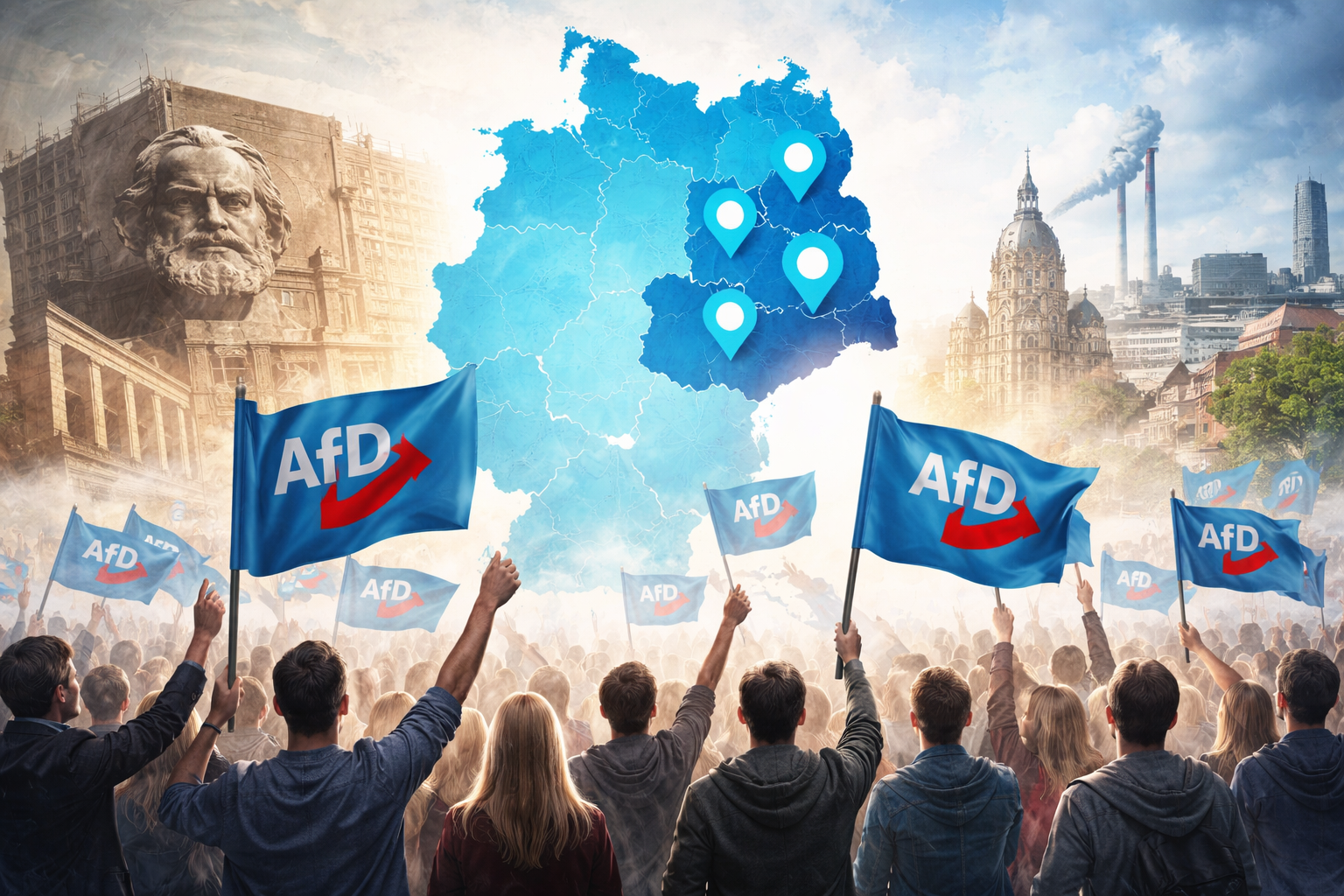
On September 6, the Alternative for Germany (AfD), a far-right, anti-immigrant, pro-Kremlin party, won a sweeping victory in Saxony-Anhalt, capturing 44% of the vote and becoming the largest party in the state parliament. This outcome marks the first time since the Nazi era that a far-right party could govern a German state, eliciting alarm and reflection across the country.
The results have prompted questions about why so many East Germans support the AfD and whether this support stems from an inherited longing for authoritarian rule. However, analysis points to a more complex reality grounded in historical grievances, economic upheaval, and a sense of marginalization.
Historical Context and Economic Discontent
The former East Germany has struggled with economic disparities and social challenges following reunification. In the years after 1990, the rapid privatization of state-owned enterprises by the Treuhand agency resulted in the loss of approximately two million jobs in the East. Only a small fraction of businesses remained under local ownership. This economic upheaval fueled widespread dissatisfaction and a perception of being treated as inferior to the West.
Many East Germans initially hoped for a system blending socialism and capitalism, and reunification was often seen as an imposed West German project rather than a consensual solution. The sense of being ‘patronized’ by Western authorities has lingered, shaping political attitudes.
The AfD’s Appeal Beyond Policy
The AfD’s rise cannot be understood solely through its policies or platform, which many voters admit to not fully engaging with. Instead, the party’s success in eastern regions is tied to its ability to connect with voters on an emotional level. The AfD’s local leaders, such as Ulrich Siegmund in Saxony-Anhalt, have capitalized on feelings of neglect by organizing community events with free food and music, creating a sense of belonging in depopulated small towns and villages.
Supporters are often motivated less by agreement with the party’s ideology and more by a desire to be seen and heard, responding to the AfD’s message of reclaiming control and standing up to perceived Western dominance. This dynamic points to political dissatisfaction being instrumentalized rather than a straightforward embrace of far-right ideology.
National Implications and Misconceptions
While some commentators have attributed East German support for the AfD to an inherited authoritarian mindset, the party’s origins and leadership are predominantly Western German. The phenomenon reflects broader national issues, including ongoing struggles with right-wing extremism and the failure of existing political structures to effectively counter these movements.
The AfD’s success exposes unresolved tensions in Germany’s reunification legacy and the persistence of systemic inequalities. It serves as a sobering reminder of how economic and social hardships can fuel political extremism, not only as a regional concern but as a challenge for the entire country.
As Germany approaches further state elections, the outcome in Saxony-Anhalt highlights the urgent need for honest engagement with the roots of far-right support and effective strategies to address underlying grievances.