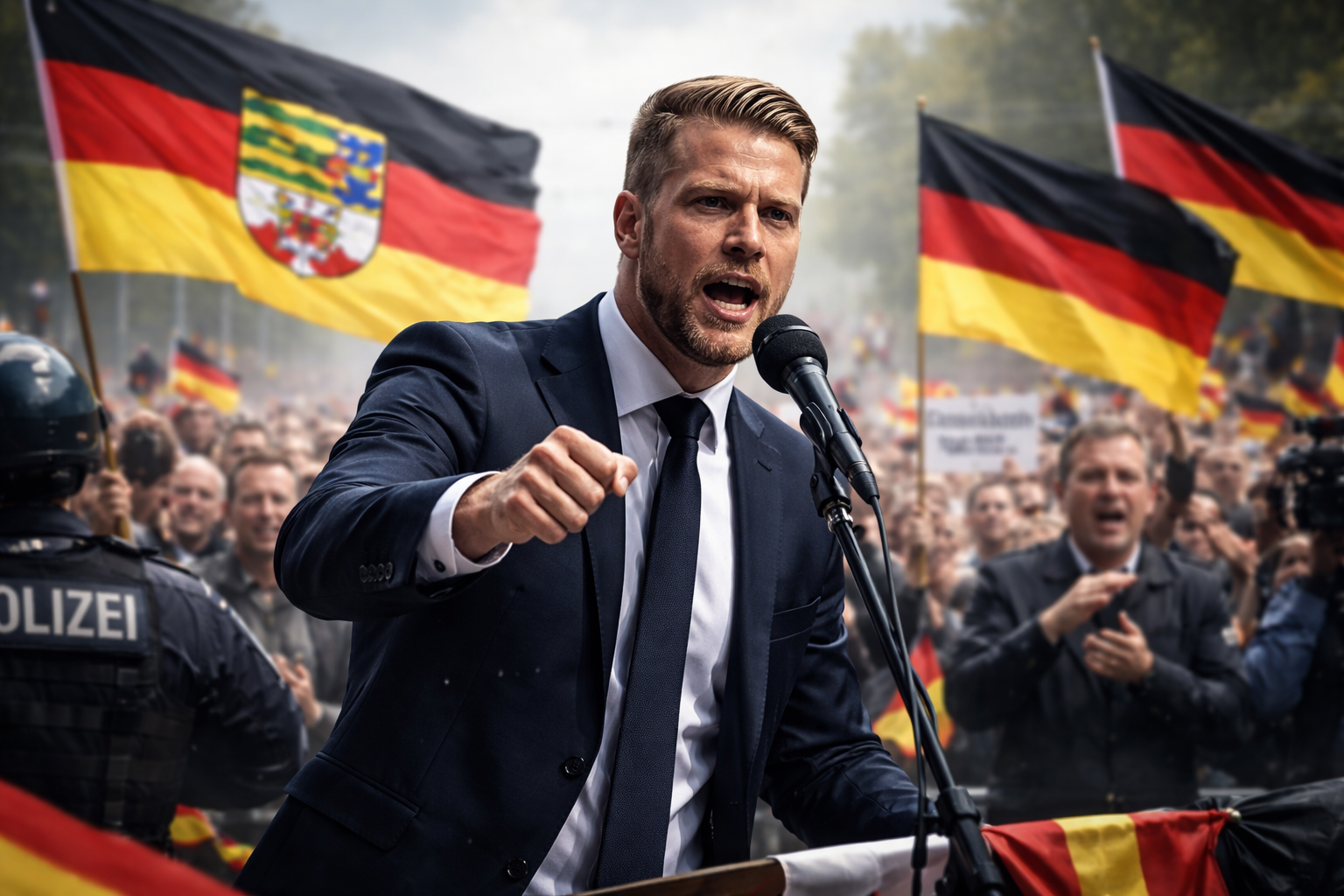
Ulrich Siegmund, the young charismatic figurehead of Germany’s far-right AfD party in Saxony-Anhalt, has recently been dubbed Germany’s most dangerous man by the news magazine Der Spiegel. Despite the provocative label, Siegmund has embraced the attention, actively engaging with supporters and media alike.
His growing popularity positions him to potentially become the first far-right leader of a German state since the era of Adolf Hitler. Current polls indicate the AfD holds 42% support in Saxony-Anhalt, nearly twice the backing of the traditionally dominant CDU party of Chancellor Friedrich Merz.
Rising Political Influence in Eastern Germany
Siegmund’s rise reflects a broader political shift in eastern German states, where far-right movements have gained notable traction. The upcoming state elections in Saxony-Anhalt are widely viewed as a critical moment for postwar German politics. If the AfD secures victory, similar outcomes could follow in other eastern states, raising concerns about the party’s long-term influence at the federal level.
Der Spiegel’s Controversial Cover and Siegmund’s Response
Der Spiegel’s cover story featured a striking portrait of Siegmund, describing him as “Der gefährlichste Mann Deutschlands” (Germany’s most dangerous man). Instead of shying away from the label, Siegmund has publicized the cover among his 800,000 TikTok followers, using it as a symbol of defiance and rallying support on the campaign trail.
Implications for German Politics
The AfD’s surge in Saxony-Anhalt poses significant questions about the direction of German democracy and the resilience of established parties. Analysts warn that success in state elections could embolden the far-right movement nationally, challenging Germany’s political stability near future federal elections.