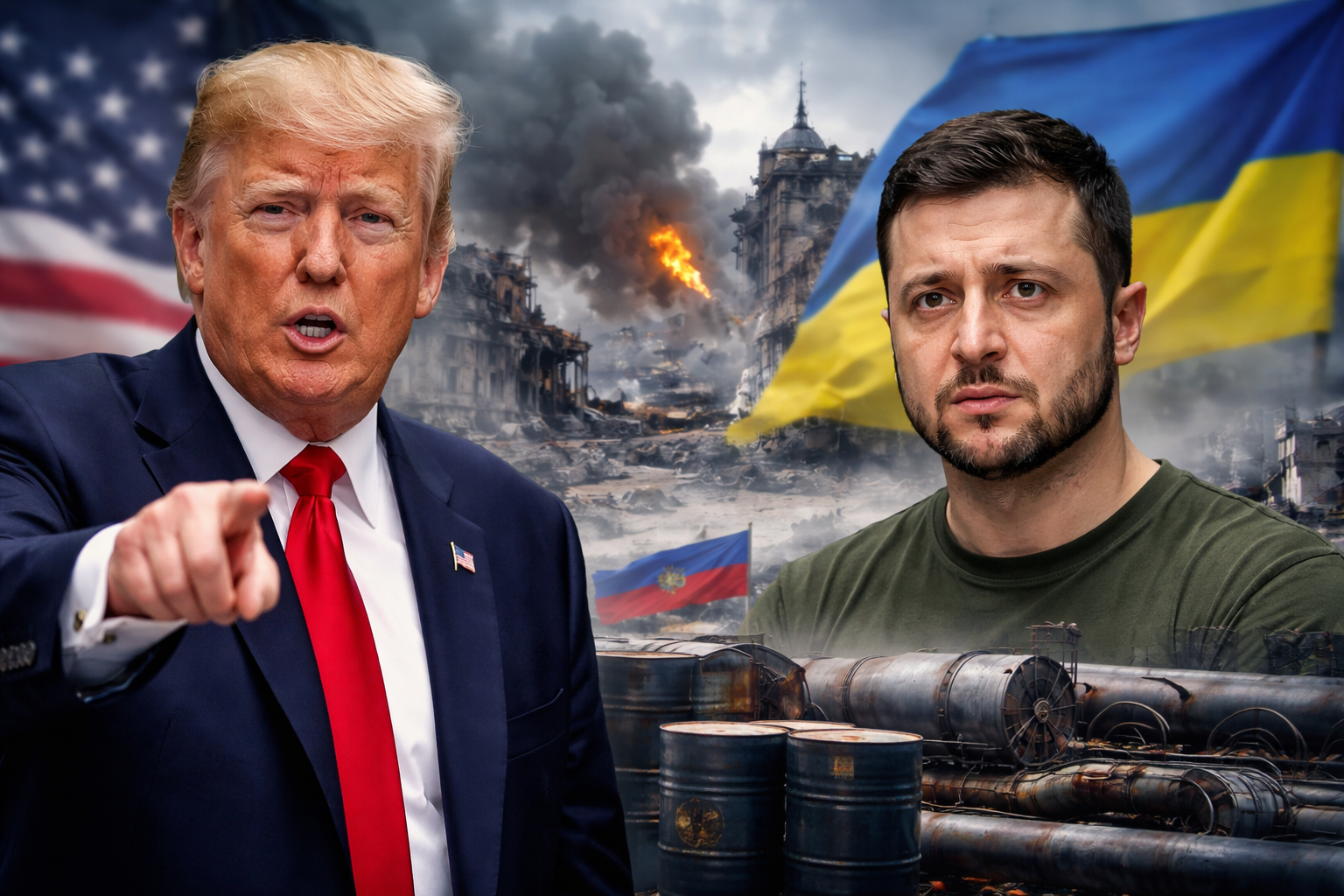
Former US President Donald Trump stated that it is “time for Ukraine to get a new president” following Ukrainian President Volodymyr Zelensky’s condemnation of a US agreement to resume Russian diesel exports. The deal, reached recently, suspends sanctions on Russian diesel exports until April 7, 2027, aiming to ease global fuel shortages but drawing criticism from Ukraine and its allies.
Zelensky denounced the agreement as a gift to Russian President Vladimir Putin, warning that it would provide Moscow with funds to continue its war against Ukraine. In response, Trump accused Zelensky of creating problems by authorizing attacks on Russian refineries, urging him to “stop” and suggesting Ukraine should replace its leader with someone capable of negotiating similar deals to reduce fuel prices.
Details of the Diesel Deal and Energy Market Impact
The US-Russia diesel deal involves Russia releasing an initial 300,000 tonnes of diesel to American and global markets, followed by 500,000 tonnes in November, a further one million tonnes thereafter, and an additional 3 million tonnes later, contingent on the status of Russian diesel refineries. This move comes amid significant fuel supply constraints triggered by the US-Israel war against Iran, which effectively closed the Strait of Hormuz, a crucial transit route for roughly one-fifth of global oil products.
Russia and Ukraine have escalated strikes on each other’s energy infrastructure, further straining fuel markets. According to the International Energy Agency, Russian diesel production has dropped an estimated 30% due to Ukrainian drone attacks on refineries. The average diesel price in the US is $6.28 per gallon, significantly higher than last year’s $3.68, pressuring the US politically ahead of midterm elections.
Global and Allied Reactions
Kirill Dmitriev, a Russian envoy, called Trump’s comments “iconic and historic,” asserting that Ukraine needs leadership focused on peace. Meanwhile, European leaders have also expressed disapproval. The European Union’s foreign affairs chief, Kaja Kallas, agreed with Zelensky, stating that the suspension of sanctions gives Moscow more revenue to wage war and that Europe will not ease pressure on Russia. European foreign ministers plan to approve the most extensive sanctions on Russia since the 2022 invasion.
UK Prime Minister Andy Burnham spoke with Zelensky, endorsing an immediate energy ceasefire and urging Russia to stop attacks on Black Sea shipping to release energy and food supplies into global markets.
Political Dimensions and Calls for Change in Ukraine
Trump’s call for new elections in Ukraine comes nearly a year after he first suggested Ukrainian voters should have the choice to replace Zelensky, despite Ukraine being under martial law since the 2022 invasion, which has suspended elections. Trump’s intervention aligns with his broader efforts to lower fuel prices in the US, a critical political issue amid rising inflation linked to international conflicts.
Zelensky continues to coordinate with allies to seek effective measures to protect lives in Ukraine and maintain European security, emphasizing the need for “real decisions” in the face of ongoing hostilities and energy challenges.