
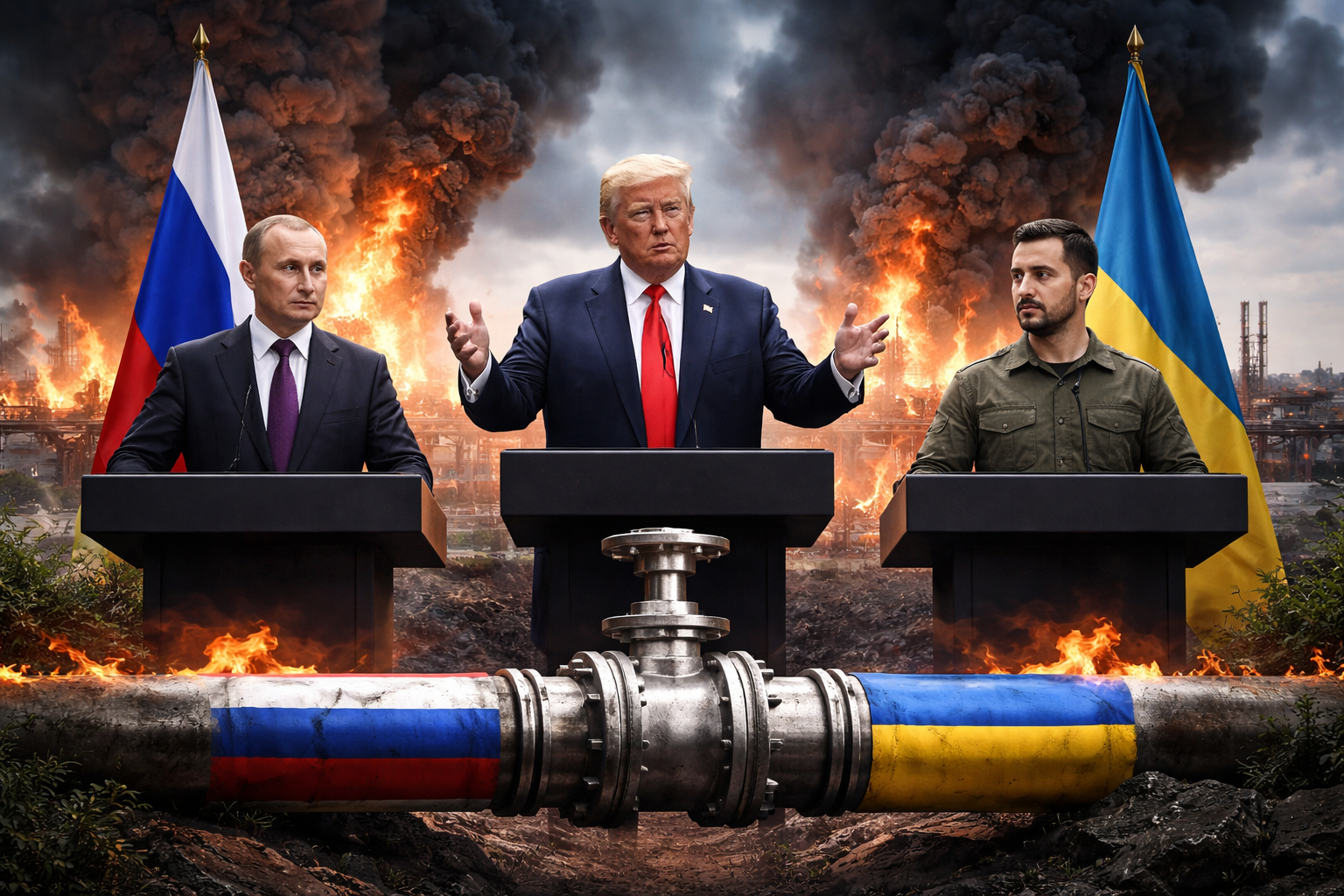
Donald Trump claimed that Russia and Ukraine have agreed to an “energy ceasefire” aimed at halting attacks on each other’s energy facilities, with Kyiv expressing cautious support and Moscow yet to issue a response. The US announcement, made by Trump on October 11, 2026, stated the ceasefire would be “effective immediately,” though no further details were provided.
Ukrainian President Volodymyr Zelensky initially said the claim was “news” to him in an interview with Axios, adding that Kyiv would back such a ceasefire if Russia agreed. He emphasized readiness to refrain from striking Russian energy infrastructure while expecting reciprocal commitment from Moscow.
Ongoing Tensions Amid Energy Infrastructure Attacks
Despite the announcement, Zelensky reported that shortly after Trump’s statement, Russian forces struck a power plant in Kyiv via drone attack, causing power outages, followed by additional strikes in northeastern Kharkiv. Ukraine and Russia have engaged in reciprocal attacks on energy facilities for months. Moscow justifies its strikes by claiming these targets support Ukraine’s military operations, while Ukraine targets Russian infrastructure to limit Russia’s war funding.
The attacks have caused disruptions in energy supplies on both sides, underscoring the challenges in establishing a lasting truce over such critical infrastructure.
Mixed International Reactions and Political Opposition
The energy ceasefire proposal received supportive statements from the UK Prime Minister, France, Canada, and the European Union. However, some, including the UK Defense Secretary and EU foreign policy chief, voiced skepticism or opposition. In the US, lawmakers from both major parties criticized the related diesel supply deal, which temporarily eased sanctions on Russian imports to release diesel on global markets.
Seven US senators, representing both Democrats and Republicans, stated that Trump’s deal “runs directly counter” to existing laws banning Russian energy imports, urging a reconsideration. Republican Senator Thom Tillis warned that the deal might endanger American lives.
Political Tensions Between Trump and Zelensky
Following Zelensky’s condemnation of the diesel deal as a “gift” to Russian President Vladimir Putin, Trump accused the Ukrainian leader of continuing strikes that “make problems for the world” and suggested it was “time for Ukraine to get a new president.” Zelensky has resisted calls for new elections during the war, citing constitutional suspensions and security concerns in occupied or active conflict areas.
Despite this, Zelensky agreed to hold elections if Russia committed to a 60-day full ceasefire. The ongoing conflict, now in its fourth year, continues to cause casualties; recent attacks killed six people in Ukrainian cities and two near Russian borders on October 11.