

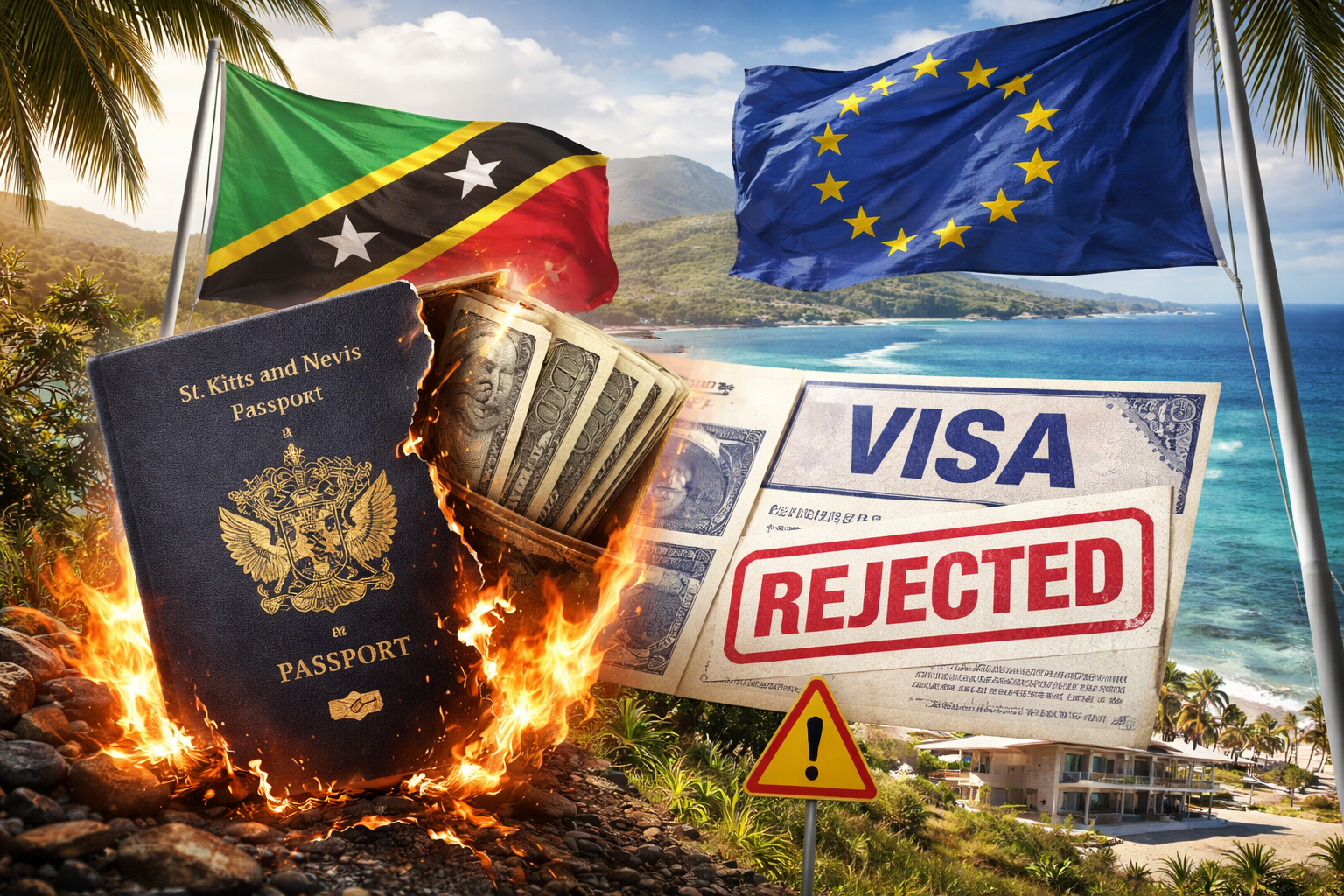
St Kitts and Nevis announced plans to phase out its citizenship-by-investment (CBI) program after the European Union threatened to revoke visa-free access to its member states within the Schengen area. The move raises concerns among leaders about the country’s economic future and its ability to provide essential services.
The announcement was made by Terrance Drew, who highlighted that the program had faced mismanagement in previous administrations, including low investment sums and issues with escrow protections. Drew stressed that the decision was driven largely by the risk of losing access to European visa-free travel, as well as potential restrictions on international banking services critical to residents and families abroad.
Impact on Economy and Government Revenue
St Kitts and Nevis pioneered the CBI program over four decades ago, allowing wealthy foreigners to gain citizenship through investments in national infrastructure and development projects. The program has been a significant source of government revenue, at times accounting for the largest portion of income.
Despite the economic benefits, Drew expressed concern about dependency on a single source of revenue, stating that relying heavily on CBI funds put the country “at its mercy.” He emphasized the government’s goal to diversify the economy by investing in tourism, yachting, creative industries, and clean geothermal energy, with related drilling activities already planned.
Opposition and Calls for Support
Mark Brantley, the premier of Nevis with autonomous governance, acknowledged the limited choice forced by the EU’s demands but voiced objections to the program’s termination without accompanying support. Brantley criticized the EU’s deadline of June 2028 for the phase-out as unrealistic and pointed out the lack of assistance to help the country transition away from CBI revenue.
He underscored the importance of the program for the nation’s GDP and its role in funding fundamental services such as water access, education, and healthcare.
Regional Responses and Future Outlook
St Kitts and Nevis is not alone in facing pressure from the EU regarding CBI programs. Other Caribbean countries with similar schemes—Dominica, Antigua and Barbuda, Grenada, and St Lucia—have received similar warnings. Antigua and Barbuda has shown willingness to end its program but seeks a longer transition period, while Grenada aims to continue until 2032. Dominica and St Lucia have yet to publicly commit.
Drew concluded with a commitment to careful economic planning and stated that increasing taxes would not be part of the strategy to replace lost CBI funds. The government plans to grow the economy through diversified sectors, hoping to mitigate the impact of winding down the citizenship-by-investment program.