

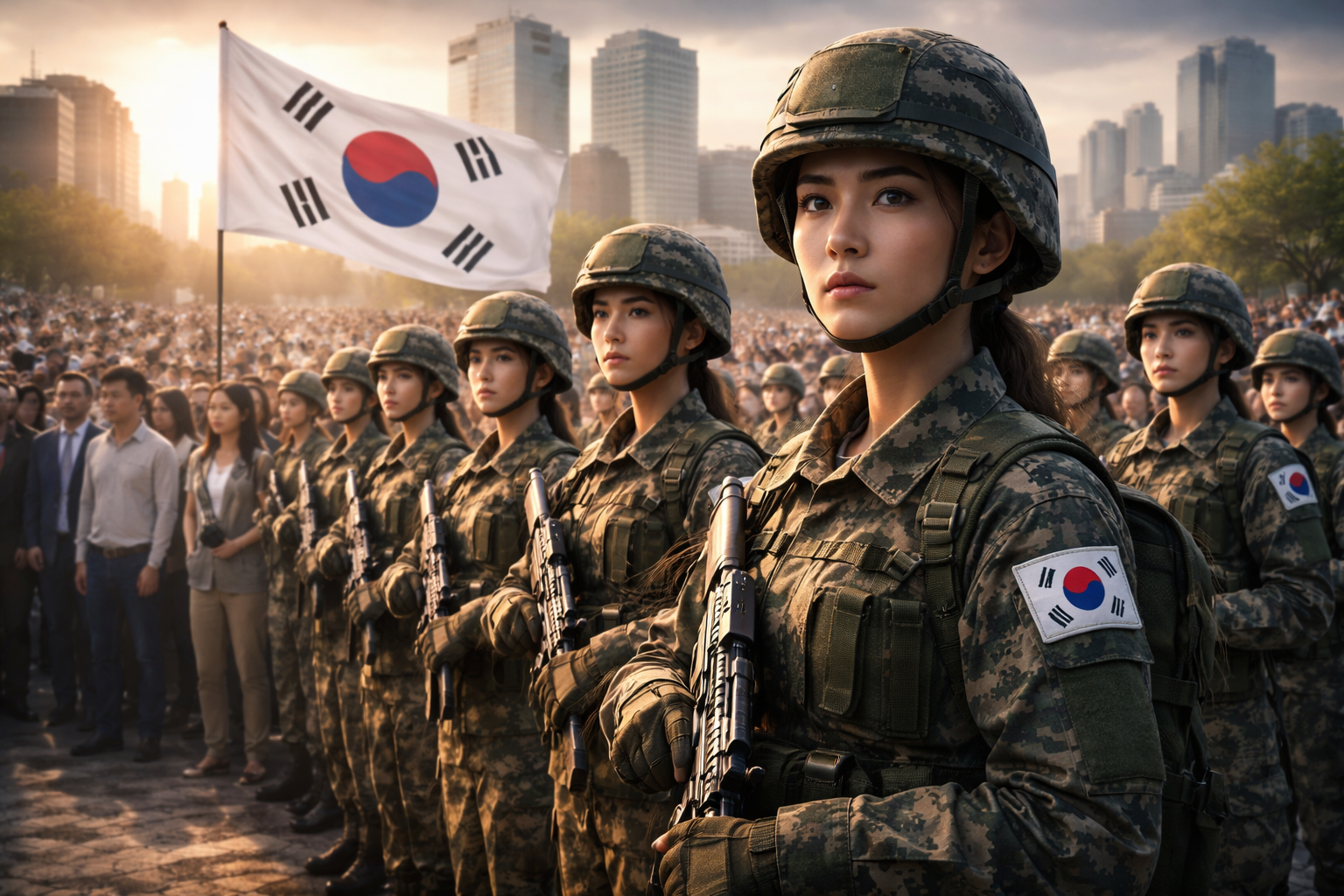
South Korea is facing a potential shift in its military conscription system as a growing number of citizens express support for mandatory service for women alongside men. According to a study released on August 20 by the Reform Institute, nearly 60% of South Korean respondents favored changing the law to require young women to serve in the armed forces.
The debate comes amid concerns over a declining birth rate, a shrinking pool of eligible male recruits, and evolving social attitudes toward gender equality. The government’s planned reform of the national defense plan this autumn includes discussions on modernizing conscription policies.
Experts highlight that South Korea’s current male-only conscription system has long been linked to traditional gender roles, with men expected to defend the nation and women responsible for childbirth and childcare. However, the increasing importance of gender equality and expanded opportunities for women in education and employment have prompted questions about this disparity.
Survey Details and Demographic Challenges
The Reform Institute’s survey found that 65% of men supported mandatory military service for women, with support highest among men in their 20s and 30s at 71.7%. Among women, 54.5% were also in favor. Presently, all able-bodied men must serve between 18 and 21 months, with recall possible in national emergencies such as conflict on the Korean Peninsula.
The South Korean Ministry of Defense reported a significant drop in eligible male conscripts, from approximately 332,000 in 2019 to 257,000 in 2022, with projections that number will fall to about 120,000 by 2043. This demographic decline is a key factor behind the renewed debate on conscription policies.
Changing Nature of Military Service and Gender Roles
The military’s evolution toward greater reliance on technology, including unmanned systems and cyber capabilities, has shifted the emphasis away from physical strength, which historically justified excluding women from conscription. This technological change supports arguments for greater inclusivity in military service obligations.
However, some experts caution that mandatory service for women may increase the cumulative burdens they face, given existing societal expectations related to pregnancy, childbirth, and caregiving. One professor noted that despite advances in women’s participation in education and employment, traditional responsibilities remain significant, potentially complicating the impact of mandatory conscription.
Diverging Opinions and Future Prospects
While advocates for gender equality support expanding conscription, some opponents argue that women should be excluded from frontline military roles. Instead, they emphasize investing in advanced military technology such as drones and robotics to enhance defense without expanding conscription.
The government has established a task force to address troop modernization and conscription reforms. Officials acknowledge the urgent need to address the “demographic cliff” and are considering measures such as reducing exemptions and extending service requirements to naturalized citizens, but have yet to take an official position on mandatory service for women.