
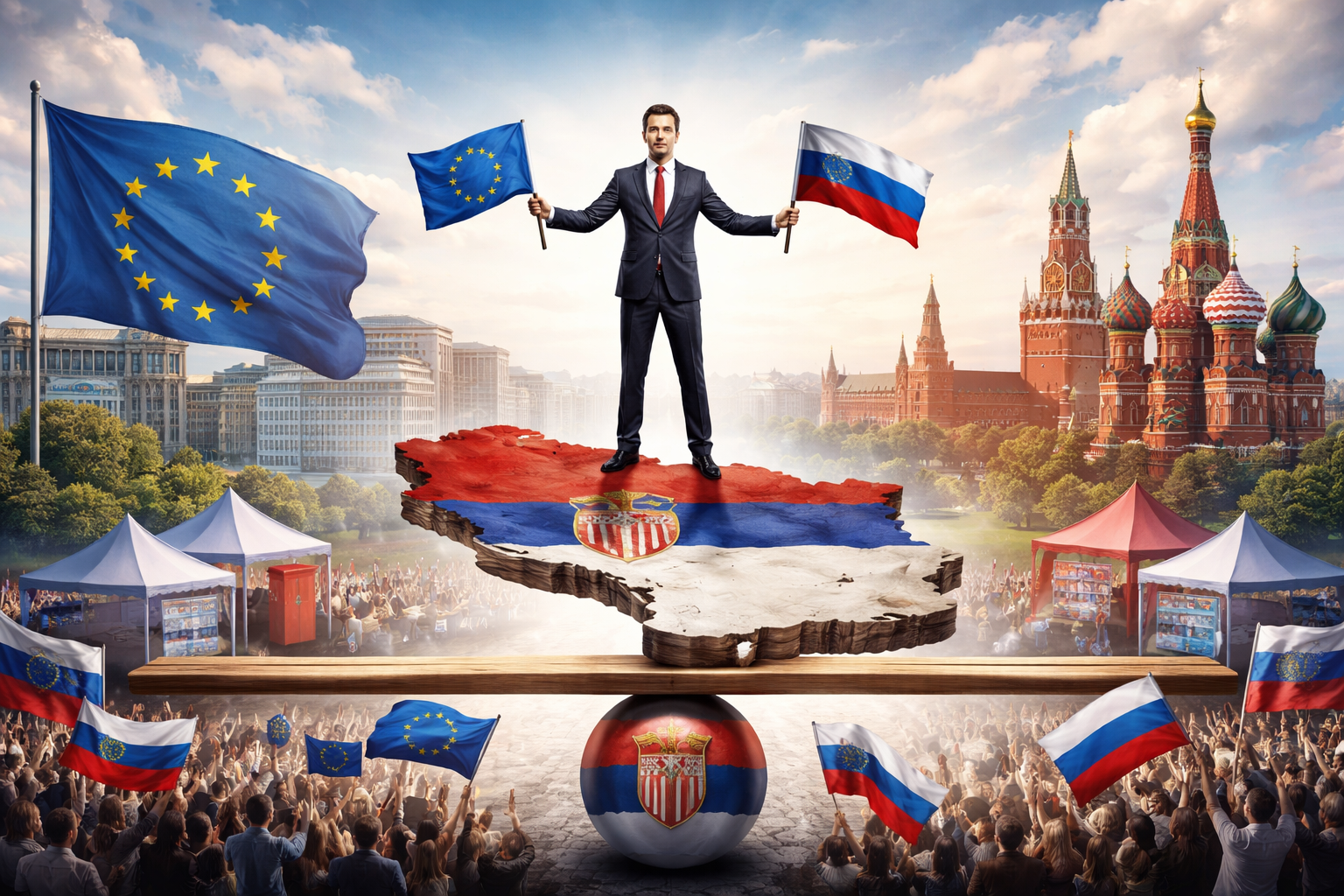
Serbia faces a delicate balancing act between the European Union and Russia as it approaches a critical election scheduled for October. Recent events, including wildfires and high-profile diplomatic visits, have highlighted the complexity of Serbia’s foreign relations and its attempt to maintain ties with both powers.
In early August, devastating wildfires affected more than 3,500 hectares within Serbia’s Deliblato Sands Special Nature Reserve. Serbia sought assistance from Russia, requesting a Russian Ilyushin Il-76 firefighting aircraft before activating the EU’s emergency support mechanism, a decision noted by observers through a geopolitical lens. Following Serbia’s appeal, the EU quickly mobilized helicopters and firefighting teams from several member states to aid in battling the fires.
Pragmatic Decisions or Political Signals?
Serbian authorities described the choice to seek Russian assistance first as a pragmatic one based on the availability and capacity of firefighting aircraft rather than an explicit political alignment. A Serbian official emphasized that the Russian aircraft provided capabilities unavailable within the EU responses, while the country also received firefighting helicopters and teams from European nations shortly thereafter.
Diplomatic Visits Highlight Serbia’s Position
Shortly before the wildfires, Ukrainian President Volodymyr Zelenskyy visited Belgrade. During the visit, the two countries reaffirmed support for each other’s territorial integrity—a significant point since Ukraine does not recognize Kosovo’s independence. This engagement signals Serbia’s effort to maintain positive relations with Ukraine, while simultaneously balancing its longstanding ties with Russia.
Challenges Ahead for Serbia’s Foreign Policy
Experts note that Serbian leadership seeks to avoid alienating either the West or Russia amid mounting geopolitical tensions, aiming to project a favorable image to both sides. However, Serbia’s refusal to impose sanctions on Russia remains a significant obstacle to closer alignment with the EU, which increasingly expects candidate countries to align their foreign policies with the bloc. Conversely, Russia maintains a cautious stance toward Serbia, showing signs of mistrust despite supporting some of Serbia’s political narratives.
The immediate and pressing concern for Serbia is the outcome of the upcoming election, which will influence the country’s capacity to continue balancing these complex relationships. For now, the government focuses on preserving this balance through careful diplomatic engagement, while managing domestic and international pressures.