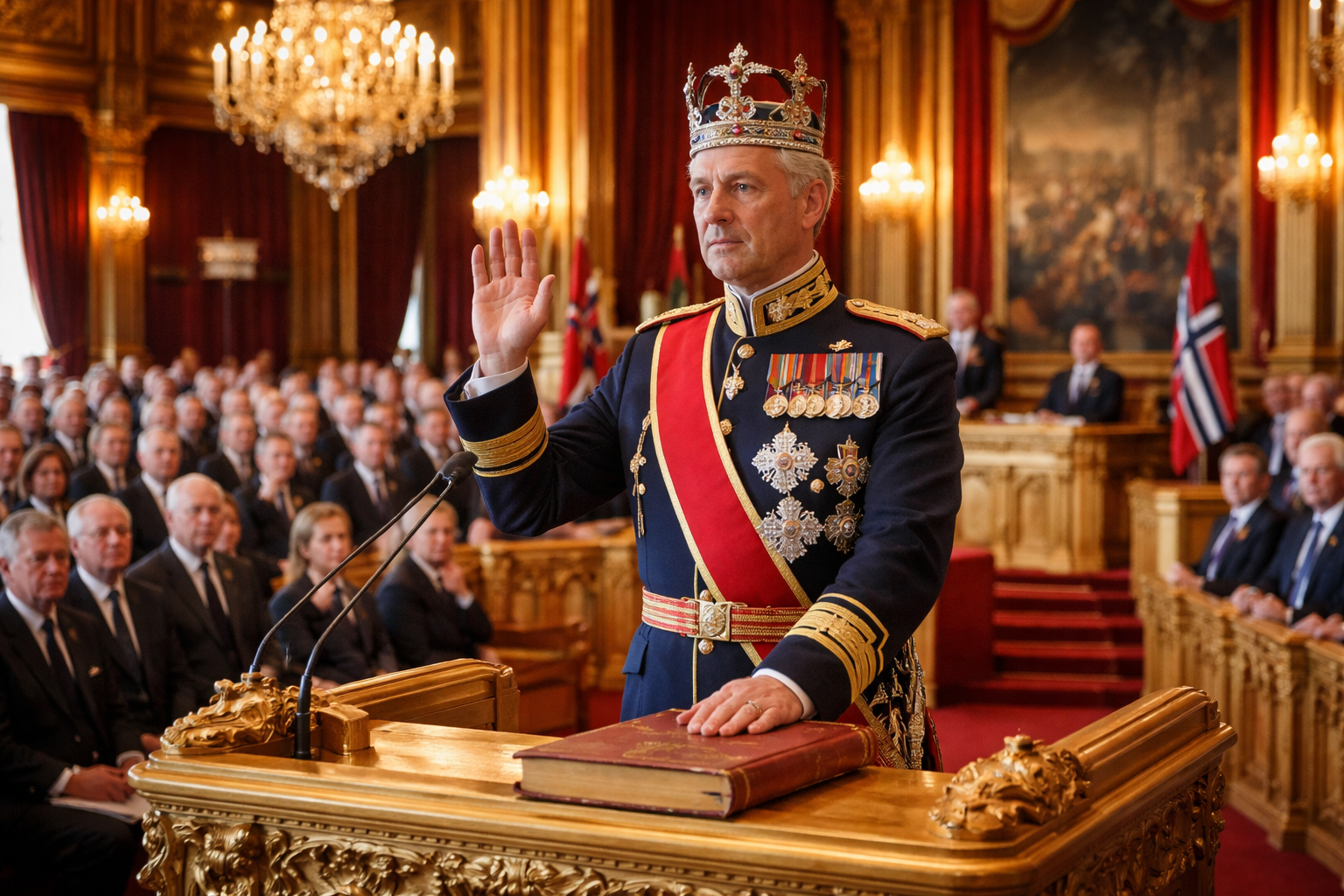
King Haakon VIII officially assumed the Norwegian throne on Tuesday by swearing an oath to uphold the country’s constitution during a ceremony at the Storting, Norway’s parliament in Oslo. The new monarch succeeded his father, King Harald V, who passed away last week at the age of 89.
The oath-taking followed a solemn period of public mourning, with Harald’s coffin placed in the royal palace chapel where citizens could pay their respects ahead of the funeral scheduled for September 9. The transition marks the continuation of Norway’s constitutional monarchy, a system that retains primarily symbolic significance today.
According to information reported from Oslo, Haakon was transported a short distance from the royal palace to the parliament building. House Speaker Masud Gharahkhani read the formal announcement confirming Harald’s death and Haakon’s accession to the throne. The 53-year-old monarch then pledged to govern Norway in accordance with its laws and constitution.
Details of the Parliamentary Ceremony
During the ceremony, King Haakon VIII’s oath was solemnly recited, emphasizing his commitment to governing the kingdom within the framework of Norwegian law. The event underscored the constitutional traditions central to Norway’s monarchy.
Queen Mette-Marit’s Absence Due to Health Complications
Queen Mette-Marit, Haakon’s wife, did not attend the ceremony owing to complications following her lung transplant in June. Earlier, she had appeared publicly during the coffin procession on Monday, her first public engagement since her transplant. Medical officials at Oslo University Hospital noted that post-transplant complications are not uncommon and stated that the Queen remained under observation, preventing her participation in Tuesday’s event.
The Role of Norway’s Constitutional Monarchy
Norway’s monarchy dates back to the ninth century. When Norway gained independence from Sweden in 1905, a plebiscite showed overwhelming public support for restoring a constitutional monarchy with mostly symbolic duties. While political authority lies primarily with elected officials in government and parliament, the royal family maintains a role in diplomacy and promoting Norway internationally.