
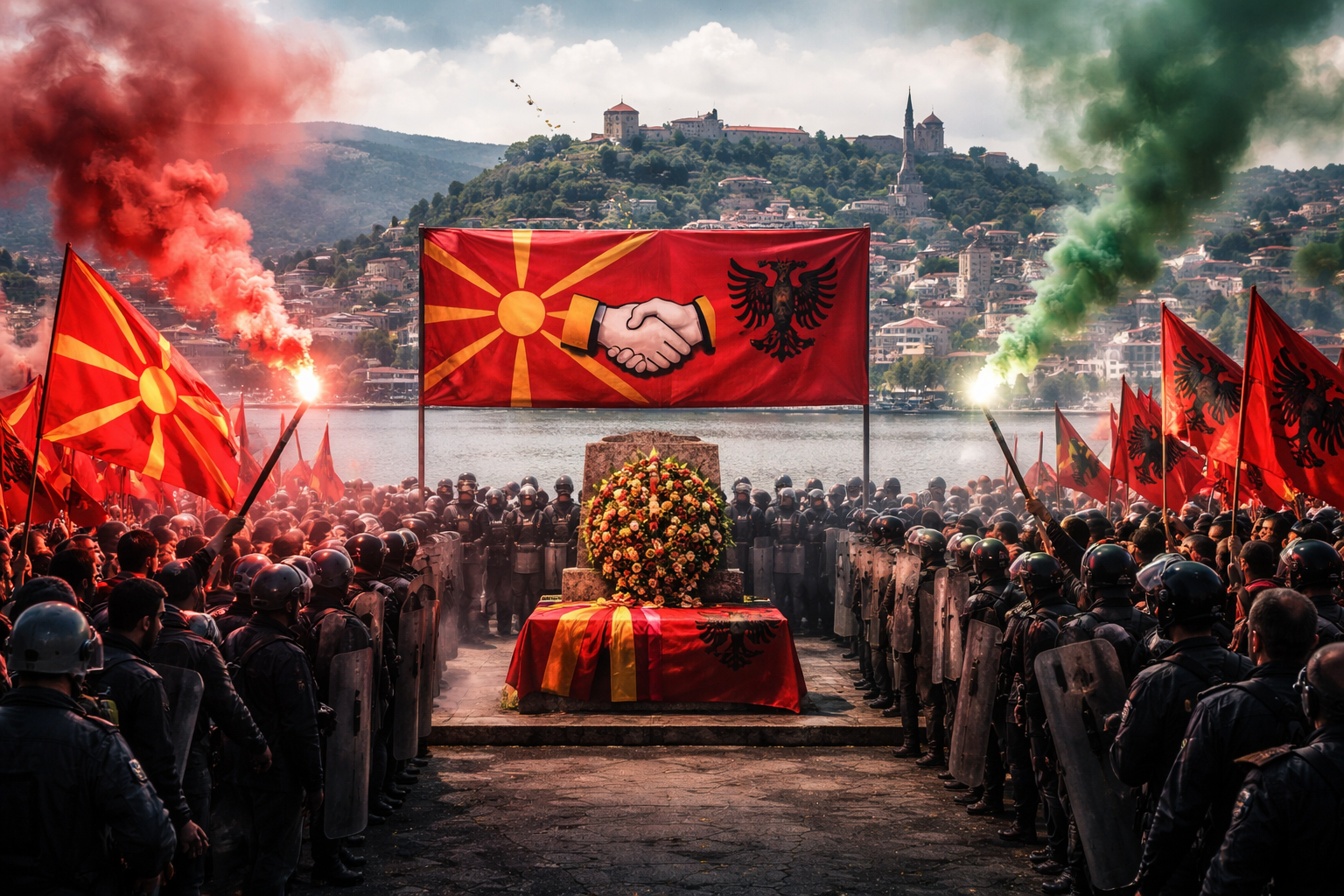
North Macedonia commemorates 25 years since the Ohrid Framework Agreement brought an end to the 2001 ethnic conflict, a turning point that helped prevent the violence from escalating like other former Yugoslav republics. The agreement, brokered with the help of NATO, the United States, and EU countries, introduced power-sharing and minority rights designed to stabilize ethnic relations, particularly between ethnic Macedonians and Albanians.
Despite living in peace, experts and political figures say the country has yet to achieve genuine reconciliation. Political shifts since 2021, including the main ethnic Albanian party moving to opposition, have raised concerns that the hard-won balance may be eroding.
The Legacy of the Ohrid Agreement
The 2001 conflict resulted in dozens of military and police deaths and displaced over 170,000 people. The Ohrid Agreement reshaped the political system to give minority communities greater influence, requiring support from minority representatives in decisions on language, education, and national symbols. Yet, tensions remain as disputes persist over equality, representation, and the interpretation of minority rights.
Leaders such as Bujar Osmani, a senior official from the Albanian Democratic Union for Integration (DUI), worry less about what has been implemented since the agreement and more about preserving its gains amid recent policy changes. He argues that the system established by Ohrid must be continuously respected to maintain peace and political stability.
Diverging Perspectives on Ethnic Representation
Ethnic Macedonians and Albanians express different views on the impact of the Ohrid Agreement. Some Macedonians voice grievances about affirmative representation policies they believe give Albanians undue advantages, especially in public sector recruitment. A former police general noted concerns over ethnicity taking precedence over qualifications in hiring.
Conversely, Albanian politicians assert that protections for their community have weakened in recent years. After the main Albanian party stepped into opposition in 2021, its leaders highlighted attacks on the official use of the Albanian language and efforts to promote a monoethnic state concept as troubling developments.
Challenges to Reconciliation and Integration
Observers highlight that while the Ohrid Agreement transformed political institutions, it has fallen short in fostering reconciliation between the communities. Ethnic distance appears to be growing, with segregated education and limited mutual understanding. Experts emphasize the need for open dialogue platforms to address differing historical perspectives.
North Macedonia’s stalled EU integration contributes to uncertainty, as unresolved issues with neighboring Bulgaria and fading hopes of EU membership undermine one of the few unifying projects between ethnic Macedonians and Albanians. The political stalemate has also slowed reforms important for consolidating stability.
Looking Ahead
Despite the complex challenges, key figures remain hopeful that a new conflict will be avoided. They stress that ethnic tensions tend to build gradually when communities perceive inequality rather than erupt suddenly. The country’s future remains tied to whether it can sustain the balance the Ohrid Framework Agreement sought to establish.
One former combatant reflected on personal progress since the conflict, noting that former fighters from opposing ethnic groups now interact peacefully. However, the path toward deeper reconciliation and shared national identity continues to require attention and effort.