

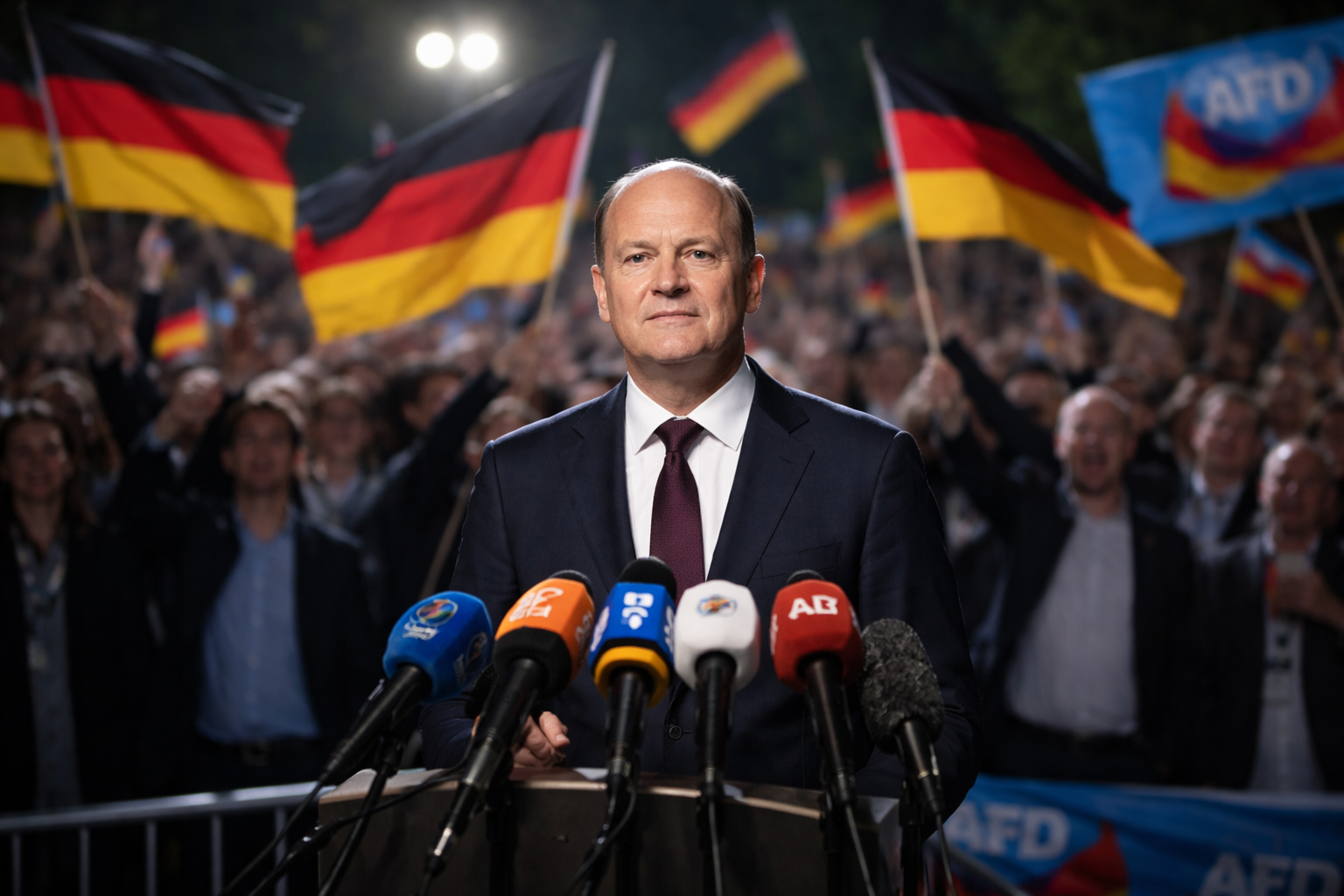
German Chancellor Friedrich Merz has vowed to remain in office despite severe losses in recent state elections, which he described as a “disaster.” The far-right, anti-immigration party Alternative für Deutschland (AfD), known for its Kremlin-friendly stance, secured 38% of the vote in Mecklenburg-Western Pomerania. Meanwhile, the leftwing party Die Linke achieved victory in Berlin.
The election results have intensified speculation about Merz’s political future and raised questions about potential leadership changes within his party. Although Merz has promised political change in response to the setbacks, the growing strength of the AfD signals shifting dynamics in Germany’s political landscape.
Election Outcomes Highlight Rising Support for AfD
The AfD’s performance in Mecklenburg-Western Pomerania stands out as a significant development, reflecting increasing voter support for nationalist and anti-immigration policies in parts of Germany. Their success marks a challenge to the more traditional parties and underscores growing divisions within the electorate. In contrast, Die Linke’s win in Berlin indicates that leftwing politics retain influence in urban centers.
Political Uncertainty Surrounding Merz’s Leadership
Following these election losses, Merz’s commitment to staying in office contrasts with mounting speculation about his eventual replacement. The election results have spurred discussions within his party about future leadership directions and strategies to regain voter confidence.
Implications for German Politics
The recent state elections suggest a fragmented political environment in Germany. With the AfD gaining ground and traditional parties losing votes, the path forward for Merz and his party remains uncertain. Analysts are watching closely to see how these developments will influence national policies and coalition-building in the months ahead.