

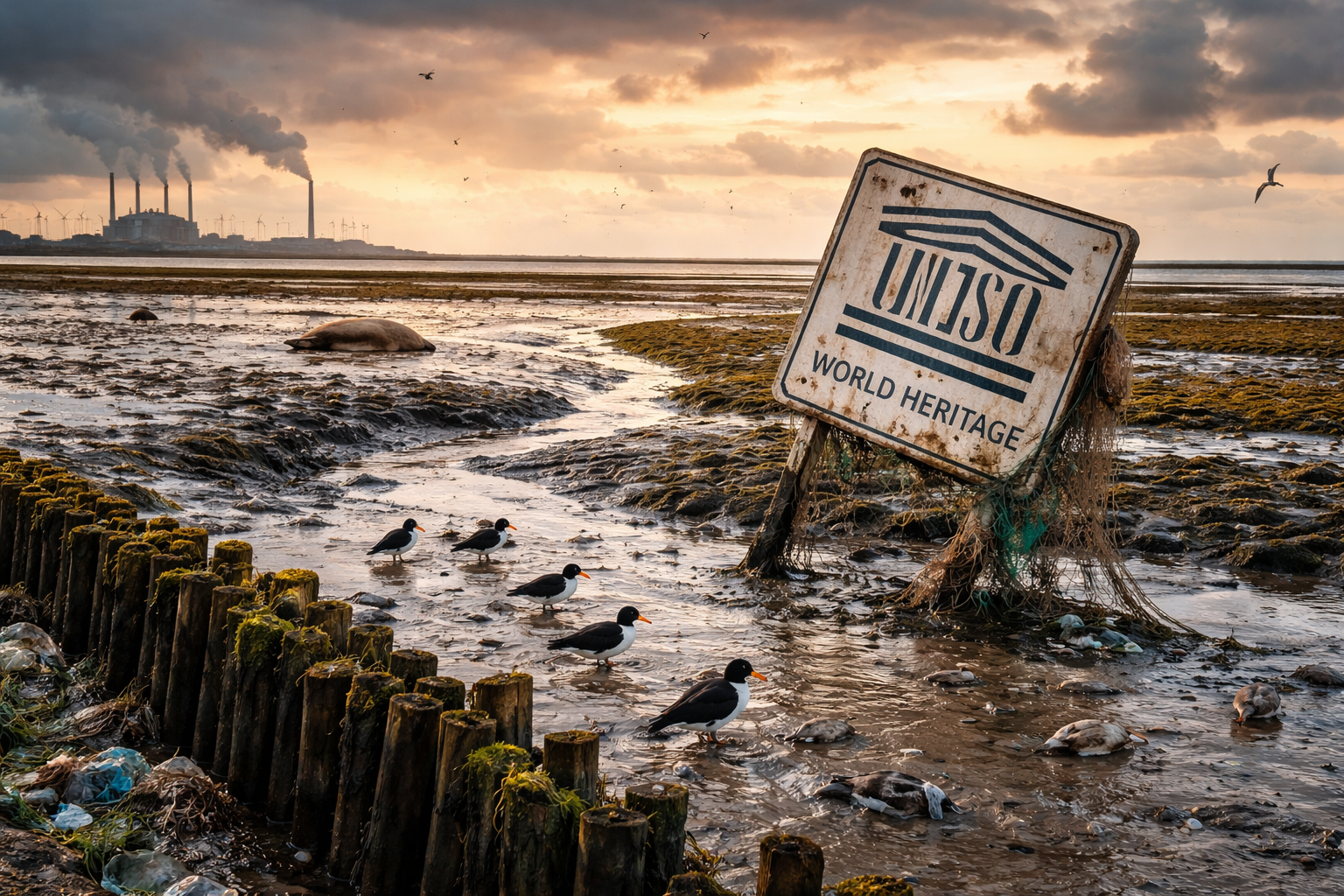
Stretching across the coasts of the Netherlands, Germany, and Denmark, the Wadden Sea is the world’s largest continuous intertidal sand and mudflat system, celebrated for its rich marine life and as a critical migratory bird habitat. Recognized by UNESCO as a World Heritage site in 2009, the area now faces the prospect of being added to the UNESCO list of World Heritage sites in danger due to escalating ecological pressures.
UNESCO is expected to send a joint inspection mission with the International Union for Conservation of Nature (IUCN) in 2027 to evaluate the conservation status of the Wadden Sea amid growing concerns over “cumulative impacts of multiple pressures” such as resource extraction, fishing, tourism, and military activities.
Ecological Declines and Human Pressures
Marine biologists and conservationists warn that the biodiversity within the Wadden Sea is under serious threat. Bird populations and fish stocks have been reported to be declining, while the health of mudflat ecosystems is deteriorating. The consequences of rising sea levels combined with land subsidence—partly a result of gas and salt extraction—could submerge critical mudflats that feeding migratory birds depend on, potentially disrupting the East Atlantic Flyway migration route.
Commercial activities such as salt and gas extraction continue in parts of the region, despite calls from environmental groups for stronger protections. An ongoing legal campaign aims to better enforce environmental assessments for fishing methods such as bottom trawling, which remain authorized inconsistently across jurisdictions. Large offshore wind farms also pose new environmental challenges by necessitating undersea cables that traverse sensitive mudflats and islands.
Local Community Concerns and Government Responses
Residents on the islands within the Wadden Sea area express deep concerns about the future of tourism, which is a key source of income for many. For instance, island tour operator Aant van der Veen warns that restrictions aimed at conservation could lead to a loss of tourism and economic hardship for local communities. This anxiety was recently channeled into a “We are the Wadden” campaign, attracting significant public support and parliamentary attention in the Netherlands.
Dutch authorities emphasize their commitment to maintaining a balance between conservation and sustainable, multifunctional use of the area. Officials underline that any conservation measures will take into account the livelihoods of local residents and existing activities, reaffirming that the protections granted with the World Heritage status include ongoing uses from the time of designation.
Complex Management Across Three Countries
Management of the Wadden Sea is shared by the Netherlands, Germany, and Denmark, complicated by multiple layers of regulation at local, national, and European levels. Enforcement inconsistencies and responsibilities across agencies add to the challenges of coherent conservation efforts.
As the 2027 inspection approaches, stakeholders across governments, residents, and environmental organizations remain focused on finding solutions that safeguard the unique ecological and cultural value of the Wadden Sea without undermining the social and economic fabric of the communities that have lived alongside it for centuries.