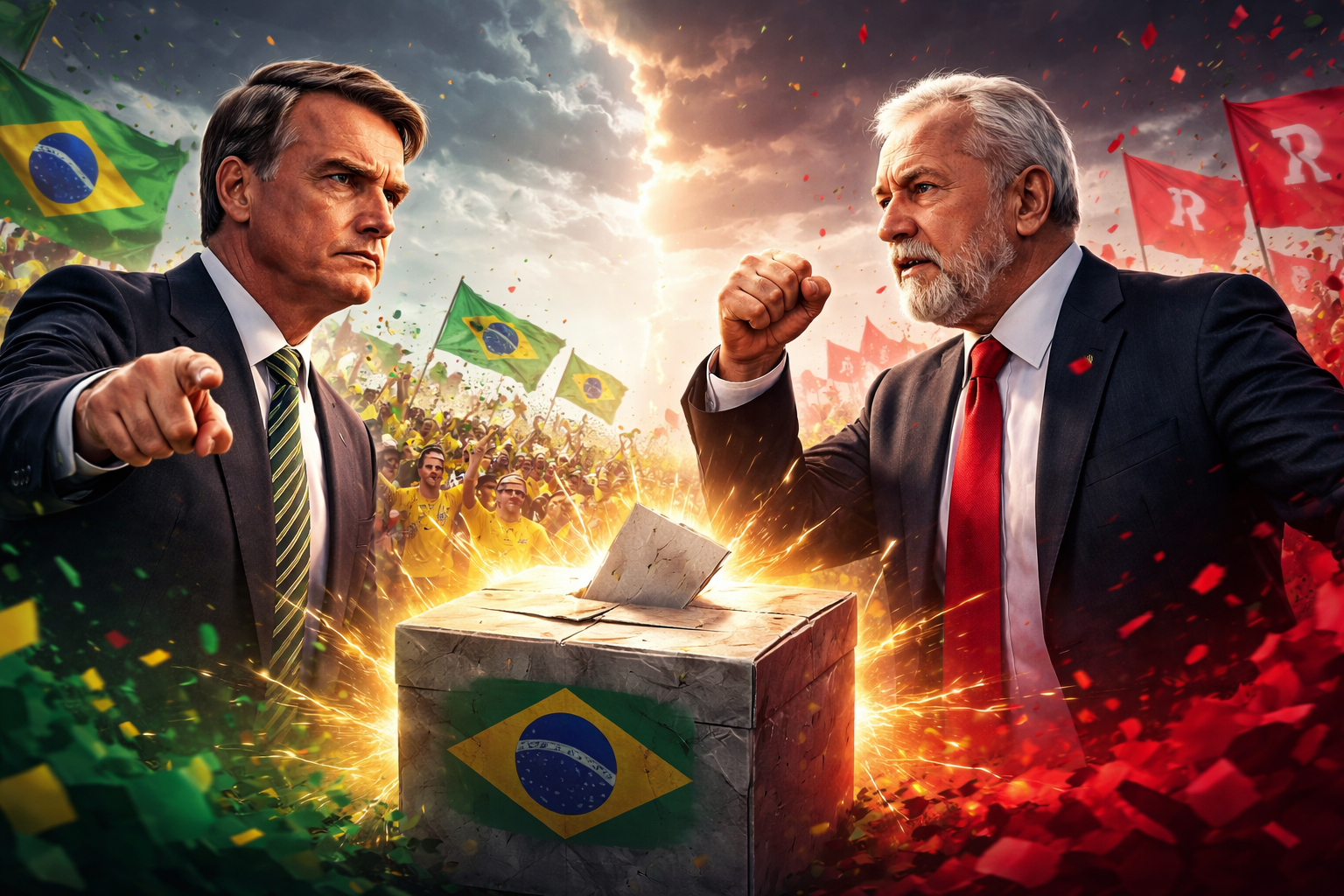
Brazil’s presidential election heads to a runoff after final vote counts on Sunday showed Senator Flavio Bolsonaro leading with 47.2% and former President Luiz Inacio Lula da Silva trailing closely at 45%. Neither candidate secured the outright majority needed to claim victory in the first round, prompting the country’s electoral court to schedule a second-round vote on October 25.
The runoff will mark a decisive moment between Bolsonaro’s right-wing populist campaign, which seeks to continue the political legacy of his father, Jair Bolsonaro, and Lula’s bid for a fourth term promoting leftist policies.
Election Results and Reactions
With more than 99% of ballots processed, the presidential race remained highly competitive. Flavio Bolsonaro expressed optimism, stating he was “very happy with the real possibility that, three weeks from now, Brazil will give a definitive answer by choosing a modern government.” In contrast, Lula described the need for a runoff as “unexpected,” given his confidence in winning outright, but reaffirmed his readiness, saying, “Tomorrow we start a new campaign. I am very good in the knockout stage.”
Political Landscape and Congressional Shifts
The recent elections also intensified the presence of right-wing forces in Brazil’s Congress. Analysts noted the far-right’s significant gains in the legislative branch, presenting challenges ahead for Lula’s potential governance. Along with the presidential vote, Brazilians elected lawmakers, governors, and senators—securing Senate seats for Bolsonaro’s family members, including his sister Michelle Bolsonaro and another son, Carlos Bolsonaro. This consolidation grants the Bolsonaro-aligned right-wing bloc a dominant position in the Senate.
Campaign Dynamics and Context
In the closing days of campaigning, Lula toured Sao Paulo, promising to defeat the far-right and advocate for his party’s welfare and development programs. Flavio Bolsonaro emphasized law-and-order policies and tax cuts, criticizing Lula’s record and focusing on societal issues such as economic hardship and violence.
The political climate remains tense, shaped by the aftermath of the 2022 election and Jair Bolsonaro’s incarceration on charges related to attempting a coup. Flavio Bolsonaro has pledged to pardon his father if elected, while Lula’s campaign highlights concerns about threats to Brazil’s democratic sovereignty linked to the Bolsonaro family’s international ties.