

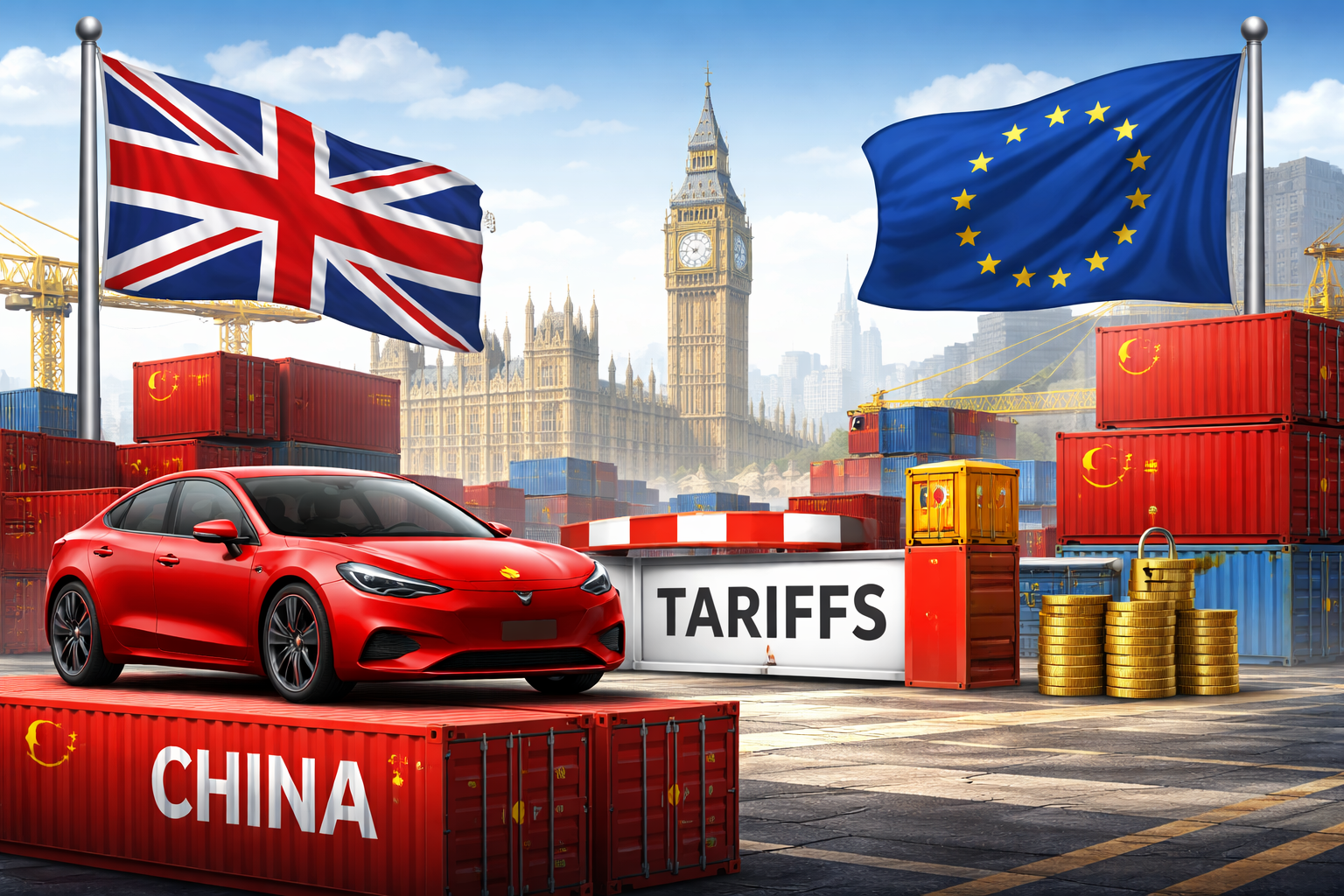
The United Kingdom is currently evaluating whether to impose tariffs on Chinese car imports as part of efforts to align with the European Union’s new Industrial Accelerator Act, a regulatory framework aimed at safeguarding European manufacturing sectors, including automobiles and chemicals.
The EU has suggested that the UK introduce import taxes on Chinese vehicles to create a level playing field and qualify as a trusted partner under the “Made in Europe” legislation. Since October 2024, the EU has levied tariffs of up to 45% on Chinese cars, a step the UK has yet to mirror.
Implications for UK-China and UK-EU Relations
Adopting tariffs on Chinese electric vehicles (EVs) would mark a significant policy shift from the UK government’s current stance. Under the leadership of Keir Starmer, the UK has maintained a more China-friendly trade approach, viewing China as a key source of economic growth rather than a threat to its manufacturing base.
Introducing tariffs could provoke a negative response from Beijing and complicate efforts to reset UK-EU relations following Brexit. Industry experts warn the move could also trigger a lengthy dispute process within the World Trade Organization, as seen in the EU’s own 13-month investigation before implementing its tariffs.
Industry and Government Perspectives
The UK government has emphasized that tariffs on Chinese EVs remain “under close review,” with the business secretary expressing ongoing engagement with the automotive sector to ensure policy decisions serve national and industry interests.
Industry voices urge the need for evidence-based measures that sustain an open and competitive market. Mike Hawes, chief executive of the Society of Motor Manufacturers and Traders, highlighted that excluding UK-built vehicles from the EU scheme could damage the deeply integrated UK-EU trade, which currently amounts to an €80 billion relationship.
Market Dynamics and EU Concerns
Chinese EV brands like BYD, Leapmotor, and Jaecoo have rapidly increased their presence in the UK market, with BYD alone capturing nearly 6% of new car sales as of September 2026. This growth has raised unease within EU capitals over the potential erosion of native industries through imports.
While the EU targets imports from China with tariffs, it regards Chinese manufacturers based in Europe—such as BYD’s production in Hungary—as less threatening and exempts them from duties. Collaborations such as Nissan’s talks with Chinese firm Chery to build cars in Sunderland also align with EU industrial policies.